
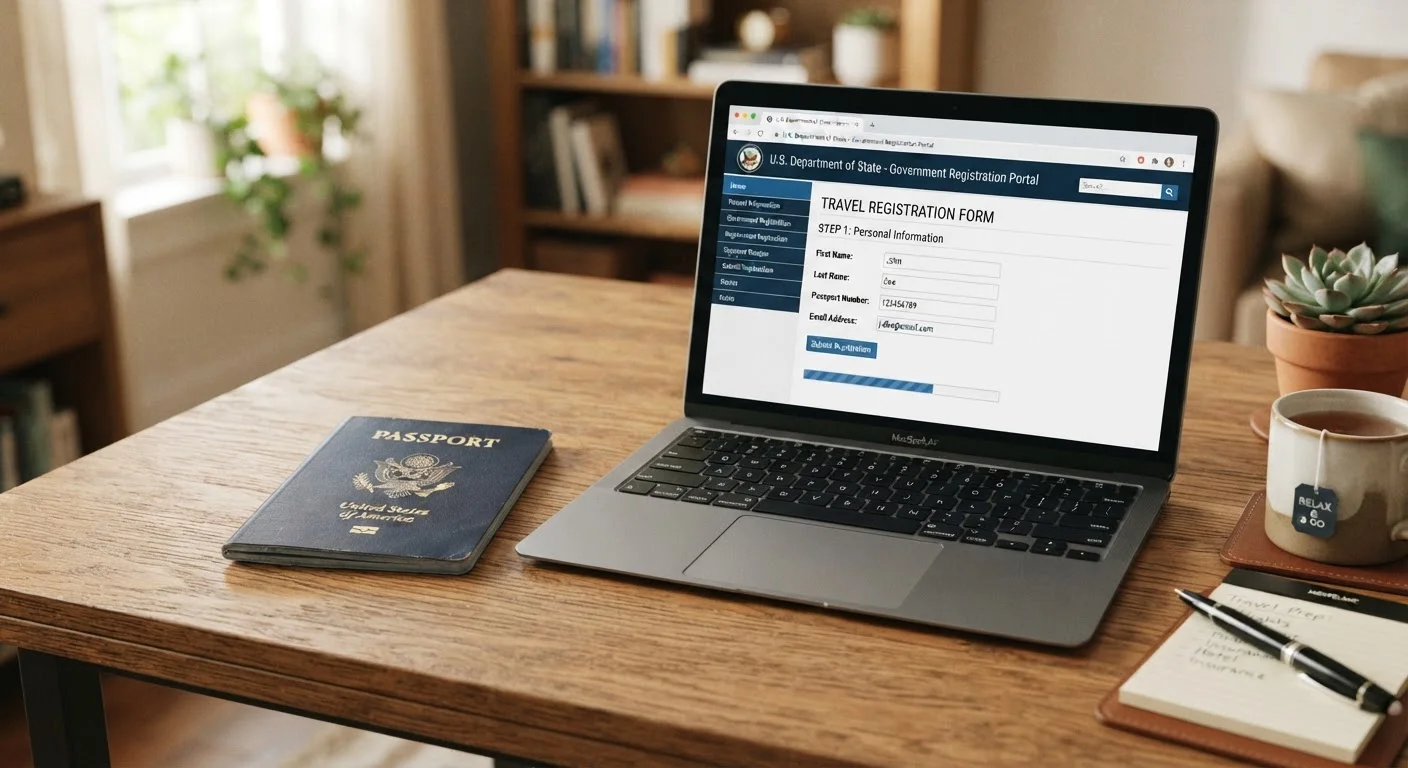
What STEP Is and Why It Matters
The Smart Traveler Enrollment Program (STEP) is a free service run by the U.S. Department of State. When you register, you create a record of your trip with the nearest U.S. embassy or consulate in your destination country. That record allows embassy staff to reach you — by email or text — if something serious happens while you're abroad.
Situations where STEP proves valuable include: natural disasters, political unrest, terrorist incidents, disease outbreaks, or any event that might require Americans to shelter in place or evacuate. It also makes it easier for the State Department to notify your emergency contact back home if you cannot be reached directly.
STEP is entirely voluntary. Enrolling does not give the U.S. government authority over your travels, share your data publicly, or affect your visa status. It simply creates a private communication channel between you and the embassy. For context on the broader safety landscape, see our guide on what U.S. travel advisories actually tell you.
What you will need
How to Enroll: Step-by-Step
The entire process is completed online at step.state.gov (the official U.S. government portal). You'll need about 10–20 minutes and your basic trip details on hand before you start.
Go to the official STEP website
Navigate to step.state.gov — the U.S. Department of State's official enrollment portal. Do not use third-party sites that claim to offer STEP registration; the service is free and only available through government channels.
Create or log into your traveler.state.gov account
Click Sign In or Create Account. If this is your first time, you'll enter your name, email address, and a password. You'll receive a verification email — confirm it before proceeding. If you already have an account from a previous trip, simply log in.
Add a new trip
Once logged in, select Add a Trip. Enter your destination country, your intended travel dates (departure and return), and the cities you plan to visit if known. If your itinerary spans multiple countries, you can add each one as a separate trip segment.
Enter your contact and personal information
Provide your passport number, your in-country contact details (such as a hotel address or a local phone number if you have one), and your emergency contact in the United States — typically a family member or trusted friend who knows your itinerary. This is the person the embassy would notify if you could not be reached.
Review, submit, and save your confirmation
Review all entered information for accuracy, then click Submit. You'll receive a confirmation email from the State Department. Save or screenshot this for your records. Your enrollment is now active and visible to the relevant U.S. embassy or consulate.
Update Your Enrollment If Plans Change
STEP enrollments are only as useful as the information they contain. If your travel dates shift, you add a new destination, or you change your contact number, log back into step.state.gov and update your trip record. Outdated information limits the embassy's ability to reach you in a real emergency.
STEP is one piece of a broader pre-trip safety checklist. Once enrolled, consider pairing it with a full safety plan — our article on building a travel safety plan before you leave home walks through emergency contacts, document backups, and communication strategies.
Common Questions and Limitations
STEP is useful, but it has limits worth understanding. The program notifies — it does not evacuate, provide financial assistance, or guarantee consular access. In a fast-moving crisis, embassy staff prioritize outreach to enrolled travelers, but communication is not instant or guaranteed.
STEP also does not replace travel insurance, which can cover medical evacuation, trip cancellation, and lost documents — expenses the government does not cover. Make sure you're also carrying the right paperwork. Our guide on travel documents every American should carry abroad covers what to have on you at all times.
STEP Is a Notification Tool — Not a Rescue Service
Enrolling in STEP does not entitle you to evacuation assistance, emergency loans, or guaranteed consular contact in every situation. The State Department recommends STEP as one layer of a broader safety plan — not as a standalone safety net. Always carry travel insurance and know your destination's local emergency numbers.
One frequently overlooked gap: many first-time international travelers skip safety-prep steps entirely, including STEP. Our article on travel safety oversights that catch first-time international travelers off guard covers other preparedness blind spots worth reviewing before you go.
The content on this site is for informational purposes only and is not a substitute for professional advice. Always consult a qualified professional for guidance specific to your situation.