

Start here
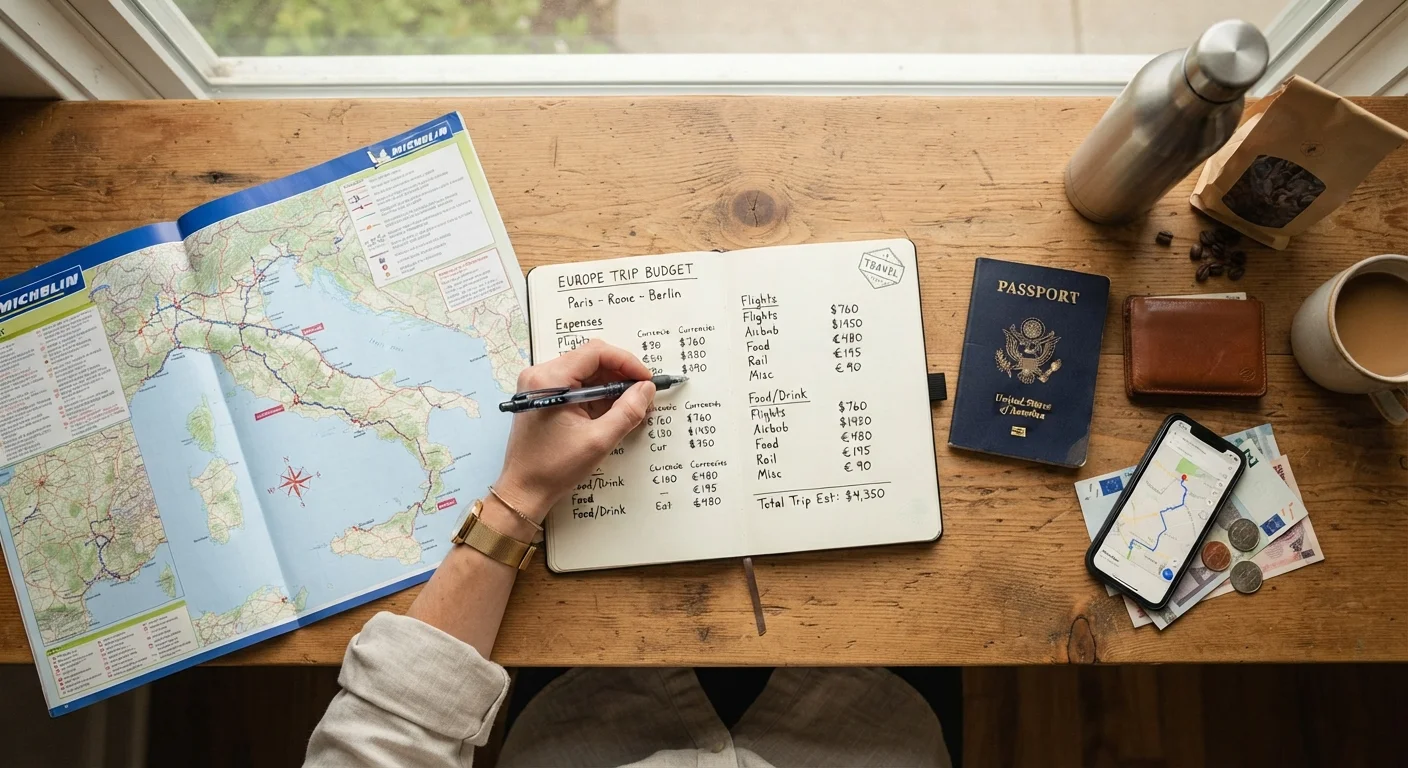
Start with a Realistic Travel Budget
Next
Choosing a Destination That Fits Your Budget
Then
Planning Transportation and Accommodation
Almost there
Managing Money While You Travel
Before you go
Common Budget Travel Mistakes to Avoid
Start with a Realistic Travel Budget
Budget travel isn't about deprivation — it's about spending intentionally so your money goes further. The first step isn't picking a destination. It's figuring out how much you actually have to work with.
Start by identifying your total available travel fund. This is the amount you can realistically set aside without affecting rent, bills, or savings goals. If you're still building that fund, our plain-English guide to building a monthly budget can help you carve out consistent savings over time.
Once you have a number, break it into categories. A basic travel budget should account for:
- Transportation (flights, train, bus, car)
- Accommodation (hotel, hostel, rental)
- Food and drinks
- Activities and entrance fees
- Travel insurance
- Buffer (10–15% of total) for unexpected costs
Don't allocate every dollar to one category before researching. Look up estimated daily costs for destinations you're considering, then divide your total budget by those figures to understand how many days you can realistically afford.
Shoulder season
The travel period just before or after a destination's peak tourist season. Prices for flights and accommodation are often lower, and attractions are less crowded.
Daily travel budget
The average amount you plan to spend per day on a trip, covering food, local transport, activities, and incidentals — not including pre-booked flights or accommodation.
Buffer fund
A reserve amount (typically 10–15% of your total budget) set aside specifically for unexpected costs, such as delays, medical needs, or unplanned expenses.
Dynamic currency conversion
A service offered at some international payment terminals that converts your purchase into your home currency on the spot — usually at a poor exchange rate. Choosing the local currency instead typically saves money.
All-in cost
The true total cost of a trip or booking, including all fees, taxes, and add-ons — not just the advertised base price.
Choosing a Destination That Fits Your Budget
Your destination is one of the most powerful budget levers you have. A week in a major US city can cost as much as a week in Southeast Asia — or more. Rather than falling in love with a place and then trying to make the numbers work, flip the process: let your budget help guide the destination.
Consider these factors when comparing options:
- Average daily cost: Websites tracking traveler spending data can show rough daily averages by city. Budget-friendly destinations often have lower accommodation and food costs.
- Distance and transport cost: Closer destinations are usually cheaper to reach. Road trips can be economical if costs are shared.
- Seasonality: Traveling in shoulder season (just before or after peak tourist season) typically means lower prices and fewer crowds.
- Free and low-cost activities: National parks, public beaches, free museums, and hiking trails can fill an itinerary without draining your budget.
Before committing to any location, ask the foundational questions outlined in our pre-booking guide — it can save you from costly regrets later.
Use Shoulder Season to Stretch Your Budget
Traveling just four to six weeks outside of a destination's peak season can reduce accommodation costs by 20–40% in many markets. You'll also encounter shorter lines at popular attractions and a more relaxed travel experience overall. Research the peak season for your destination before locking in dates.
Planning Transportation and Accommodation
These two categories typically consume 50–70% of a travel budget, so they deserve the most scrutiny.
Transportation
For flights, flexibility is your biggest asset. If your travel dates are fixed, you'll pay more. Even shifting by a day or two can make a noticeable difference. Booking well in advance helps for international travel, while last-minute deals exist but are unreliable to count on.
For ground travel within your destination, research public transit options before assuming you'll need a rental car. Buses, trains, and metro systems can drastically cut daily costs in many cities.
Accommodation
Hotels aren't your only option. Hostels offer dormitory or private rooms at lower price points. Vacation rentals with kitchens allow you to cook some meals, reducing food costs. Some travelers use home-exchange networks or stay with friends and family to minimize this expense entirely.
When comparing accommodation prices, factor in location. A cheaper room far from transit may cost more in taxi rides than a slightly pricier option near public transport.
For a structured approach to making these decisions, see our trip-planning checklist for budget-conscious travelers.
Managing Money While You Travel
Having a budget on paper only matters if you track it on the road. Many first-time travelers arrive with a solid plan and return having spent 30–40% more than intended — not from one big splurge, but from dozens of small, untracked purchases.
A few practical approaches:
- Set a daily spending limit and check your running total each evening.
- Use a dedicated travel account or card to keep trip spending separate from everyday finances.
- Carry a small amount of local cash for markets, tips, and small vendors that don't accept cards.
- Avoid dynamic currency conversion at payment terminals — always choose to be charged in the local currency to get a better exchange rate.
For ideas on structuring your spending tracking, the envelope method and zero-based budgeting comparison offers useful frameworks that translate well to travel spending.
Notify Your Bank Before You Travel
Banks and card issuers sometimes freeze accounts when they detect transactions in unfamiliar locations. Before departure, let your bank know your travel destination and dates — most allow you to do this online or by phone. This simple step can prevent your card from being declined at a critical moment.
Common Budget Travel Mistakes to Avoid
Even well-prepared travelers make predictable mistakes. Knowing them in advance is your best defense.
Overspending before you leave
Pre-trip purchases — new luggage, clothing, travel gadgets, last-minute supply runs — can quietly consume hundreds of dollars before you've even arrived. Our companion piece on how travelers blow their budget before leaving home covers this trap in detail.
Ignoring total trip cost
A cheap flight means little if airport transfers, baggage fees, and resort charges add hundreds to the final bill. Always calculate the all-in cost, not just the headline price.
No buffer for the unexpected
Delays, medical needs, a lost item, an impromptu experience — travel produces surprises. Build a 10–15% contingency into your budget and treat it as off-limits unless genuinely needed.
Skipping travel insurance
Budget travelers sometimes skip insurance to save money. However, a single unexpected medical expense or cancelled flight can cost far more than a modest policy. Weigh the risk honestly before opting out.
Budget travel is a learnable skill. With each trip, your planning instincts sharpen, your estimates become more accurate, and you find more ways to stretch your money without sacrificing the experience. The Trip Planning hub has additional resources to help you build on these foundations.
Don't Skip the Contingency Budget
Leaving no financial cushion is one of the most common first-timer mistakes. Travel is unpredictable — flights get delayed, items get lost, and fees appear that weren't in the original plan. Reserve 10–15% of your total budget as a contingency and commit to not touching it unless genuinely necessary.
Frequently Asked Questions
There's no universal number — it depends on your destination, trip length, and travel style. A domestic weekend trip might cost $300–$600, while an international week-long trip could run $1,500–$3,000 or more. Research average daily costs for your specific destination before setting a figure.
Bus travel (such as intercity coach services) is typically the most affordable option, followed by driving if costs are shared. Flights can be competitive, especially with advance booking and flexible dates. Compare total cost including baggage fees, not just the base ticket price.
Research suggests domestic flights are often less expensive when booked one to three months in advance, while international flights may benefit from booking three to six months out. Prices vary widely, so checking regularly and using fare-tracking tools can help you spot dips.
It can be, but check with your bank before you travel. Some debit cards charge significant foreign transaction fees or ATM withdrawal fees overseas. Notify your bank of your travel plans so your card isn't flagged for suspicious activity.
Common overlooked costs include travel insurance, checked baggage fees, airport transportation, travel visas, daily tipping, and tourist attraction entry fees. Building a 10–15% buffer into your total budget helps absorb these surprises.
Travel insurance is worth considering for any trip, including budget ones. Trip cancellation, medical emergencies abroad, and lost luggage can all create costs that far exceed a modest insurance premium. Compare plan types and read policy terms carefully before purchasing.
The content on this site is for informational purposes only and is not a substitute for professional advice. Always consult a qualified professional for guidance specific to your situation.