

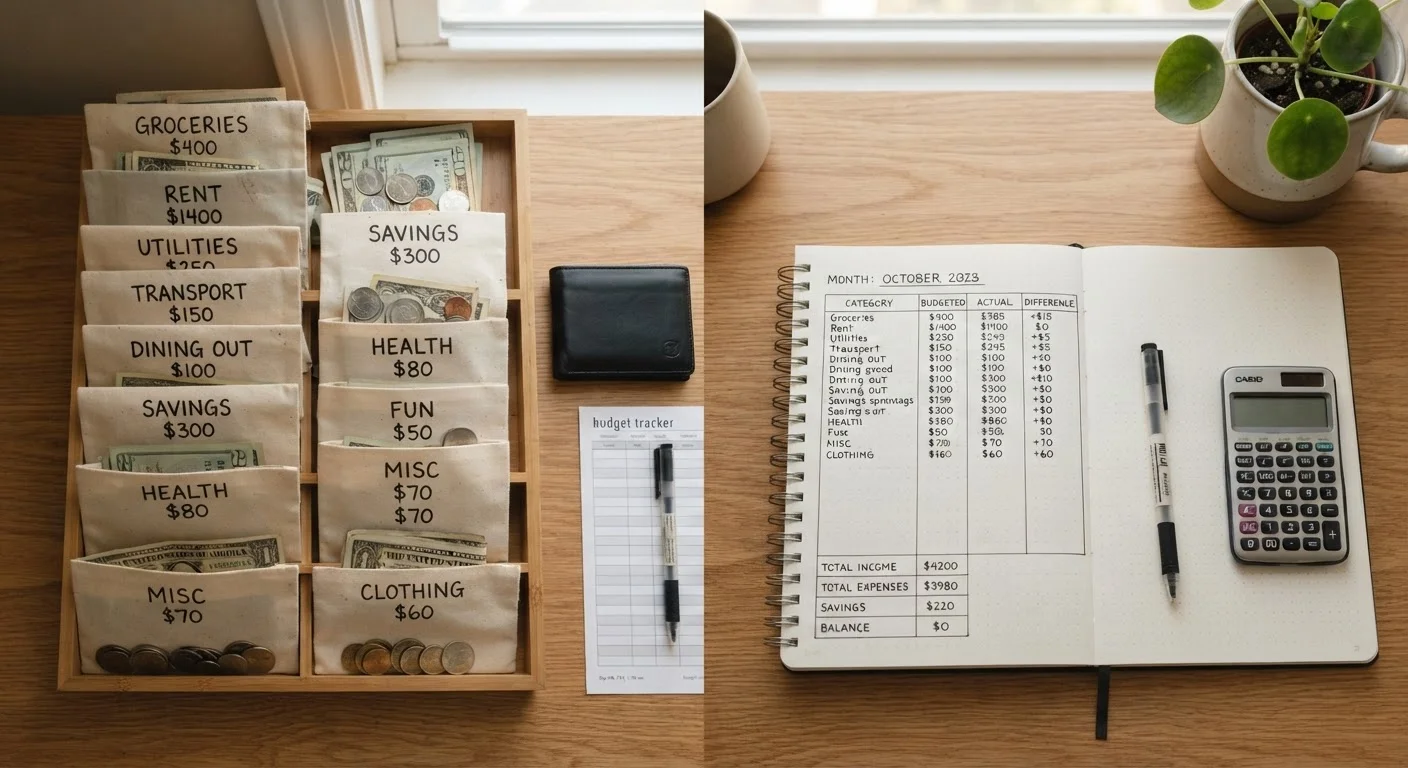
Option A
Zero-Based Budgeting
The structured, spreadsheet-friendly approach.
Best for: People who want detailed control over every dollar they earn each month, using a written or digital plan.
Option B
The Envelope Method
The tactile, cash-in-hand system.
Best for: People who tend to overspend and want a physical, visual way to cap spending in each category.
What Each Method Actually Does
Both zero-based budgeting and the envelope method share one core idea: every dollar you earn should have a job before you spend it. Beyond that, they work quite differently.
Zero-based budgeting means you start each month with your total take-home income and subtract planned expenses — rent, groceries, savings, debt payments, entertainment — until you reach zero. That zero doesn't mean you've spent everything; it means nothing is sitting unassigned. Dollars earmarked for savings are still yours, they're just given a purpose. This approach typically lives in a spreadsheet, a notebook, or a budgeting app.
The envelope method is older and more tactile. You divide your cash into labeled envelopes — one for groceries, one for gas, one for eating out, and so on. When an envelope is empty, spending in that category stops until next month. Some people now use digital versions of this system through banking apps that mimic envelope logic without physical cash.
If you've never built a spending plan before, our guide to building your first monthly budget walks through the basics before you commit to either method.
How They Compare Side by Side
Understanding the practical differences helps you choose the system you'll actually stick with. Before diving in, it also helps to know your expense types — see our piece on fixed vs. variable expenses to understand which spending categories are hardest to control.
| Criterion | Zero-Based Budgeting | The Envelope Method |
|---|---|---|
| Core mechanic | Assign every dollar on paper or digitally | Divide physical or virtual cash into categories |
| Best payment type | Cards, apps, or cash | Cash (or digital envelope apps) |
| Ease of setup | Moderate — requires listing all income and expenses | Simple — label envelopes and fill with cash |
| Spending control mechanism | Awareness and self-discipline | Hard stop when envelope is empty |
| Works with irregular income | Yes — recalculate each month | Harder — requires knowing cash amounts upfront |
| Tech-friendly | Yes — many apps support it | Partially — requires cash-friendly habits or specific apps |
| Learning curve | Moderate | Low |
~74%
Americans living paycheck to paycheck
A 2023 LendingClub report found roughly 74% of Americans reported living paycheck to paycheck at some point, highlighting the need for structured spending plans.
12–18%
Reduction in spending using cash vs. cards
Research in consumer behavior has consistently found that people tend to spend less when using physical cash compared to credit or debit cards.
Which One Is Right for You?
There's no universally superior method — the right system is the one you'll use consistently. A few questions help narrow it down:
- Do you use cash regularly? The envelope method loses much of its power if you primarily pay with cards or tap-to-pay. Zero-based budgeting works regardless of payment method.
- How detailed do you want to get? Zero-based budgeting rewards people who enjoy granular tracking. The envelope method is simpler to maintain day to day.
- Do you have irregular income? Both methods require adjustment when income varies month to month, but zero-based budgeting is generally easier to recalculate from scratch each pay period.
It's also worth knowing that some people combine elements of both — using zero-based planning to allocate their paycheck, then pulling cash for the categories where they struggle most. If you're worried these systems sound complicated or restrictive, our article on common budgeting myths addresses that directly.
Whichever system you start with, expect to adjust. If your budget isn't working after a month or two, that's a signal to tweak your categories — not to give up. Our guide on budget warning signs can help you diagnose what to change.
Digital Envelope Apps Are a Middle Ground
If the envelope method appeals to you but you rarely carry cash, several budgeting apps replicate the envelope concept digitally. You set a spending limit per category, and the app tracks deductions as you spend. This gives you the hard-cap discipline of the envelope method without needing physical cash. Look for apps that connect to your bank accounts and allow custom category limits.
This article is for general informational and educational purposes only. It does not constitute personalized financial advice. For guidance specific to your situation, consider speaking with a licensed financial professional.
The content on this site is for informational purposes only and is not a substitute for professional advice. Always consult a qualified professional for guidance specific to your situation.