

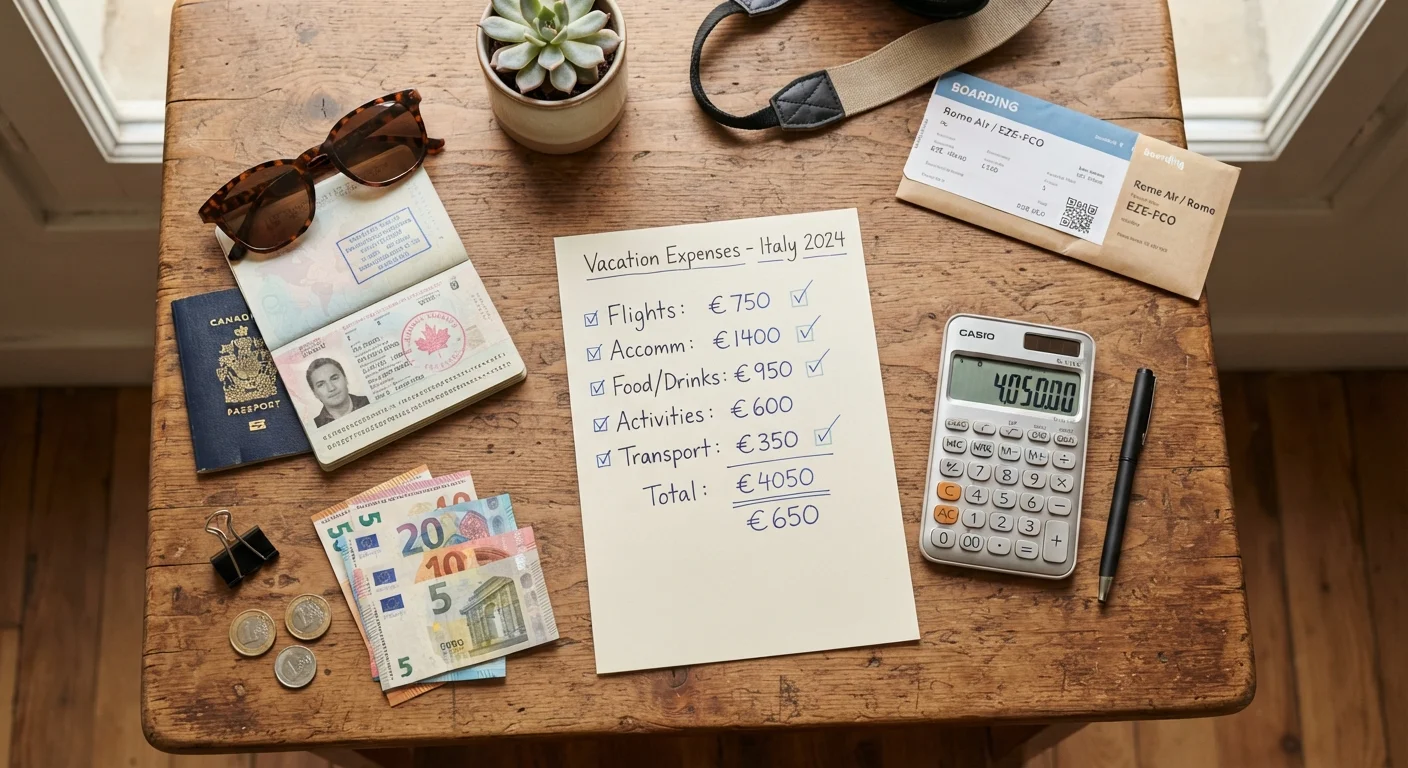
The Six Buckets That Eat Most Vacation Budgets
Most travelers think of a vacation budget as one big number. In reality, your spending falls into six predictable categories — and understanding each one is what makes trimming feel manageable rather than painful. For a deeper look at how Americans build and spend their travel funds, see our guide to travel funds.
Here is how those six categories typically break down for a domestic leisure trip:
- Transportation (airfare or driving): Often the single largest line item, frequently consuming 30–40% of a total trip budget for flights.
- Lodging: Usually the second-biggest expense, ranging widely based on destination, season, and accommodation type.
- Food and dining: Frequently underestimated; restaurant meals for a family or couple add up faster than most people expect.
- Activities and entertainment: Admission fees, tours, and experiences can quietly rival lodging costs in tourist-heavy destinations.
- Local transportation: Rideshares, car rentals, parking, and transit passes that accumulate throughout the trip.
- Incidentals: Souvenirs, tips, resort fees, baggage charges, and unexpected costs that most budgets fail to capture in advance.
Where Realistic Savings Actually Live
Not every category offers equal room to trim. Flights and hotel nightly rates are largely set by market conditions — meaningful savings there require flexibility on dates or destination, not just shopping harder. The categories below tend to offer the most realistic savings for the average traveler.
Incidentals
Small, often overlooked travel costs such as tips, resort fees, baggage charges, and in-room extras. They are rarely budgeted for individually but collectively can add hundreds of dollars to a trip.
Resort fee
A mandatory daily charge added by some hotels on top of the nightly room rate, often covering amenities like Wi-Fi, pool access, or fitness facilities. It is separate from the advertised price and disclosed at checkout.
Per diem
A fixed daily allowance for travel expenses, most commonly used in work travel but also a useful personal budgeting concept — setting a daily spending cap for food and local costs.
Travel fund
A dedicated savings account or pool of money set aside specifically for travel. Separating it from everyday savings makes it easier to track progress and avoid accidentally spending it on non-travel expenses.
Food and Dining
Dining is one of the highest-leverage places to adjust spending without sacrificing enjoyment. Choosing accommodations with a kitchen or kitchenette, eating a larger lunch instead of dinner at sit-down restaurants, and reserving splurge meals for one or two special nights can cut food costs significantly without eliminating the experience. Research published by the U.S. Travel Association consistently identifies dining as the category where travelers most commonly overspend relative to their original estimates.
Activities and Entertainment
Many destinations offer free or low-cost versions of their most popular experiences — public beaches, national parks, free museum days, and self-guided walking tours. Paying full price for every ticketed attraction is rarely necessary. Our article on domestic destinations with an international feel shows how choosing the right destination can itself dramatically lower activity costs.
Local Transportation
Rideshare costs in tourist areas can be surprisingly high. Where public transit is available, a day or multi-day transit pass almost always undercuts the equivalent in rideshares or parking fees. For family trips, the flying versus driving cost comparison is worth doing before you commit to any transportation plan.
Incidentals
Resort fees, checked baggage charges, and in-room Wi-Fi are examples of costs that feel small individually but accumulate quickly. Many travelers first encounter these hidden line items during the planning phase — our article on pre-trip budget drains covers the most common ones in detail.
~$2,100
Average American vacation spend per person
According to U.S. Travel Association annual reports, average leisure trip spending per person (domestic) typically falls in this range, though it varies widely by trip type.
Over 50%
Travelers who exceed their original vacation budget
Multiple consumer travel surveys indicate more than half of vacationers spend more than planned, most often citing dining and incidentals as the culprits.
Before finalizing any booking, run through the pre-booking checklist for budget travelers to catch savings opportunities before they disappear.
This article is for general informational purposes only. Travel costs vary significantly by destination, season, group size, and individual circumstances. Verify prices and fees directly with providers before booking.
The content on this site is for informational purposes only and is not a substitute for professional advice. Always consult a qualified professional for guidance specific to your situation.