

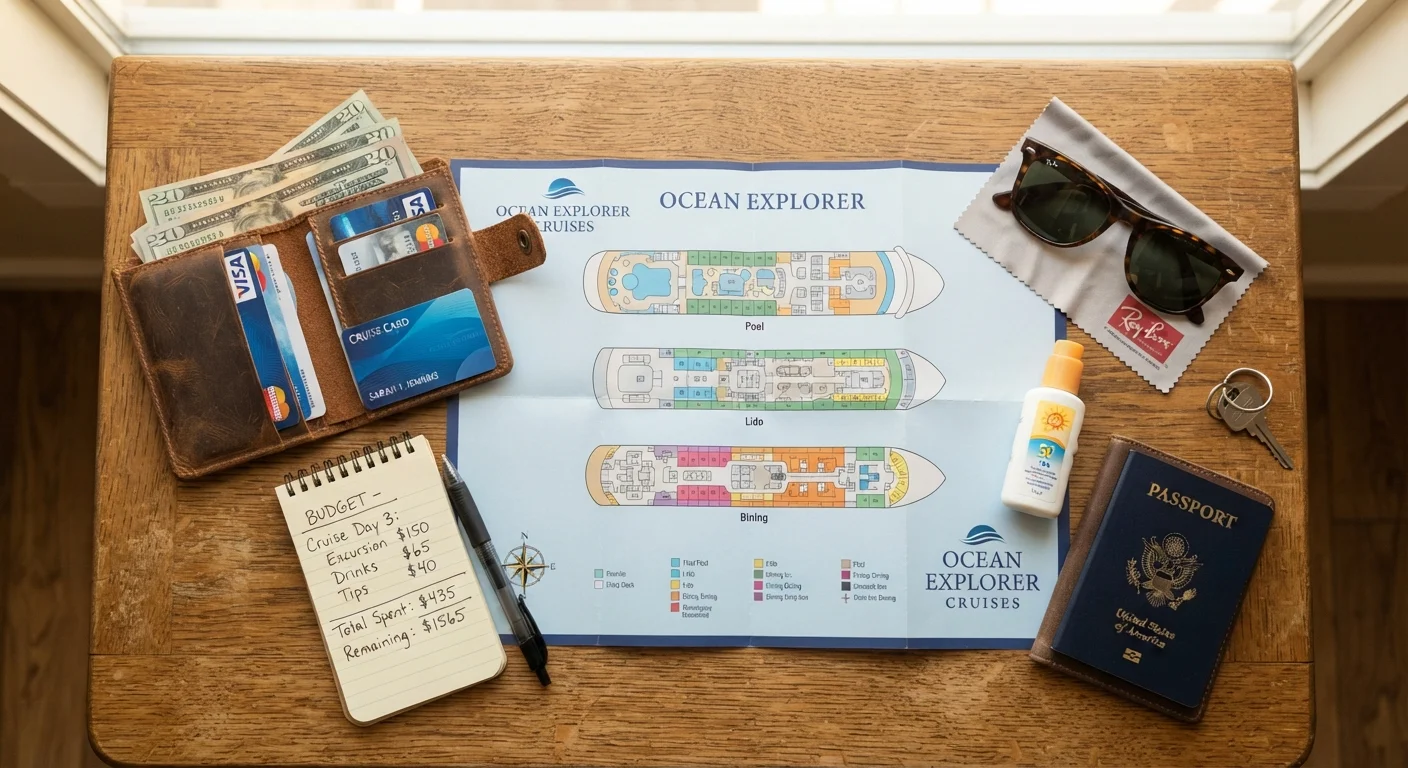
Why the Fare Is Just the Beginning
When most people price out a cruise, they focus on the advertised fare. That number is real, but it's only the foundation. Once you board, a separate spending clock starts ticking — and for many first-time cruisers, the final onboard bill comes as a genuine surprise.
Common costs that fall outside the base fare include automatic daily gratuities, alcoholic and specialty beverages, Wi-Fi access, specialty restaurant meals, spa services, casino spending, and photographs. In port, you may add shore excursions, shopping, meals ashore, and local transportation. Understanding this landscape before you sail is the most important step toward staying in control of your money. For a fuller picture of what tends to catch travelers off guard, see our article on hidden cruise costs.
Calculate your total gratuity cost before you book, not after
Automatic daily gratuities are charged to your onboard account on most cruise lines regardless of service satisfaction. For a 7-night sailing with two travelers, this can add $210–$280 or more to your bill. Factoring this in upfront prevents a budget gap at the end of your trip.
Evaluate drink packages honestly against your actual consumption habits
Cruise lines market beverage packages aggressively, and they can offer value for heavy drinkers — but they often don't break even for moderate consumers. Doing a simple daily drink estimate before purchasing helps you avoid paying for a package that won't pay off.
Set a per-port cash or card limit for each day in port
Port days create multiple spending temptations — excursions, meals, souvenirs, taxis — that compound quickly across a multi-stop itinerary. Deciding in advance how much each port day is worth to you prevents small purchases from accumulating unnoticed.
Monitor your onboard account balance at least once every two days
Most cruise lines allow you to review your shipboard account through a TV menu, kiosk, or smartphone app. Checking regularly surfaces unexpected charges — like a minibar item, a photo package, or a specialty dining fee — while there's still time to address them with guest services.
Separate 'included' costs from 'extra' costs in your pre-trip research
What's included in a cruise fare varies meaningfully by cruise line and fare category. Some lines bundle specialty dining or Wi-Fi; others charge for everything beyond the main dining room and basic buffet. Reading your booking confirmation carefully prevents false assumptions about what you've already paid for.
Book popular shore excursions early and compare prices before committing
High-demand excursions — submarine rides, cooking classes, snorkeling trips — sell out, and last-minute bookings often come at a premium or aren't available at all. Comparing ship-sold prices against independent operators for the same experience can reveal meaningful savings without sacrificing quality.
Best Practices for Budgeting Onboard Spending
Applying a few straightforward habits before and during your voyage makes a significant difference in what you spend. Each practice below addresses a specific pressure point where cruise budgets tend to leak.
Planning for Port Days
Port days introduce a separate spending layer. Whether you book an organized excursion or explore independently, setting a per-port budget in advance keeps cumulative costs from drifting upward throughout the itinerary.
Shore excursions sold through the cruise line offer convenience and a guaranteed return policy — if the trip runs long, the ship waits. Independent tours and self-guided exploration often cost less but require more personal planning and punctuality. Our guide to shore excursions through the ship vs. booking on your own walks through the trade-offs in detail so you can decide what fits your comfort level and budget.
Independent Port Exploration: Know the Risk
If you book excursions or explore on your own rather than through the cruise line, you are responsible for returning to the ship on time. Cruise ships depart on schedule regardless of whether all passengers are aboard. Always build extra time into your independent port day, know the ship's departure time, and keep the port agent's phone number with you as a backup.
For broader money-management strategies that apply before and after your trip, the Budgeting Basics hub offers practical frameworks for tracking and controlling spending.
$150–$300+
Typical extra spending per person per cruise day
Industry observers and personal finance travel writers commonly estimate onboard and port spending beyond the base fare can range from $150 to over $300 per person per day, depending on spending habits and itinerary.
$15–$20
Average daily gratuity per person on major cruise lines
Most large cruise lines publish automatic gratuity rates in this range per person per day, though rates vary by line and stateroom category — always verify with your specific cruise line.
Putting It All Together Before You Board
The most effective cruise budgeters do their math before embarkation day, not after. Add up your estimated costs across each spending category — gratuities, beverages, excursions, and incidentals — and set a hard daily limit for discretionary spending. Knowing that number in advance gives you a clear signal when to slow down rather than discovering it on your final statement.
Gratuity policies deserve particular attention because they're automatic on most major cruise lines and non-negotiable in most cases. Our article on how cruise gratuities work explains exactly who receives those charges and what they cover. Timing your sailing strategically can also reduce base fares, freeing up budget for onboard spending — cruise seasons and itineraries explains how timing shapes both price and experience.
Build a Simple Pre-Trip Budget Worksheet
Before you sail, create a basic spreadsheet or notes document with rows for gratuities, beverages, specialty dining, excursions, and a miscellaneous buffer. Assign a dollar amount to each category and total it up. Seeing the full picture in advance — not just the cruise fare — helps you make deliberate trade-offs, like skipping a drink package in favor of a more expensive excursion.
This article is for general informational purposes only. Prices, policies, and fees vary by cruise line and itinerary. Always verify current costs directly with your cruise provider before booking.
The content on this site is for informational purposes only and is not a substitute for professional advice. Always consult a qualified professional for guidance specific to your situation.