

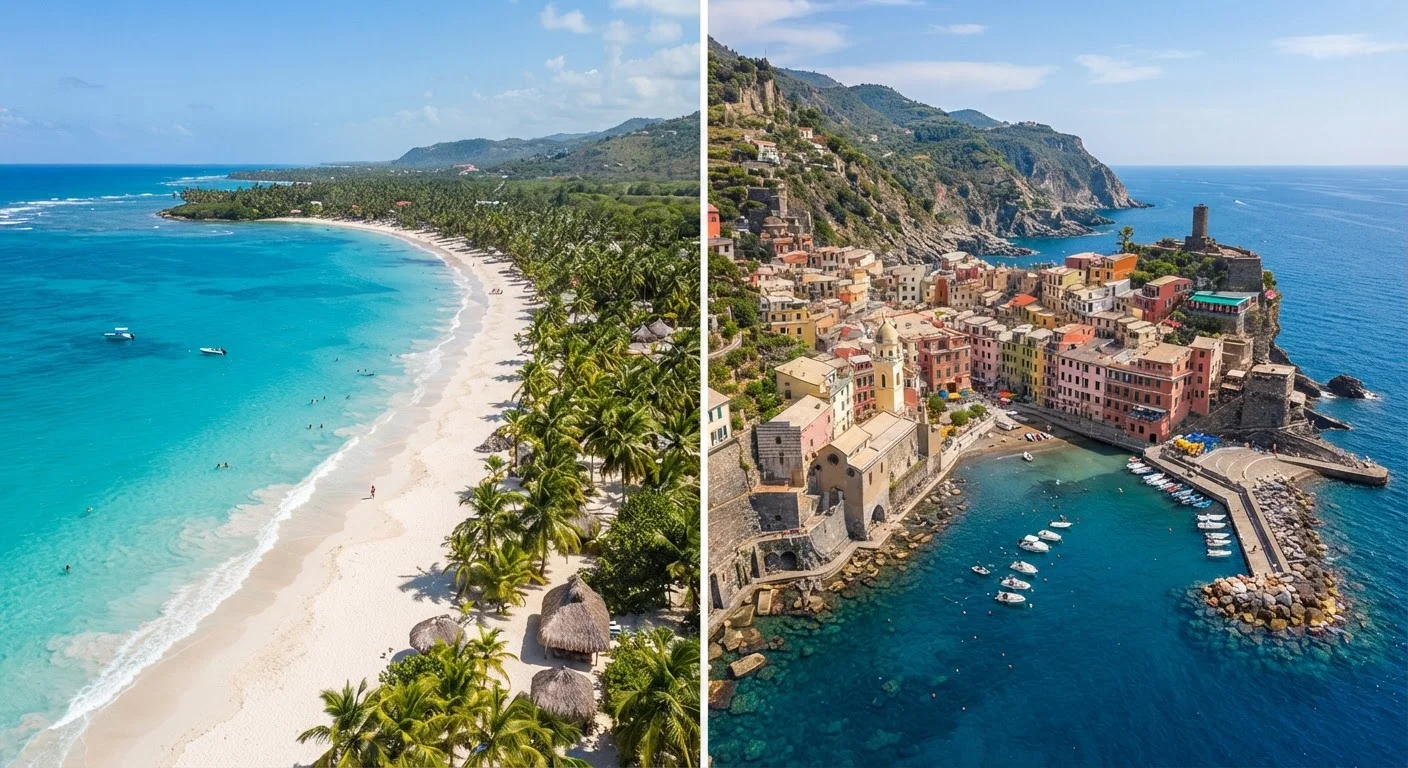
Option A
Caribbean Cruise
The sun-and-sand escape built for relaxation.
Best for: Travelers who want warm weather, beach days, and an easygoing pace with minimal planning.
Option B
Mediterranean Cruise
The cultural deep-dive across history and cuisine.
Best for: Travelers who want to explore ancient landmarks, diverse cuisines, and multiple countries in one trip.
How Climate and Timing Shape Each Destination
Climate is often the deciding factor before anything else. Caribbean ports — spanning islands from the Bahamas to Barbados — maintain warm, humid temperatures throughout the year, typically between 75°F and 90°F. That consistency makes Caribbean sailings viable any time, though travelers should account for hurricane season, which runs roughly June through November. Learn how timing shapes your cruise experience before locking in a departure date.
Mediterranean sailings run on a tighter seasonal window. Most itineraries operate between April and October, when temperatures across southern Europe and North Africa are comfortable for sightseeing. Summer months (July–August) bring peak heat and heavy crowds at major landmarks. Spring and early fall offer a more moderate experience, and fares are sometimes lower outside of peak summer weeks.
Hurricane Season Doesn't Mean Automatic Risk
Hurricane season (June–November) increases the statistical likelihood of disruptions in the Caribbean, but itineraries are adjusted or rerouted when storms develop. Many travelers cruise successfully during this period. That said, cruise travel insurance becomes especially relevant if you're sailing during these months. Check your cruise line's weather policy before booking.
Port Culture and Daily Pace
Caribbean ports are generally beach-oriented. A typical day might involve a short tender ride or dock walk to a sandy beach, a snorkel tour, or a local market stroll. The pace is relaxed, and most travelers find it easy to return to the ship with time to spare. This low-pressure structure suits first-timers and those who want vacation to feel genuinely restful.
Mediterranean ports front-load your day with purpose. Visiting the Colosseum in Rome, the Acropolis in Athens, or the old city of Dubrovnik requires transit time, some physical effort, and thoughtful planning. Whether you book shore excursions through the ship or plan independently, the volume of worthwhile experiences per port is significantly higher — but so is the mental energy required.
| Criterion | Caribbean Cruise | Mediterranean Cruise |
|---|---|---|
| Typical Season | Year-round (watch hurricane season) | April – October |
| U.S. Departure Ports | Miami, Galveston, Port Canaveral | Requires transatlantic flight |
| Average Port Focus | Beaches, snorkeling, local markets | Historic landmarks, museums, cities |
| Countries Per Itinerary | 1–3 (island nations) | 4–7 (European/North African) |
| Daily Pace | Relaxed and flexible | Active and planned |
| Overall Budget Impact | Lower (no long-haul flight) | Higher (international airfare needed) |
| Best Fit | First-timers, families, beach lovers | Culture seekers, repeat cruisers |
Cost Differences Worth Knowing Before You Book
Cruise fares for both regions can range from budget to luxury depending on the line and cabin type. The real cost difference often lies outside the fare itself. For most Americans, a Caribbean cruise departs from a domestic port — Miami, Port Canaveral, Galveston — meaning no international airfare. A Mediterranean cruise almost always requires a round-trip transatlantic flight to reach embarkation cities like Barcelona, Rome (Civitavecchia), or Venice, which can add $600–$1,500 or more per person depending on timing and origin.
Onboard spending patterns differ, too. Caribbean ports tend to have lower-cost independent options for beach access and water activities. Mediterranean ports may involve paid museum admissions, guided tours, and higher-cost local transport. Regardless of destination, protecting your investment with cruise travel insurance is worth understanding before you sail.
~70%
U.S. cruisers who choose Caribbean itineraries
The Caribbean consistently ranks as the most popular cruise destination for American travelers, according to Cruise Lines International Association (CLIA) research.
$800–$1,500+
Estimated transatlantic airfare cost per person
Round-trip economy flights from major U.S. cities to common Mediterranean embarkation ports typically fall in this range, though prices vary significantly by route and timing.
5–7
Countries visited on a typical Mediterranean itinerary
A standard seven-night Western Mediterranean sailing commonly includes ports in Spain, France, Italy, and sometimes Monaco or Malta.
Which Cruise Type Is Right for You?
If this is your first cruise and you're uncertain about the format itself, the Caribbean is a forgiving starting point. Shorter itineraries (3–7 nights), familiar food options, and simpler port days let you ease into cruising without feeling overwhelmed. You can explore more about how ocean cruise ships differ from other vessel types in our guide to cruise line categories.
If you've cruised before — or if exploring new cultures, trying regional cuisines, and walking through ancient history sounds more compelling than another beach day — the Mediterranean will likely deliver a more memorable experience. Both options have genuine merit; neither is universally superior. The decision comes down to what kind of traveler you are right now, and what you want this particular trip to feel like.
This article provides general travel information for educational purposes. Prices, itineraries, and entry requirements vary by provider and can change. Always verify current conditions and requirements with official government sources and your cruise line before booking.
The content on this site is for informational purposes only and is not a substitute for professional advice. Always consult a qualified professional for guidance specific to your situation.