

Ocean Cruises: The Classic Starting Point
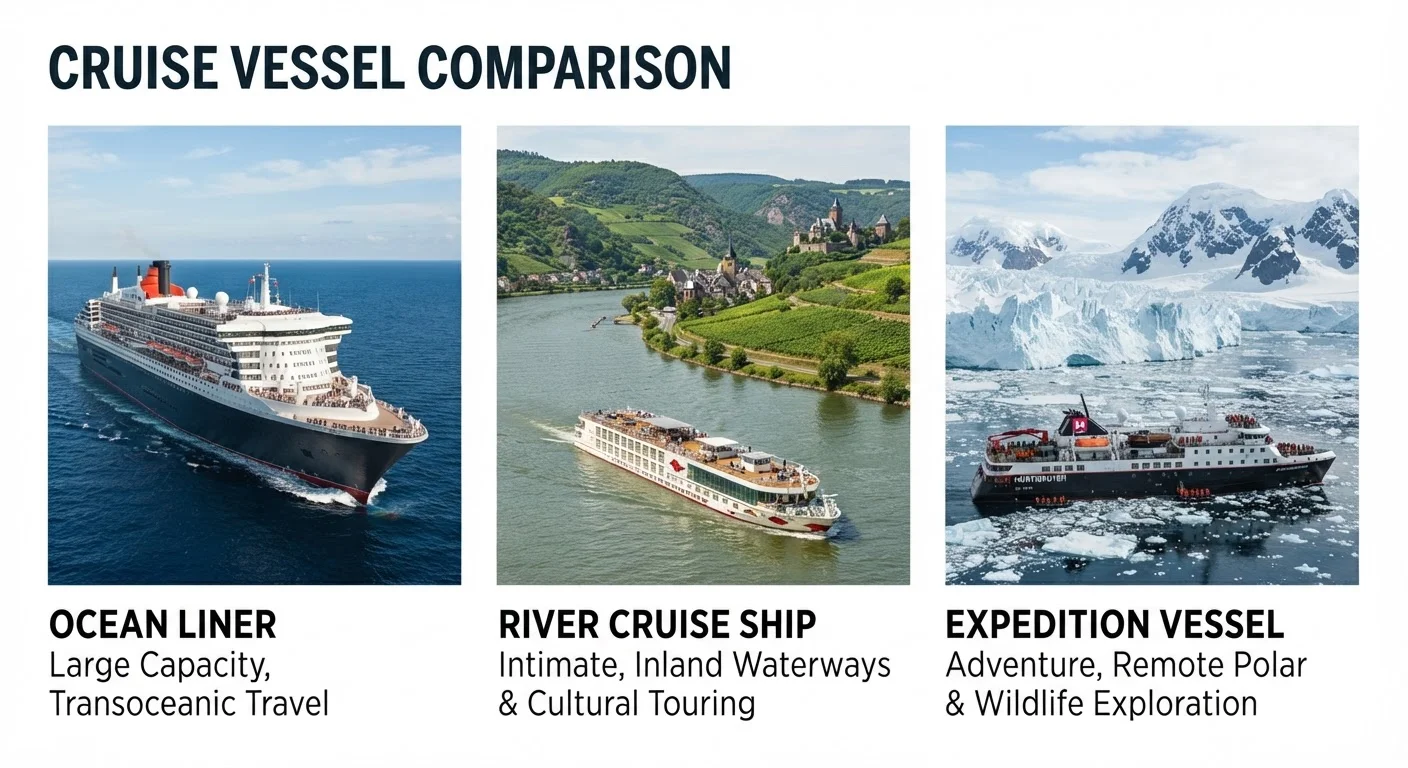
When most Americans picture a cruise, they're imagining an ocean cruise — a large ship sailing between coastal ports, often with a full schedule of onboard activities. Ships in this category range from midsize vessels carrying 500 passengers to mega-ships with capacities exceeding 5,000 guests.
Ocean lines typically fall into three market tiers:
- Contemporary: Mainstream lines with broad appeal, multiple dining options, pools, entertainment, and a wide price range.
- Premium: Slightly smaller ships, more refined dining, and enhanced service — a step up without reaching full luxury pricing.
- Luxury/Ultra-Luxury: Small ships, butler service, all-inclusive pricing, and sophisticated itineraries (covered in more detail below).
Ocean cruises are a practical first choice for new cruisers because everything — accommodation, meals, entertainment, and transport between ports — is bundled into one fare. See what your base fare actually covers before assuming everything is included.
Match Ship Size to Your Travel Style
If crowds and noise bother you, a mega-ship with 5,000 passengers may feel overwhelming regardless of the itinerary. Conversely, a 100-passenger river ship may feel too quiet if you're looking for nonstop entertainment. Think honestly about how you prefer to spend your evenings before choosing a category.
River Cruises: Slow Travel on Inland Waterways
River cruise ships are dramatically smaller than ocean vessels — typically 100 to 200 passengers — and navigate inland waterways such as the Rhine, Danube, Mekong, and Mississippi. Because they dock in the heart of towns and cities, passengers can often walk directly off the ship into local markets, historic districts, and vineyards.
The onboard experience is quieter and more adult-oriented. Expect comfortable but compact staterooms, one or two dining venues with locally inspired menus, and itineraries that change port daily. Entertainment is minimal compared to ocean ships, but cultural enrichment — lectures, cooking demonstrations, guided excursions — fills that space.
River cruises are especially popular in Europe and Southeast Asia. They tend to cost more per day than contemporary ocean lines, reflecting the smaller ship size and included excursions. Timing matters considerably on river routes; seasonal water levels and weather can affect itineraries and port access.
~323
Ocean cruise ships operating globally
According to the Cruise Lines International Association (CLIA), the global ocean cruise fleet numbered over 320 ships as of recent industry reports.
150–200
Average river cruise passenger capacity
River ships are intentionally small; most European river vessels carry between 100 and 200 passengers, enabling access to shallow waterways and town-center docking.
~$4,000+
Estimated average cost per person for expedition cruises
Expedition voyages to remote destinations such as Antarctica or the Arctic typically start well above $4,000 per person for a 10–14 day itinerary, reflecting specialized ship operations and included expert guides.
Expedition Cruises: Remote Destinations, Small Ships
Expedition cruises prioritize destination access over onboard luxury. Ships are small — often 50 to 200 passengers — and purpose-built to reach places larger vessels cannot: Antarctica, the Arctic, the Galápagos Islands, Alaska's backcountry, and remote Pacific atolls.
Onboard, you'll find naturalist guides, scientists, and expedition leaders who deliver daily lectures and lead shore landings via inflatable zodiac boats. Cabins are functional rather than opulent. Activities center on wildlife observation, kayaking, hiking, and snorkeling rather than Broadway-style shows or casinos.
Expedition itineraries require flexibility — weather and wildlife conditions can alter plans daily. This unpredictability is part of the appeal for adventure-minded travelers, but it's worth understanding before you book. Because remote routes often involve medical evacuation risk, reviewing cruise-specific travel insurance is especially important for this category.
Luxury, Specialty, and Niche Categories
Beyond the three main categories, the cruise industry includes several niche segments worth knowing:
- Luxury and Ultra-Luxury Lines
- Small ships (200–700 passengers), near-one-to-one staff ratios, and fully inclusive pricing covering premium drinks, gratuities, shore excursions, and even airfare on some itineraries. Suited to experienced cruisers who want a refined, uncrowded experience.
- Sailing Ships and Wind-Assisted Vessels
- Small ships with actual sails, blending the romance of traditional seafaring with modern amenities. Itineraries focus on boutique ports inaccessible to large ships.
- Repositioning Cruises
- When cruise lines move ships between regions at the start or end of a season, they sell these transatlantic or transpacific crossings — often longer voyages with many sea days — at lower prices than standard itineraries.
Each niche suits a different traveler profile. The right category isn't simply about budget; it's about how you want to spend your time at sea and on shore. For a practical walkthrough of what actually happens once you board, see what to expect from boarding to disembarkation.
Entry Requirements Vary by Cruise Type
Ocean itineraries that visit multiple countries — and virtually all river and expedition routes — involve border crossings with different visa and documentation rules. Always verify current passport validity requirements, visa policies, and any health documentation (such as vaccinations) directly with official government sources and your cruise operator well before departure. Requirements can change on short notice.
Frequently Asked Questions
Ocean cruises take place on large ships sailing open seas, often visiting coastal cities and islands. River cruises use smaller vessels to navigate inland waterways like the Danube or Mississippi, docking directly in town centers. River ships carry far fewer passengers and focus on cultural depth over onboard entertainment.
Expedition cruises can work for motivated beginners, but they require some physical comfort with outdoor activities like zodiac landings and hiking. They suit travelers who prioritize wildlife and remote landscapes over pools and shows. First-time cruisers who prefer a gentler introduction may want to start with an ocean or river cruise.
Contemporary ocean cruise lines generally offer the widest range of price points, making them accessible for budget-conscious travelers. River and expedition cruises tend to cost more per day because of smaller ship sizes and more specialized itineraries. Costs vary significantly by season, itinerary, and cabin type.
Luxury cruise lines operate smaller ships with higher staff-to-guest ratios, more inclusive pricing (covering drinks, gratuities, and excursions), and elevated dining and cabin standards. They appeal to experienced travelers who prioritize service and exclusivity. Prices are substantially higher than mainstream ocean lines.
Yes — international river cruises, such as those in Europe or Southeast Asia, require a valid U.S. passport and may require visas for certain countries along the route. Always verify current entry requirements with official government sources and your cruise operator before departure.
Large ocean cruise ships on contemporary lines are generally the most family-friendly option, offering dedicated kids' clubs, multiple dining venues, pools, and onboard entertainment. Expedition and luxury lines are often adult-oriented and may have age restrictions or limited children's programming.
The content on this site is for informational purposes only and is not a substitute for professional advice. Always consult a qualified professional for guidance specific to your situation.