

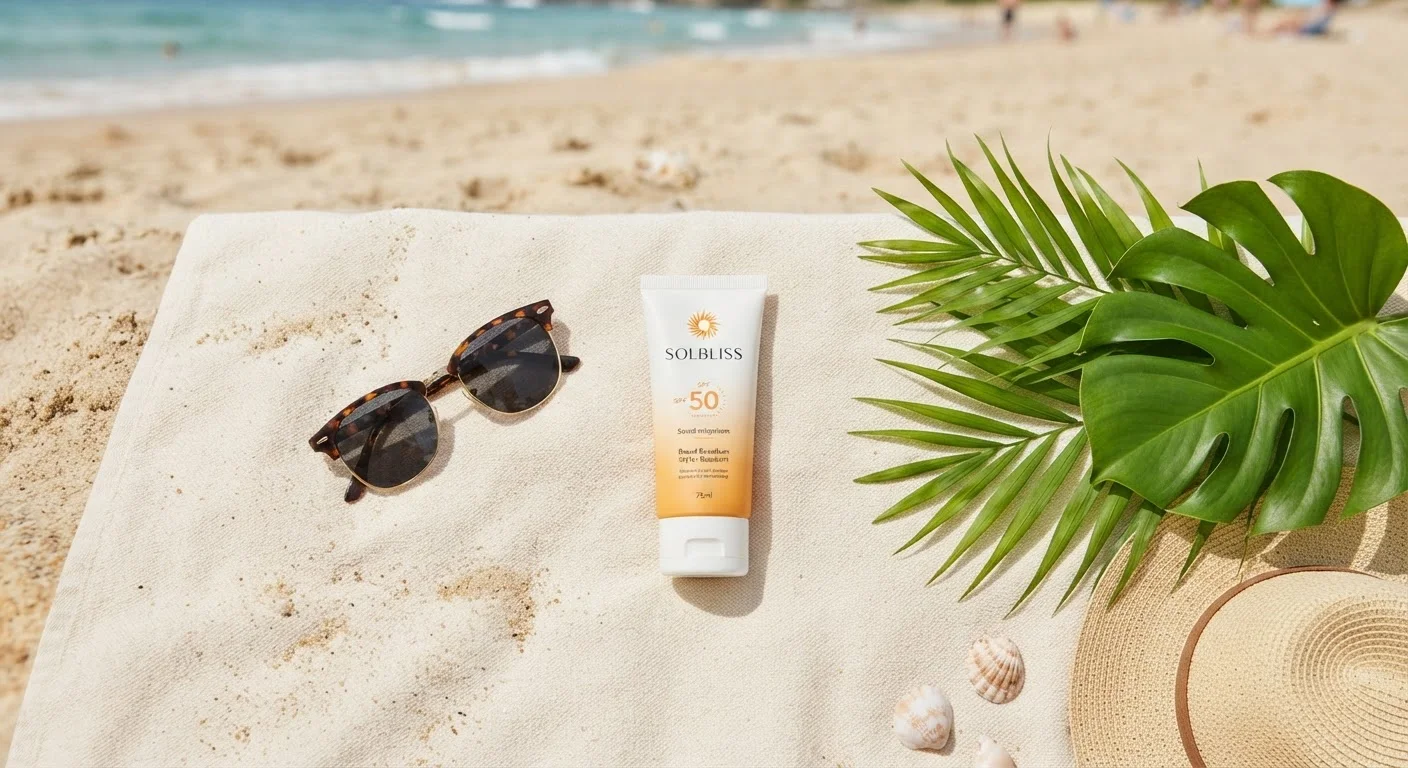
Why Dermatologists Keep Coming Back to SPF
Walk into any dermatologist's office and ask what one product everyone should use. The answer is almost always sunscreen. While debates swirl endlessly in the beauty world — retinol vs. bakuchiol, toner or no toner, expensive serums vs. drugstore dupes — SPF stands apart as a point of near-universal agreement among skin health professionals.
The reason is evidence. Decades of peer-reviewed research link UV exposure to sunburn, premature skin aging, and increased skin cancer risk. The American Academy of Dermatology and similar bodies consistently recommend daily broad-spectrum sunscreen as a cornerstone of skin health — not as a trend, but as a protective habit.
If you're just starting to figure out what your skin actually needs, this is the one step worth getting right first. See our beginner's guide to building a skincare routine for how SPF fits into a broader daily practice.
97%
UVB rays blocked by SPF 30
SPF 30 filters approximately 97% of UVB rays under proper application conditions, according to FDA sunscreen testing standards.
80%
UV rays that penetrate cloud cover
The Skin Cancer Foundation notes that up to 80% of the sun's UV rays can reach your skin even on cloudy days.
1 in 5
Americans who develop skin cancer
The American Academy of Dermatology estimates that 1 in 5 Americans will develop skin cancer in their lifetime.
Decoding SPF Numbers, UVA, and UVB
The SPF number on a label measures protection specifically against UVB rays — the wavelength most associated with sunburn and a key driver of skin cancer risk. But the sun also emits UVA rays, which penetrate more deeply into the skin and play a larger role in premature aging (think fine lines and uneven tone). UVA damage happens even when you don't visibly burn.
That's why the phrase "broad spectrum" matters so much. It signals that a sunscreen is formulated to address both UVA and UVB — not just the burn-causing rays. Any sunscreen without that label only tells you half the story.
As for the numbers themselves: SPF 30 blocks approximately 97% of UVB rays, SPF 50 blocks about 98%, and SPF 100 reaches roughly 99%. The protection increases incrementally, not exponentially. What closes the gap far more than SPF numbers is how much you apply and how consistently you reapply.
Want to get better at reading what's actually on product labels? Learn how to decode skincare labels without getting tripped up by marketing language.
How to Apply Sunscreen So It Actually Works
Here's the part that surprises most people: the SPF on the label assumes you're applying a specific amount — and studies consistently show most people use far less than that. For the face alone, a nickel-sized dollop is the commonly cited guideline. For the body, about one ounce (a full shot glass) is the standard recommendation for a swimsuit-level exposure situation.
Make Application Quantity a Habit
A good rule of thumb: for the face, use roughly a nickel-sized amount. For exposed body areas, think of filling a shot glass. Most people apply too little, which dramatically reduces the actual protection they receive. Applying generously and evenly — including ears, neck, and the back of hands — closes the gap between the label's promise and real-world results.
Timing matters too. Chemical sunscreens are generally recommended to be applied about 15 minutes before sun exposure to allow the active ingredients to absorb. Mineral sunscreens work immediately upon application.
Reapplication is non-negotiable if you're spending time outdoors: every two hours, or immediately after swimming or heavy sweating — even if the label says "water resistant." Water resistance doesn't mean waterproof, and it has a defined time limit (typically 40 or 80 minutes).
Cloud cover doesn't equal protection either. Up to 80% of UV rays can penetrate cloud cover, which is why dermatologists recommend making sunscreen a daily habit regardless of the weather. It pairs well with the non-product skin habits — like avoiding peak sun hours — that also make a real difference.
Mineral vs. Chemical: What the Fuss Is Really About
You've probably seen sunscreens marketed as "mineral" or "physical" versus "chemical." Here's a plain breakdown of what those terms actually mean.
- Mineral sunscreens use active ingredients like zinc oxide or titanium dioxide. These sit on top of the skin and deflect UV rays. They tend to be less irritating, making them a common recommendation for sensitive skin.
- Chemical sunscreens use compounds such as avobenzone or oxybenzone. These absorb into the skin, take in UV energy, and release it as heat. They're often more cosmetically elegant — invisible on the skin and easier to layer under makeup.
Both are recognized as effective by dermatological standards. The online debate about chemical filters can feel alarming, but most regulatory bodies consider currently approved chemical sunscreen ingredients safe at concentrations used in consumer products. If you have concerns or a specific skin condition, a dermatologist can give you personalized guidance.
Be wary of sweeping "toxic" or "all-natural is always better" claims in beauty marketing — these aren't always grounded in evidence. Our look at common skincare myths covers how to spot the difference between marketing and fact.
This article is for general informational and educational purposes only and is not a substitute for professional medical or dermatological advice. Consult a qualified healthcare provider for guidance specific to your skin and health needs.
Frequently Asked Questions
Most dermatologists recommend SPF 30 as a practical minimum for daily use. SPF 50 offers slightly more protection and is a reasonable choice if you'll spend extended time outdoors. The difference between SPF 50 and SPF 100 is smaller than the numbers suggest — consistent, correct application matters far more than chasing the highest number.
If you're working near windows, UVA rays can penetrate glass and reach your skin. For a typical indoor day away from windows, reapplication is less critical — but applying sunscreen every morning as a baseline habit is still valuable. If you head outside, reapply every two hours.
Yes. UV damage and skin cancer risk affect all skin tones, though they can look different and may be detected later in people with deeper complexions. Mineral formulas have historically left a white cast on darker skin, but modern tinted and finely-milled options minimize this. Chemical sunscreens tend to be more cosmetically invisible.
Mineral sunscreens use ingredients like zinc oxide or titanium dioxide to physically deflect UV rays. Chemical sunscreens use compounds that absorb UV energy and convert it to heat. Both types are considered effective by dermatological bodies. Personal preference, skin sensitivity, and cosmetic finish are the main factors in choosing between them.
SPF in a moisturizer or foundation can contribute to protection, but most people apply these products too lightly to achieve the labeled SPF. A dedicated sunscreen applied in the right amount is more reliable. Using a moisturizer with SPF is better than nothing, but it's not a full substitute for standalone sunscreen if you're outdoors.
Yes. The FDA requires sunscreens to remain effective for at least three years, and most products carry an expiration date. Sunscreen stored in high heat — like a hot car or beach bag in direct sun — can degrade faster. Check the date and replace if the formula has separated, changed color, or smells off.
The content on this site is for informational purposes only and is not a substitute for professional advice. Always consult a qualified professional for guidance specific to your situation.