

The Spending Blind Spot Most People Have
Ask most people how much they spend each month and they'll give you a number — then express genuine surprise when the actual total is significantly higher. This isn't a character flaw. It's a natural result of how spending actually works: dozens of small transactions spread across multiple accounts, cards, and apps, each one feeling minor in the moment.
The first step to understanding your finances isn't making a budget. It's looking backward — honestly and specifically — at what you've already spent. Once you see those patterns clearly, everything else becomes much easier.
You Don't Need Special Software to Start
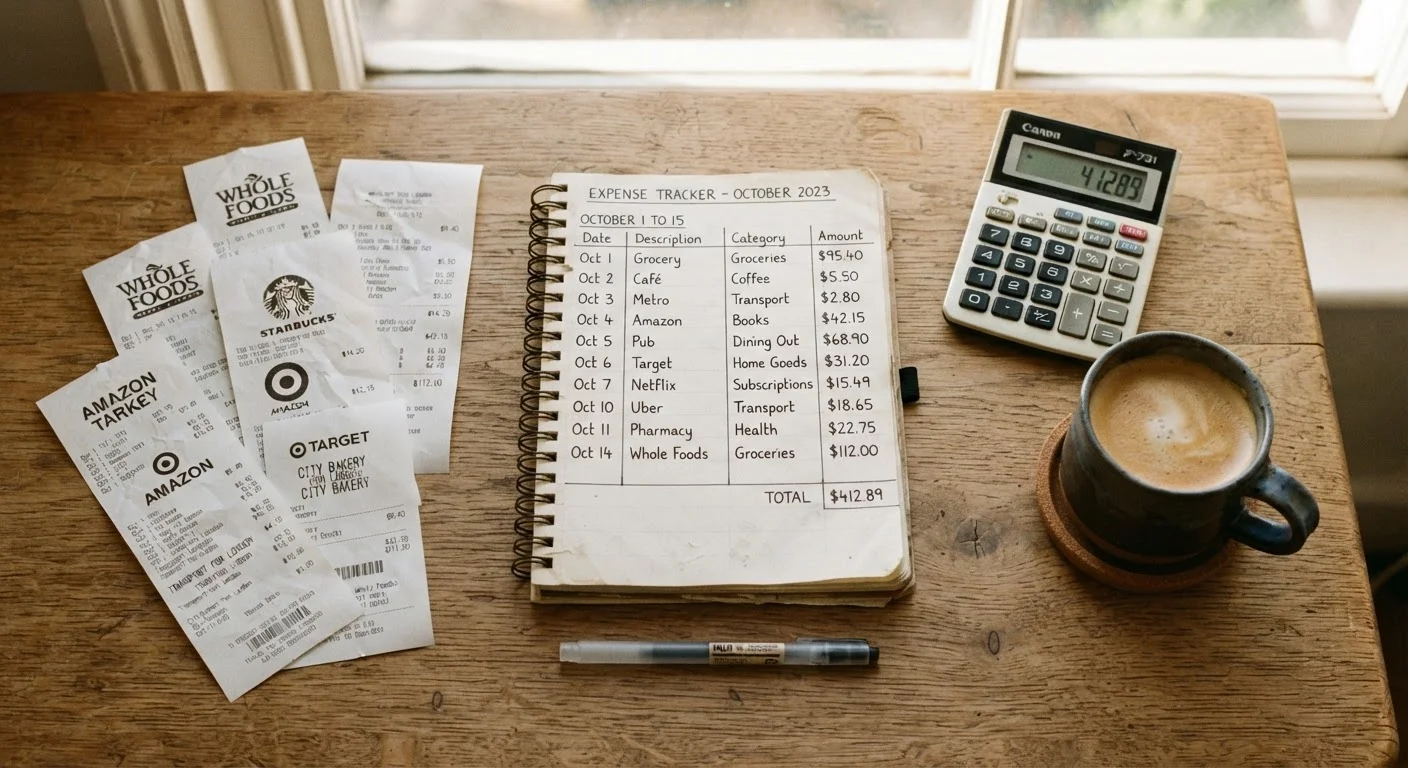
Many free tools and apps can help categorize spending automatically, but they aren't required. A simple notebook, a spreadsheet, or even handwritten categories on paper work just as well for getting your first clear picture. The method matters far less than the act of doing it.
The Three Buckets Every Dollar Falls Into
It helps to sort your spending into three broad categories rather than trying to track every individual line item at once.
- Fixed needs: Rent or mortgage, car payment, insurance premiums, minimum debt payments. These amounts are predictable and largely non-negotiable month to month.
- Variable needs: Groceries, gas, utilities, medical copays. These are necessary but fluctuate — and they're often where people have the most room to adjust spending habits without major lifestyle changes.
- Wants and discretionary spending: Dining out, entertainment, subscriptions, shopping, hobbies. This category isn't frivolous — it's part of a real life — but it's also where untracked spending tends to pile up fastest.
One popular framework for thinking about these proportions is the 50/30/20 rule, which suggests dividing take-home pay into needs, wants, and savings. It won't fit everyone's situation perfectly, but it provides a useful reference point for evaluating your own split.
$1,000+
Average monthly household spending on food
According to U.S. Bureau of Labor Statistics Consumer Expenditure data, the average American household spends over $1,000 per month on food when combining groceries and dining out.
~32%
Share of household budget spent on housing
BLS Consumer Expenditure data consistently shows housing as the largest single spending category for American households, averaging around 32% of after-tax income.
$219
Average monthly subscription spending per consumer
Research from West Monroe has found that consumers regularly underestimate their total subscription costs, with actual monthly totals often far exceeding what they self-report.
How to Actually Trace Your Spending
The most reliable method is to pull two months of statements from every account you use — checking, savings, and every credit card. Most banks let you download these as PDFs or spreadsheets. Then go line by line and assign each transaction to one of your three categories.
It sounds tedious, and it can be. But two months gives you enough data to spot patterns rather than outliers. One expensive month skews the picture; two months reveals what's actually normal for you.
Look especially hard at three areas that catch people off guard:
- Subscriptions and recurring charges: Streaming services, cloud storage plans, gym memberships, meal kit deliveries, app subscriptions. Many people are paying for services they barely use or forgot they signed up for.
- Food spending in total: Groceries and restaurants are often tracked separately, but combined food spending is frequently one of the largest categories in a household budget — and one of the most adjustable.
- Convenience and impulse purchases: Delivery fees, convenience store runs, small app purchases. Individually minor; collectively significant.
Once you have a clear picture of your baseline, you're ready to take the next step. See our plain-English guide to building your first monthly budget for a practical walkthrough from there.
Start With Just One Month of Statements
If pulling two months of data feels overwhelming, start with one. Even a single month of honest categorization will reveal patterns you didn't know existed. The goal is progress, not perfection — you can always go back and review more history once you have the habit in place.
Turning Awareness Into a Plan
Seeing where your money went last month is informative. Deciding where it goes next month is empowering. The point isn't to judge your past choices — it's to make future ones more intentional.
If your spending reveals that debt interest is quietly consuming a meaningful share of your income, that's worth understanding clearly. Carrying a credit card balance costs more than most people realize, and seeing the real monthly impact can motivate action in a way that abstract warnings never do.
Once you've set a spending plan, the key is revisiting it regularly. A monthly budget review routine doesn't need to take more than 20 minutes — but it keeps your plan from going stale as your expenses shift over time. You can also use a monthly savings audit checklist to catch gaps before they become real problems.
Understanding your cash flow isn't a one-time event. It's an ongoing habit — and one that pays off far more than any single financial tip ever could.
This article is for general informational and educational purposes only and does not constitute personalized financial advice. For guidance tailored to your situation, consider consulting a licensed financial professional.
Frequently Asked Questions
Pull 30–60 days of statements from every bank account and credit card you use. Categorize each transaction — housing, food, transport, subscriptions, entertainment — and add them up. Most banks and credit unions also offer built-in spending summaries that do much of this work automatically.
A widely cited guideline suggests keeping housing costs at or below 30% of gross income, though many Americans pay more due to local market conditions. The key is understanding what percentage you're currently paying so you can see how it affects the rest of your budget.
Small, frequent purchases — coffee, apps, impulse buys, convenience fees — add up faster than most people expect. Without tracking, these invisible expenses can consume a significant portion of income before fixed bills are even considered.
They can be. When you add up streaming services, gym memberships, app subscriptions, and delivery plans, the total is often $100–$200 or more per month. Because these charges are automatic, they're easy to forget — and easy to cancel if you decide they're not worth it.
Not exactly. Tracking shows you what happened in the past. A budget is a forward-looking plan for what you want to happen next month. Tracking is the essential first step — you can't build a realistic plan without knowing your baseline spending patterns.
Once a month is a practical rhythm for most people. A brief end-of-month review lets you catch surprises before they become habits, and keeps your spending plan aligned with what's actually happening in your life.
The content on this site is for informational purposes only and is not a substitute for professional advice. Always consult a qualified professional for guidance specific to your situation.