

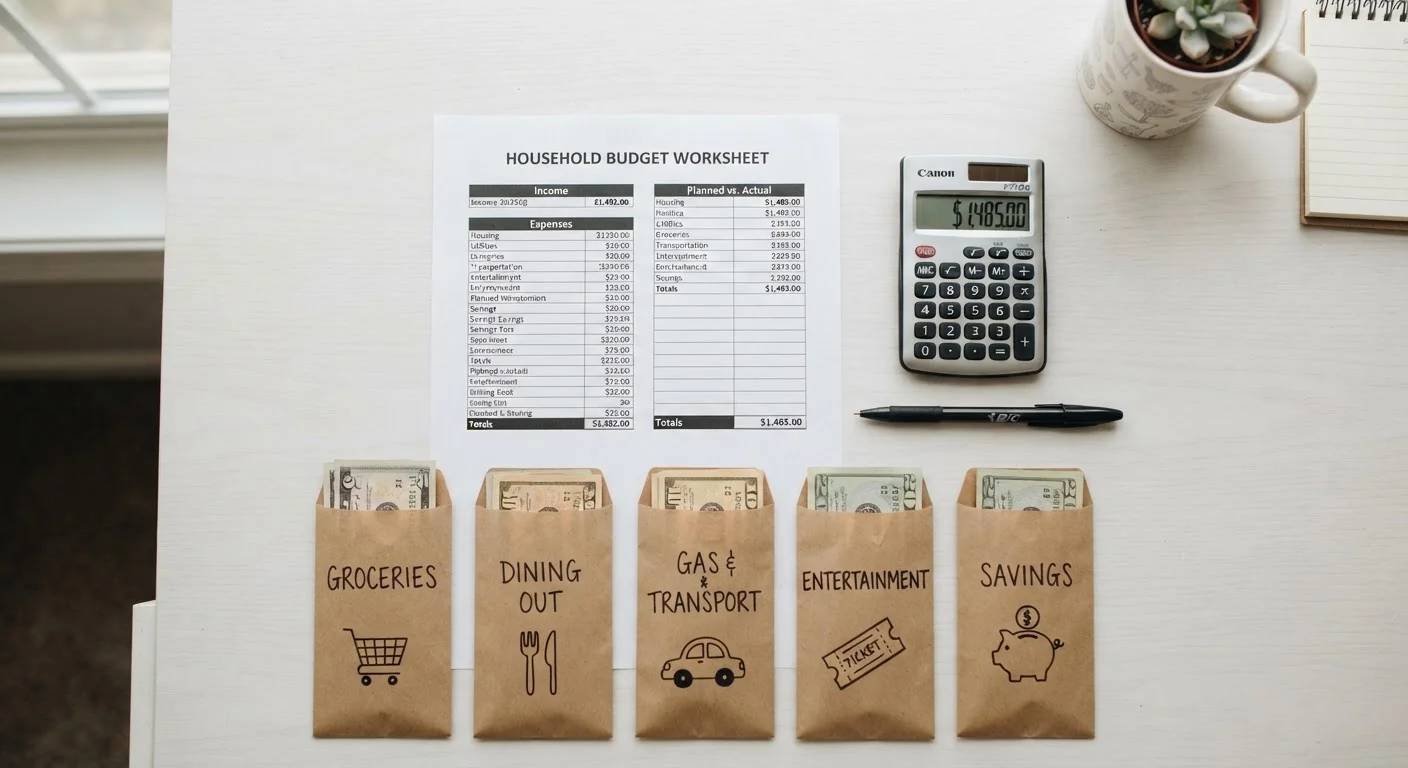
Why Category Lists Matter
Most budgets fail not because people spend too much, but because they forget to plan for entire categories of spending. A car registration bill arrives in October, a dental co-pay pops up in March — and suddenly money earmarked for rent is gone. The fix is simple: know your categories before the month begins.
This reference covers the spending buckets most households need to track. Use it as a checklist when you're building your first monthly budget or auditing one that already exists. You won't need every category — pick the ones that match your actual life.
Core Monthly Categories
Housing
Rent or mortgage payment, renter's or homeowner's insurance, property taxes (if not escrowed), and HOA fees if applicable. Housing is typically the largest single line item for American households.
Utilities
Electric, gas, water, trash, and sewer. These vary by season, so averaging three to six months of past bills gives a more realistic figure than using just last month.
Groceries
Food purchased for home cooking. Keep this separate from dining out — they behave differently and need their own spending caps.
Transportation
Car payment, fuel, auto insurance, parking, and public transit passes. Don't forget to set aside a monthly amount for maintenance and repairs — irregular costs like car repairs derail more budgets than daily coffee ever will.
Healthcare
Health insurance premiums (if paid directly, not pre-tax through payroll), prescription costs, and routine co-pays. This is general budgeting information — consult a licensed professional for decisions about your specific coverage.
Debt Payments
Student loans, credit card minimums, and personal loans. List each separately so you can see exactly where the money goes.
Sinking fund
A dedicated savings pool where you set aside a fixed amount each month to cover a known future expense, such as a car registration or annual insurance premium. It prevents one-time bills from derailing your monthly cash flow.
Fixed expense
A cost that stays the same amount each month, such as rent or a car payment. Fixed expenses are the easiest to predict and budget for.
Variable expense
A cost that changes from month to month, like groceries, utilities, or gas. Budgeting for variables usually involves averaging several past months of spending.
Discretionary spending
Money spent on non-essential wants rather than necessities — dining out, entertainment, hobbies, and similar categories. This is typically the most flexible part of a budget.
Easy-to-Forget Categories
These are the expenses that blindside people most often. Leaving them out of a budget doesn't make them disappear — it just means you'll be scrambling when they arrive.
~$77,000
Average annual U.S. household spending
According to the U.S. Bureau of Labor Statistics 2022 Consumer Expenditure Survey.
33%
Share of spending on housing alone
Housing consistently represents the largest single category in U.S. household budgets per BLS data.
~40%
Americans without a budget
Various surveys, including Gallup polling, have found a large share of U.S. adults do not maintain a formal household budget.
Annual and Semi-Annual Bills
- Car registration and license plate renewal
- Annual subscriptions (streaming bundles, software, membership clubs)
- Life and umbrella insurance premiums paid annually
- Tax preparation fees
The practical approach is to divide each annual cost by 12 and set that amount aside every month in a dedicated savings bucket, sometimes called a sinking fund.
Personal and Household
- Clothing and shoes
- Haircuts and personal care
- Cleaning supplies and household goods
- Pet food, vet visits, and grooming
Savings and Goals
Emergency fund contributions, retirement account deposits, and any goal-specific savings (vacation, home down payment) deserve their own category — not just the money left over. If you want to spot gaps in your savings plan, treating savings as a fixed expense is the most reliable method.
Dining Out and Entertainment
Restaurants, takeout, coffee shops, concerts, and streaming services used casually. Keeping this separate from groceries makes overspending visible quickly. If you constantly overspend one category, dining and entertainment is often where the leak is hiding.
Travel
Even occasional travelers should maintain a travel category. Flights, hotels, and activities add up fast — our overview of where trip money actually goes can help you plan more accurately.
This article provides general financial education and is not personalized financial advice. For guidance specific to your situation, consult a qualified financial professional.
The content on this site is for informational purposes only and is not a substitute for professional advice. Always consult a qualified professional for guidance specific to your situation.