

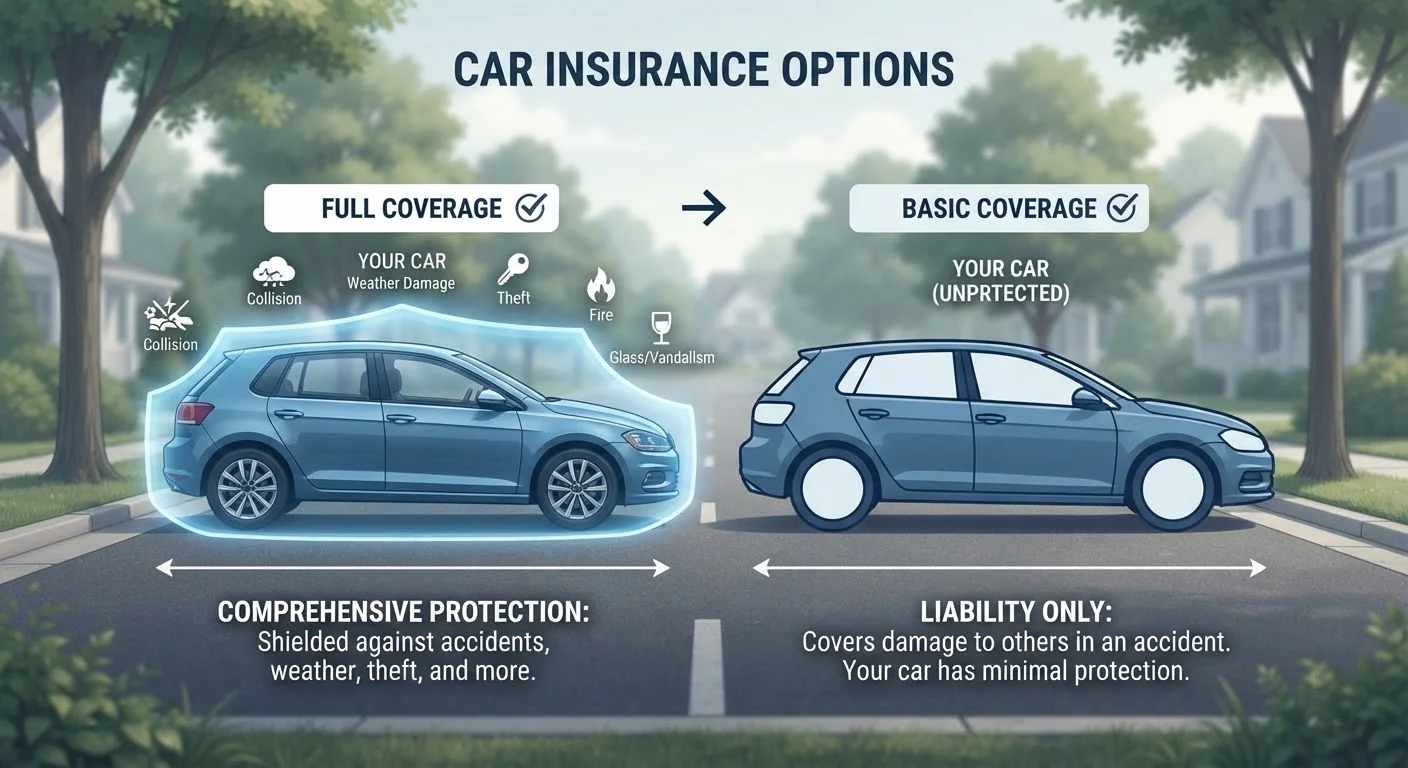
Option A
Comprehensive Car Insurance
The broadest protection available for your vehicle.
Best for: Drivers who want cover for damage to their own car, regardless of who caused the incident.
Option B
Third-Party Car Insurance
The minimum legal requirement in most US-adjacent and comparable markets.
Best for: Drivers primarily concerned with covering damage or injury they cause to others.
What Each Policy Actually Covers
The core distinction between these two insurance types is straightforward: third-party insurance protects other people from you, while comprehensive insurance also protects you from a wider range of events.
Third-party cover - often called liability coverage in the US - pays out when you cause an accident that injures someone else or damages their property. It does not pay anything toward repairing or replacing your own vehicle. If another driver hits you and they are uninsured or underinsured, third-party-only cover leaves you without recourse for your own car's damage unless you've added separate provisions.
Comprehensive cover includes third-party liability and layers on additional protection: damage to your own vehicle in a collision, theft, fire, flooding, hail, and vandalism are typical inclusions. This broader net comes at a higher premium, but it addresses a much wider set of real-world risks. For context on how premiums and deductibles interact with the cost you actually pay, see our guide to premiums, deductibles, and excess.
| Criterion | Comprehensive | Third-Party |
|---|---|---|
| Damage to other people's property | Covered | Covered |
| Injury to other people | Covered (liability) | Covered (liability) |
| Damage to your own vehicle (collision) | Covered | Not covered |
| Theft of your vehicle | Typically covered | Not covered |
| Weather damage (hail, flood, fire) | Typically covered | Not covered |
| Vandalism | Typically covered | Not covered |
| Mechanical breakdown | Not covered | Not covered |
| Typical premium cost | Higher | Lower |
| Meets minimum legal requirement | Yes | Yes (at minimum level) |
Where the Gaps Show Up
The gaps in third-party cover become most visible in scenarios where the fault is yours, the weather's, or simply unknown - a hailstorm dents your hood, your car is stolen from a parking lot, or you reverse into a post. None of those events trigger a third-party payout, because no third party was harmed.
Comprehensive policies also have limits. They typically won't cover mechanical breakdown, wear and tear, or incidents excluded specifically in the policy language. The precise exclusions differ by insurer and policy, which is why reading the actual policy document matters more than relying on the product name alone. This is a common contributor to underinsurance - the gap between what a driver thinks is covered and what actually is. Our article on underinsurance and coverage gaps explains this dynamic in more depth.
It's also worth noting that some drivers add optional endorsements - such as uninsured motorist coverage or roadside assistance - to either policy type. These add-ons change the coverage equation significantly and should be evaluated based on your individual circumstances. A licensed insurance agent can help you assess which add-ons, if any, make sense for your situation.
Choosing Between Them: What to Think Through
There is no universally correct answer here - the right coverage level depends on several factors personal to you. A few practical questions can help frame the decision:
- What is your vehicle worth? If the market value is low, the cost of comprehensive premiums may exceed what you'd realistically recover in a claim for vehicle damage.
- Could you absorb the cost of repairing or replacing your car out of pocket? If not, third-party-only cover creates real financial exposure.
- What does your lender require? If your car is financed or leased, the lender will typically mandate comprehensive coverage as a loan condition.
- What are the legal minimums in your state? US states set their own minimum liability requirements; these represent a floor, not a recommendation for adequate protection.
Insurance decisions sit within a broader personal financial plan. Our guide to building a personal insurance plan walks through how to match coverage to your actual risk profile rather than simply defaulting to the cheapest or most expensive option available.
This article is for general informational and educational purposes only. It is not personalised insurance or financial advice. Coverage terms, exclusions, and legal requirements vary by provider and jurisdiction. Always read your full policy documents and consult a licensed insurance professional before making coverage decisions.
The content on this site is for informational purposes only and is not a substitute for professional advice. Always consult a qualified professional for guidance specific to your situation.