

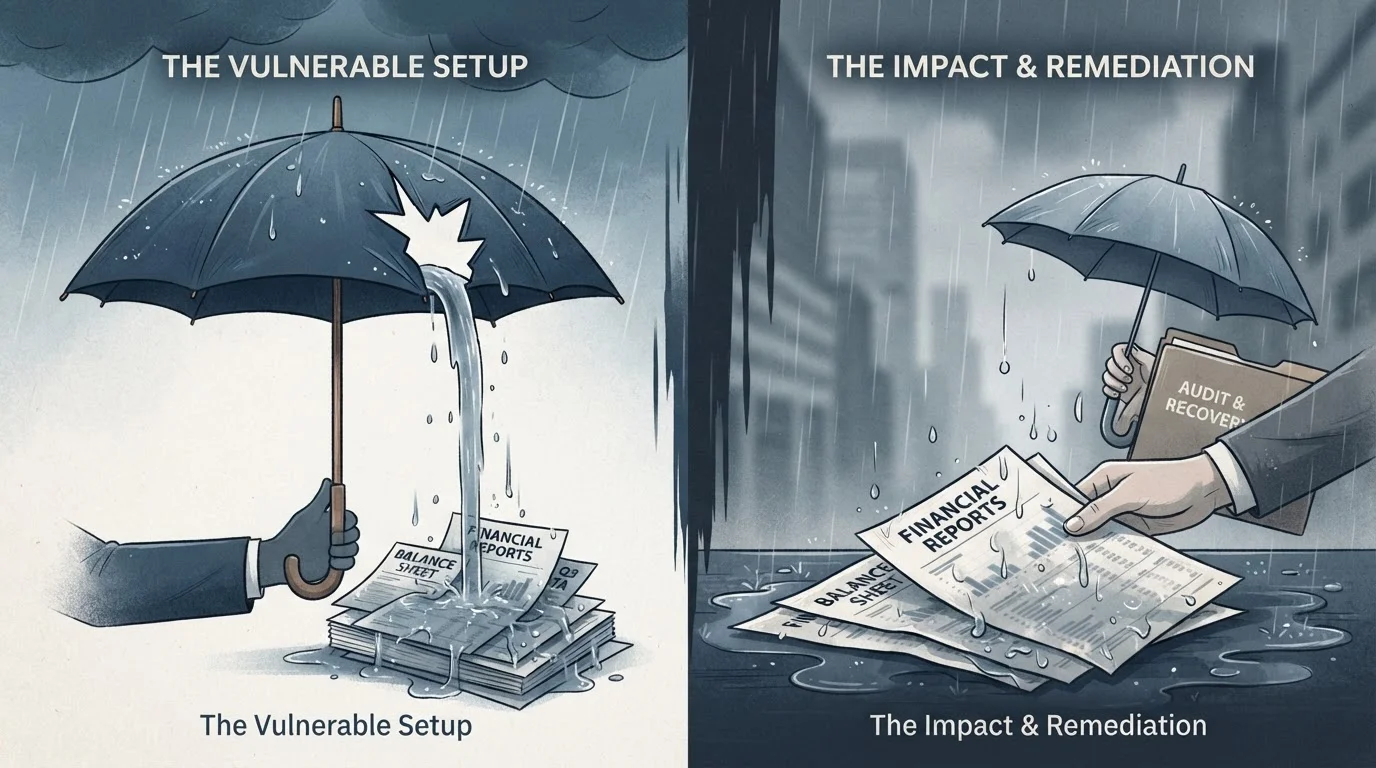
The Gap Between Having a Policy and Being Protected
Most people assume that as long as they pay their premiums and hold a policy, they're covered. That assumption is reasonable - but it skips a critical question: covered for how much?
Underinsurance is the condition of having a valid policy with limits too low to absorb your actual loss. The insurer pays - they just don't pay enough. The remainder becomes your problem. For a small claim, that gap might be manageable. For a major event - a house fire, a serious illness, a long-term disability - it can be financially devastating.
To understand how insurance works at a foundational level, see our plain-language insurance explainer.
Underinsurance Is Not the Same as a Coverage Exclusion
An exclusion means your policy deliberately does not cover a specific event or type of damage - for example, flood damage excluded from a standard homeowners policy. Underinsurance means the event is covered, but the dollar limit is too low. Both create gaps, but they arise differently and require different solutions.
How Underinsurance Happens
Underinsurance rarely starts as a deliberate choice. It usually develops in one of a few predictable ways:
- Choosing lower limits to reduce premiums. Lower coverage costs less per month. That tradeoff feels sensible until a large claim reveals the limit doesn't match the loss.
- Coverage that hasn't kept pace with changing circumstances. A home insured for what it was worth ten years ago may now cost significantly more to rebuild. A life insurance payout sized for a single person's needs may be inadequate after a family grows. Circumstances change; static policies don't automatically adjust.
- Misunderstanding what the limit actually covers. Some people set limits based on the market value of a property rather than the rebuild cost - two figures that can differ substantially. Others don't realize their health plan has a benefit cap that would be reached well before a serious illness resolves.
- Buying a policy without reading the limits. It's easy to focus on whether you have coverage rather than on the specific dollar amounts attached to it.
For a clear breakdown of how premiums, deductibles, and coverage limits interact, see Premiums, Deductibles, and Excess: What's the Difference?.
Where Underinsurance Shows Up Most Often
Underinsurance can affect almost any type of policy, but it appears most frequently in four areas:
Home Insurance
Homeowners often insure for the purchase price or market value rather than the current cost to rebuild. Construction costs fluctuate, and a policy set years ago may cover far less than what a contractor would charge today. Some policies also exclude specific risks - flood or earthquake damage, for example - meaning coverage gaps exist by design, not just by limit.
Health Insurance
Plans with very high deductibles, narrow provider networks, or low annual benefit caps can leave policyholders responsible for large portions of treatment costs. The Affordable Care Act placed limits on annual out-of-pocket maximums for qualifying plans, but not all plan types fall under those rules, and costs can still be substantial.
Life Insurance
A common rule of thumb suggests life insurance coverage of several times annual income, but the right amount depends on debts, dependents, and income replacement needs. Policies taken out early in a career or before major life changes - marriage, children, a mortgage - can become insufficient as financial obligations grow.
Auto Insurance
State minimums for liability coverage are often too low to cover the full costs of a serious accident. If an at-fault driver's liability limit doesn't cover all damages, the victim - or the at-fault driver themselves - may face out-of-pocket costs that exceed the payout.
See The Main Types of Insurance and What Each One Covers for more on how each category is structured.
The Financial Consequences of Being Left Short
~57%
US homes estimated to be underinsured
According to CoreLogic research, a majority of US homes are insured for less than their current estimated rebuild cost.
~1 in 3
US adults with medical debt
KFF (Kaiser Family Foundation) research has found that roughly one in three US adults reports having some form of medical debt, reflecting the gap health coverage can leave.
26%
Average property rebuild cost increase in recent years
Industry data indicates residential construction costs have risen sharply in recent years, widening the gap between static coverage limits and actual rebuild expenses for many homeowners.
When a claim exceeds your coverage limit, the insurer pays up to the limit - and stops there. The remaining balance is yours to handle. Depending on the situation, that could mean:
- Out-of-pocket costs for home repairs or rebuilding that your policy doesn't fully fund
- Medical bills that exceed your plan's benefit limits or accumulate beyond your annual out-of-pocket maximum
- A life insurance payout that doesn't cover a surviving family's mortgage, debts, or ongoing living costs
- Income disruption if a disability benefit replaces only a fraction of actual earnings
For a closer look at income replacement risks specifically, our article on income protection insurance and its limits walks through how those policies work and where they fall short.
Reviewing Coverage Before a Claim Happens
The most practical step is a regular coverage review - not just confirming that policies are active, but checking whether the limits still reflect your actual situation. A few questions worth asking for each policy:
- What would it cost to replace or recover from the worst realistic loss this policy is meant to cover?
- Has anything changed since I last reviewed - home renovations, income changes, new dependents, new debts?
- Am I choosing a lower limit primarily to save on premiums, and have I thought through what that means if I file a claim?
A licensed insurance agent or adviser can help assess whether your current limits are realistic. This article is general information, not personalised insurance advice - for decisions about your own situation, consult a qualified professional.
If you want to think through your coverage more holistically, Building a Personal Insurance Plan That Covers the Right Gaps explains how to match coverage to your actual risks rather than defaulting to minimum or standard options.
For definitions of terms you encounter in policy documents, The Insurance Terms Glossary Every Policyholder Should Know is a useful reference.
This article is for general informational purposes only and does not constitute personalised insurance, financial, or legal advice. Coverage terms, limits, and regulations vary by provider, policy type, and location. Always read your policy documents carefully and consult a licensed insurance professional before making coverage decisions.
Frequently Asked Questions
Uninsured means you have no policy at all. Underinsured means you have a policy, but the coverage limit isn't high enough to cover your full loss. Both can leave you paying significant costs out of pocket, but underinsurance is often harder to spot because the protection feels real until you actually file a claim.
Review each policy's coverage limit and compare it against what it would actually cost to replace or recover from a loss. For home insurance, that means the rebuild cost - not the market value. For health insurance, look at annual and lifetime coverage caps relative to potential treatment costs. A licensed insurance agent can help you assess whether your limits are realistic.
Yes. A health plan with a very high deductible, low annual benefit cap, or narrow network can leave policyholders facing large bills after a serious illness or hospitalization. Paying premiums does not guarantee that all or most medical costs will be covered.
Often it comes down to cost - lower-coverage policies carry lower premiums, which makes them appealing. It can also happen passively when circumstances change (property values rise, income increases, a family grows) but coverage limits stay the same as when the policy was first purchased.
No. Underinsurance can affect home, auto, health, life, and income protection policies. Any type of insurance where the coverage limit can fall below actual costs carries underinsurance risk.
Start by gathering your current policy documents and identifying the coverage limits for each. Then estimate what a realistic loss would cost - property rebuild estimates, medical cost projections, income replacement needs. Consulting a licensed insurance professional can help you decide whether to adjust coverage. This article is general information and not personalised insurance advice.
The content on this site is for informational purposes only and is not a substitute for professional advice. Always consult a qualified professional for guidance specific to your situation.