

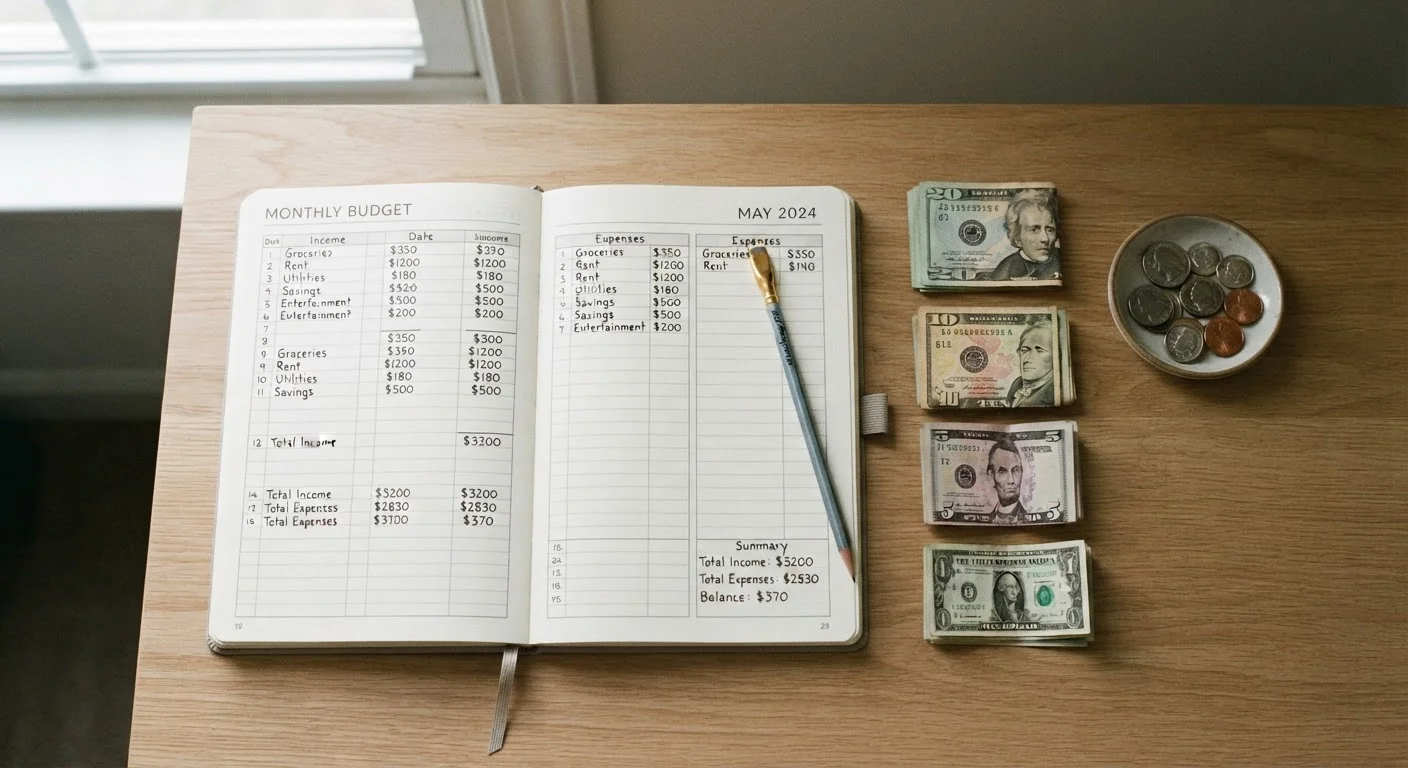
Our Verdict
Zero-based budgeting is one of the most intentional personal finance frameworks available - it leaves no dollar unaccounted for and forces honest conversations with yourself about priorities. That depth comes at a cost: it takes real effort to set up and maintain, and it can feel rigid when life doesn't follow the plan. For people who want a high level of financial control and are willing to invest the time, it's a genuinely powerful tool.
Best for people with a stable, predictable income who want to aggressively pursue savings goals or break a cycle of unexplained overspending.
What Zero-Based Budgeting Actually Means
Zero-based budgeting (ZBB) is a method where you assign every dollar of your income to a specific category - rent, groceries, savings, entertainment, everything - until your income minus your allocations equals zero. That doesn't mean you spend everything; it means every dollar has a named job, including dollars earmarked for savings or an emergency fund.
The idea was popularized in personal finance circles as a way to eliminate the vague middle ground where money quietly disappears. If you earn $4,000 a month, you build a plan that accounts for all $4,000 before the month begins. You're essentially telling your money where to go rather than wondering where it went.
If you're new to budgeting altogether, our beginner's budget guide covers the foundational concepts worth understanding first. And if you want to see how zero-based budgeting stacks up against other popular methods, this side-by-side framework comparison lays it all out plainly.
The Case For It: Real Advantages
Zero-based budgeting has genuine strengths that explain why many people swear by it once they've put in the initial work.
Forces intentional decisions about every dollar
Because nothing goes unassigned, you have to actively decide what matters - savings, discretionary spending, debt repayment - rather than letting leftover money drift toward whatever comes up.
Makes overspending patterns impossible to ignore
When you've pre-allocated your dining-out budget and it's gone by the 20th, that's a clear, concrete signal. Vague monthly spending rarely produces that kind of clarity.
Aligns spending directly with personal priorities
You choose what each category gets, so the budget reflects your actual values rather than defaults. Someone who prioritizes travel over dining out can build that in explicitly.
Savings become a category, not an afterthought
By assigning savings a line item from the start, the method mirrors the 'pay yourself first' principle - you're budgeting savings in, not hoping whatever's left will cover it.
Reveals waste in recurring expenses
The act of categorizing every dollar often surfaces subscriptions, habits, or auto-payments that were running invisibly and wouldn't have been noticed otherwise.
Understanding how your spending breaks down by category is one of the most underrated financial skills there is. Our guide on fixed vs. variable expenses explains why that distinction becomes especially visible - and useful - inside a zero-based framework.
The Case Against It: Real Drawbacks
Zero-based budgeting isn't a fit for everyone, and being honest about its limitations matters before you commit.
Time-consuming to build and maintain monthly
Creating a fresh, category-by-category plan every single month takes meaningful effort. For people with limited time or low patience for financial admin, that barrier can make the method unsustainable.
Difficult to manage with irregular income
Freelancers, contractors, or anyone with unpredictable earnings can't easily build an exact zero-based plan when they don't know exactly what's coming in. Workarounds exist, but they add complexity.
Can feel rigid when unexpected expenses arise
A tightly allocated budget has little slack by design. One car repair or medical co-pay can throw off multiple categories, leading to frustration or abandonment if the plan isn't built to absorb surprises.
Requires honest, detailed tracking throughout the month
The plan only works if you monitor actual spending against your allocations in real time. Logging expenses loosely or infrequently undermines the entire method's precision.
High initial learning curve for beginners
People who have never budgeted before may find starting with zero-based budgeting overwhelming. Establishing realistic category amounts takes experience that newer budgeters simply haven't built yet.
If rigidity is a concern, it's worth reading about how to build a budget that holds up under real-life pressure. A zero-based approach may need built-in flex categories to survive contact with an unpredictable month.
Who It Tends to Work Best For
Zero Doesn't Mean Broke
A common misreading of zero-based budgeting is that it means you have no money left over. In practice, 'zero' refers to the accounting balance after all allocations - including savings, investments, and an emergency buffer - are assigned. Your savings account can still grow; the point is that every dollar moving into savings is deliberate rather than accidental.
Zero-based budgeting tends to click for people with a steady, predictable monthly income - salaried employees, retirees on fixed income, or anyone whose earnings don't swing dramatically month to month. When you know exactly what's coming in, building an exact plan for it is much more straightforward.
It also suits people chasing a concrete goal: paying off a specific debt, building a down payment, or reaching a savings target by a set date. The method's precision makes progress visible and hard to ignore.
People with highly variable income - freelancers, gig workers, commission-based earners - often need to adapt the method significantly, budgeting from a conservative income floor rather than an exact figure. That's a workable solution, but it adds another layer of management.
If you're carrying persistent misconceptions about what budgeting even is, common budget myths worth examining may be a useful read before deciding whether any method is right for you. And for a comprehensive look at building a budget from wherever you're starting, this end-to-end budgeting guide covers every stage of the process.
This article is for general informational and educational purposes only and does not constitute personalized financial advice. For guidance specific to your financial situation, consider consulting a qualified financial professional.
The content on this site is for informational purposes only and is not a substitute for professional advice. Always consult a qualified professional for guidance specific to your situation.