

Why Myths Stop People Before They Start
Most people who have never made a budget say the same things: it's too complicated, it's only for people in financial trouble, or it means saying goodbye to anything enjoyable. These ideas are understandable - budgeting has a reputation it doesn't fully deserve.
But when a belief stops someone from taking a useful step, it's worth examining. The misconceptions below are some of the most common reasons people delay or dismiss budgeting entirely. Each one has a more accurate picture behind it.
For a grounded look at what a budget actually involves, see what a monthly budget really is before diving into the myths.
Myth
Budgeting is only for people who are in debt or struggling with money.
Fact
A budget is a planning tool, not a rescue tool - it's useful at every income level and financial situation.
This myth frames budgeting as a sign of financial distress, which keeps many people who are doing reasonably well from ever trying it. In reality, a budget is simply a plan for how you intend to use your money. People with healthy finances use budgets to build savings faster, fund long-term goals, and avoid the drift that happens when spending goes untracked. If anything, having more money makes deliberate planning more valuable, not less. The relationship between smart money management and avoiding debt is also worth understanding - budgeting is one of the more reliable ways to stay ahead of it.
Myth
Budgeting means giving up things you enjoy and living on almost nothing.
Fact
A budget allocates money for enjoyment - it just makes that spending a conscious choice rather than an accident.
The word "budget" carries a connotation of restriction that doesn't match how most workable budgets actually function. A realistic budget includes categories for dining out, entertainment, hobbies, or whatever matters to the person making it. The point isn't to eliminate spending on things you value; it's to make sure that spending is deliberate. When people design budgets that reflect their actual lives, the plan tends to hold. When they build budgets around an idealized version of themselves who never has fun, the plan tends to collapse quickly. Why budgets often fail in month two is often traceable to exactly this kind of overreach.
Myth
You need a steady, predictable income before a budget will work.
Fact
Budgeting is actually more useful - not less - when income is irregular or variable.
People with variable income from freelance work, hourly shifts, or seasonal jobs sometimes feel they can't budget because the numbers keep changing. But irregular income is precisely the situation where having some kind of spending framework helps the most. Common approaches for variable income include budgeting from a conservative baseline (your lowest likely monthly income), building a buffer for leaner months, and adjusting allocations as actual income arrives. The mechanics differ from a fixed-salary budget, but the core benefit - knowing where money is going - remains the same or becomes even more important.
Myth
Budgeting requires complicated spreadsheets or special software.
Fact
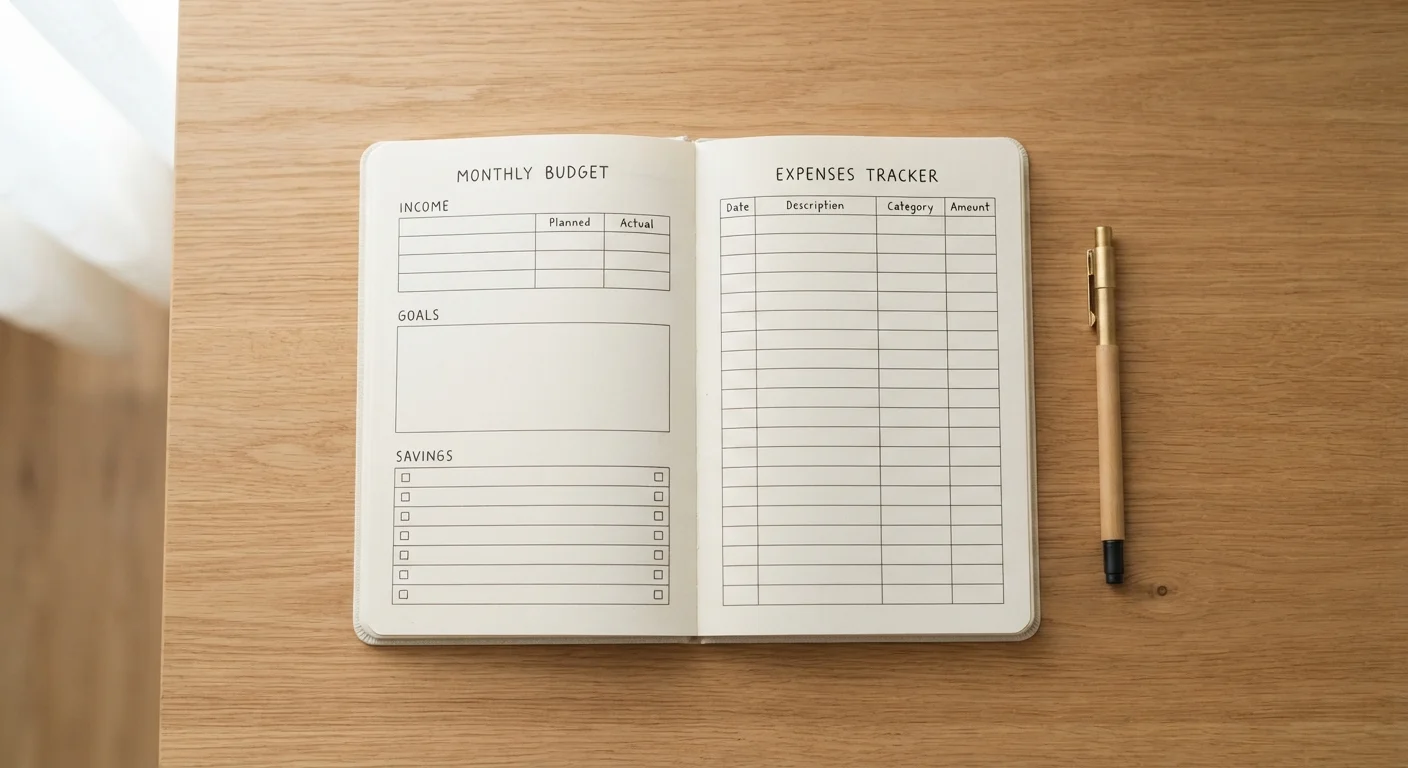
A budget can be written on paper, tracked in a notes app, or built in a basic grid - the tool matters far less than the habit.
The financial industry has an incentive to sell budgeting tools, and there are genuinely useful ones. But the complexity of the tool has almost no relationship to whether the budget works. People have managed money effectively with handwritten ledgers for generations. What drives results is reviewing your spending regularly and comparing it against your plan - not the sophistication of the platform you use. If a simple notebook lowers the barrier to starting, that's the right tool. A comprehensive guide to building a budget from any starting point covers multiple approaches without requiring any particular software.
Myth
If you overspend one month, the whole budget has failed and you should start over.
Fact
Going over budget in one category or one month is normal - the plan just needs a small adjustment, not an overhaul.
Treating any deviation as total failure is one of the most reliable ways to abandon a budget permanently. Real spending is uneven. Some months have car repairs, birthday gifts, or medical costs that don't appear in others. A budget that can't accommodate imperfection isn't realistic, and most financial guidance supports the idea that flexibility - not rigidity - is what makes a long-term budget sustainable. When a month goes sideways, the useful question is: what happened, and how do I account for it next month? Not: should I give up entirely? Zero-based budgeting is one approach that builds this kind of intentional flexibility in from the start.
The Bigger Picture: Starting Imperfectly Is Still Starting
None of these myths are completely irrational. They usually come from real experiences - trying a rigid system that collapsed, watching someone else fail publicly with their finances, or just feeling overwhelmed by where to begin. That context matters.
But the evidence is fairly consistent: people who track their spending and set intentional targets - even rough ones - tend to make more deliberate financial decisions than those who don't. A budget doesn't need to be airtight to be useful. Making a budget that holds up when life gets complicated is a skill that develops over time, not a prerequisite for starting.
If you're brand new to this, a ground-up guide for complete beginners can walk you through each step without assuming any prior knowledge. And if you want to understand how different types of spending behave differently inside a budget, the distinction between fixed and variable expenses is a useful concept to get familiar with early on.
The goal isn't a flawless budget. The goal is a clearer picture of where your money goes - and more control over where it goes next.
This article is for general informational purposes only and does not constitute personalized financial advice. For guidance specific to your financial situation, consider consulting a qualified financial professional.
The content on this site is for informational purposes only and is not a substitute for professional advice. Always consult a qualified professional for guidance specific to your situation.