

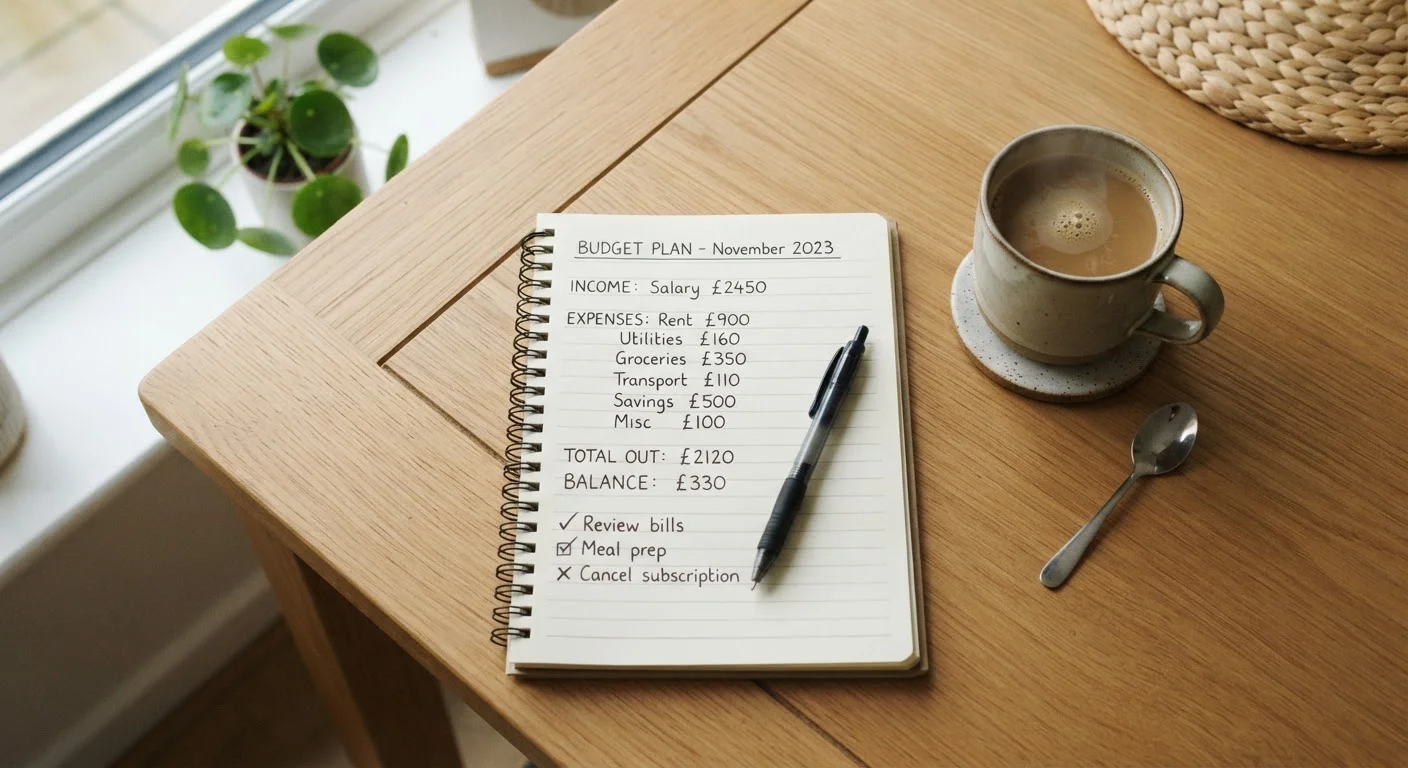
The Core Idea: A Plan, Not a Punishment
A monthly budget has one job: to tell your money where it's going before the month begins. That's it. It isn't a moral judgment about your choices, a rigid rulebook you can never deviate from, or proof that you're bad with money. It's a plan - the same way a grocery list is a plan before you shop.
The reason so many people resist budgeting is that the word carries baggage. It tends to sound like deprivation, like giving up things you enjoy, or like admitting something is wrong. None of that is accurate. A budget can - and should - include things you value, including entertainment, eating out, or whatever matters to you. It simply requires that spending be deliberate rather than accidental.
If you've been skeptical of budgeting, you're not alone. Common budget myths stop a lot of people from ever getting started - and most of those myths don't hold up under scrutiny.
What a Budget Actually Contains
A real monthly budget has two sides: income and expenses. Income is every dollar coming in - your paycheck after taxes, freelance earnings, side income, or any other reliable source. Expenses are every dollar going out, broken into categories that reflect how you actually spend.
Those categories typically include fixed expenses (rent, loan payments, insurance premiums - amounts that don't change month to month) and variable expenses (groceries, gas, utilities, dining out - amounts that shift). A complete budget also carves out a line for savings and, if applicable, debt repayment.
One category that catches people off guard: irregular expenses. These are costs that don't show up every month - car registration, annual subscriptions, holiday gifts, medical copays - but that are entirely predictable if you think ahead. A budget that ignores irregular expenses will feel broken when they arrive. Overlooked budget categories are one of the most common reasons monthly plans go sideways.
~33%
Americans with a written monthly budget
Gallup polling has consistently found that fewer than half of U.S. adults maintain a detailed household budget, despite widespread recognition that budgeting is financially beneficial.
60%+
Adults living paycheck to paycheck
Multiple consumer surveys, including research from the Federal Reserve's Report on the Economic Well-Being of U.S. Households, have found that a majority of Americans report difficulty covering an unexpected $400 expense.
What a Budget Isn't
A budget is not a spending tracker. Tracking records what already happened; a budget sets a plan before money moves. Both tools are valuable, but they do different things. Tracking without a budget tells you where money went; budgeting tells your money where to go.
A budget is also not a static document. Life changes - income goes up or down, unexpected costs arrive, priorities shift. A budget that worked in January may need real adjustment by March. That's not failure; that's how a functioning budget works. A budget built for real life accounts for change rather than assuming everything will stay constant.
And finally, a budget isn't something only people in financial trouble need. It's a planning tool - one that works at any income level, for any goal, at any stage of life.
Start Broader Than You Think You Need To
New budgeters often get stuck trying to track every micro-category before they've built the habit. Start with 6-8 broad categories - housing, food, transportation, savings, debt, and personal spending - and add detail only once the monthly review becomes routine. A simple budget you actually use beats a complex one you abandon.
Why the Monthly Frame Makes Sense
Most income arrives monthly or semi-monthly, and most recurring expenses - rent, utilities, subscriptions - are billed monthly. That alignment makes the month a natural planning unit. It's long enough to capture your full financial picture and short enough to stay manageable.
That said, a monthly budget isn't a guarantee of smooth sailing. Many people build a solid plan and still hit a rough patch around month two, once the initial motivation fades and real-life friction sets in. Understanding why budgets often fail in month two can help you design one that actually holds.
The goal of a monthly budget isn't perfection. It's direction. A budget gives you a reference point to come back to when spending drifts, and a clear view of whether your money is going where you actually want it to go.
This article is for general informational purposes only and does not constitute personalized financial advice. Consider consulting a licensed financial professional for guidance specific to your situation.
Frequently Asked Questions
It doesn't have to be on paper, but it does need to exist somewhere you can refer to and adjust. A spreadsheet, an app, or even a notes document works - the important thing is that it's visible and specific, not just a rough mental estimate.
Tracking spending looks backward - it records what already happened. A budget looks forward - it sets a plan before money is spent. Both are useful, but a budget gives you the ability to make decisions in advance rather than simply observe outcomes after the fact.
It needs to be detailed enough to catch where money typically leaks, but not so granular that maintaining it becomes a burden. Most people do well with 8-15 categories. Starting broader and adding detail over time is a practical approach.
Yes. People with variable income often budget based on a conservative estimate of their lowest expected monthly income. In higher-income months, the extra money is directed toward savings or the next month's expenses - a practice sometimes called income smoothing.
Not at all. A budget is a planning tool, not a distress signal. People across all income levels use budgets to align spending with goals - whether that's paying down debt, saving for a house, or simply avoiding financial drift.
The content on this site is for informational purposes only and is not a substitute for professional advice. Always consult a qualified professional for guidance specific to your situation.