

Our Verdict
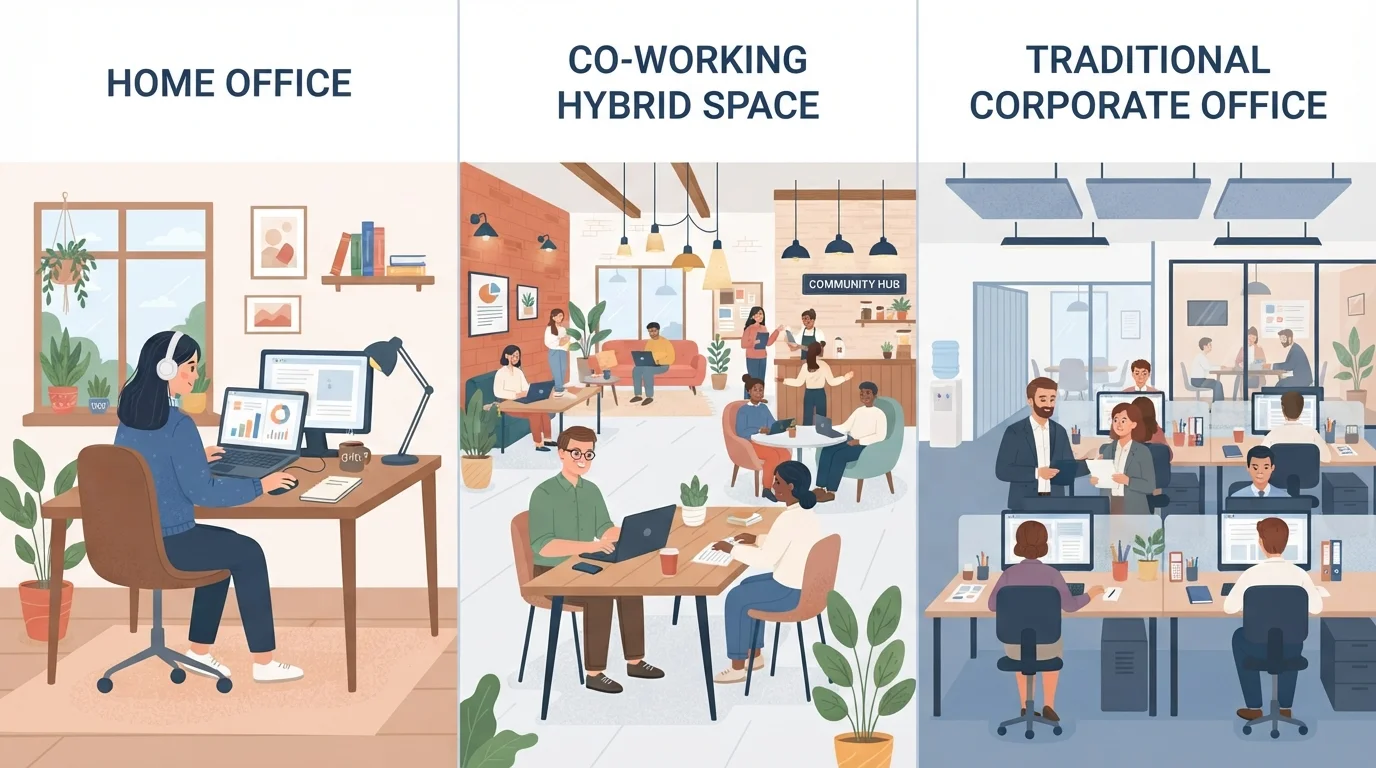
No single work arrangement suits every job seeker. Remote roles offer flexibility but demand strong self-direction; hybrid arrangements attempt a middle ground but vary wildly by employer; on-site roles provide structure and visibility at the cost of commute time and location flexibility. The right fit depends on your personal circumstances, career stage, and the specific way each employer defines these terms.
| Best for | Recommended |
|---|---|
| Those who value location freedom and work well independently | Remote |
| Those who want some in-person collaboration without a full-time commute | Hybrid |
| Those who thrive on routine, in-person mentorship, or roles requiring physical presence | On-Site |
Why These Terms Don't Mean the Same Thing Everywhere
Employers use the words remote, hybrid, and on-site constantly in job postings — but they rarely define them. One company's "hybrid" might mean two days in the office per week; another's could mean occasional travel to a headquarters once a quarter. This ambiguity is one of the most common frustrations job seekers face today.
As the modern job search has evolved, so has the vocabulary employers use to describe work arrangements. That makes it your job to ask clarifying questions before signing anything — or even before investing time in a long interview process.
A good starting question during any screening call: "Can you walk me through what a typical workweek looks like for someone in this role?" That single question reveals far more than the label on the posting.
Breaking Down Each Arrangement
Here's what each model typically involves — keeping in mind that real-world implementation varies.
Remote
You work from a location of your choosing — usually home — full-time. Some remote roles are "fully distributed," meaning the whole company works this way. Others are remote by exception, meaning your team is local but your manager approved your arrangement individually. The second type can be less stable if policies change.
Hybrid
You split time between a physical office and a remote location. The split could be employer-mandated (fixed days in office) or flexible (you choose when to come in, within reason). Hybrid arrangements are the most inconsistently defined of the three — always ask who decides the schedule and whether it can shift.
On-Site
You are expected in the workplace for most or all of your working hours. Some on-site roles have a geographic requirement (you must live within commuting distance); others require relocation. This model is standard in industries like healthcare, manufacturing, retail, and hospitality where physical presence is part of the job function itself.
| Remote | Hybrid | On-Site | |
|---|---|---|---|
| Location flexibility | High — work from anywhere (role permitting) | Moderate — split between home and office | Low — fixed workplace required |
| Commute requirement | None or minimal | Part-time commute | Daily commute expected |
| Schedule definition | Often flexible, but varies | Varies widely by employer | Usually fixed business hours |
| In-person collaboration | Rare or virtual only | Regular but not daily | Daily, face-to-face |
| Visibility for advancement | Requires extra effort to build | Moderate, depends on days in office | Generally higher in traditional orgs |
| Definition consistency | Inconsistent across employers | Very inconsistent — always clarify | Generally consistent |
The Real Trade-Offs to Weigh
Each arrangement affects more than just where you sit. Consider these dimensions when evaluating a role:
- Commute cost and time: On-site roles often add significant weekly hours and transportation expenses. Remote eliminates this; hybrid reduces it.
- Career visibility: In many organisations, in-person presence still correlates with being noticed for advancement opportunities — though this is changing. See our piece on vertical vs. lateral career moves for more on how visibility affects advancement.
- Collaboration style: If your role involves real-time problem-solving with others, remote work requires more deliberate communication habits. Our guide to skills for hybrid and remote workers outlines what that looks like in practice.
- Work-life boundaries: Remote work can blur the line between personal and professional time. On-site work enforces a natural off-switch when you leave the building.
Ask Before the Final Interview
Don't wait until an offer is on the table to ask how the arrangement works in practice. Raise it during the first or second interview stage: ask who sets the in-office schedule, whether it's written into your contract, and how often the policy has changed recently. Employers who are vague or defensive about these questions are telling you something important.
If you're searching while currently employed, your current arrangement may influence what feels manageable during a transition — factor that in when filtering postings.
How to Evaluate an Arrangement Before You Apply
Learning to decode what job postings are really saying is essential here. A posting that says "remote-first" but lists a specific city as a requirement may be hybrid in practice. Watch for these signals:
- A required office city or state in an otherwise "remote" posting usually means occasional in-person expectations exist.
- "Flexible schedule" does not automatically mean remote — it may refer to hours, not location.
- Phrases like "must be able to come in as needed" in a remote role often indicate hybrid expectations without the label.
Once you've identified roles that interest you, rank your own preferences honestly. Do you need the structure of an office environment? Are you willing to relocate for an on-site position? Could a hybrid arrangement with rigid mandatory days create scheduling conflicts? Answering these questions upfront — before you're emotionally invested in a specific opportunity — keeps your search focused and efficient.
Work arrangement preferences can also intersect with longer-term career planning. Whether you're staying at one company or moving on, understanding how your preferred arrangement aligns with a company's culture is part of evaluating long-term fit.
The content on this site is for informational purposes only and is not a substitute for professional advice. Always consult a qualified professional for guidance specific to your situation.