

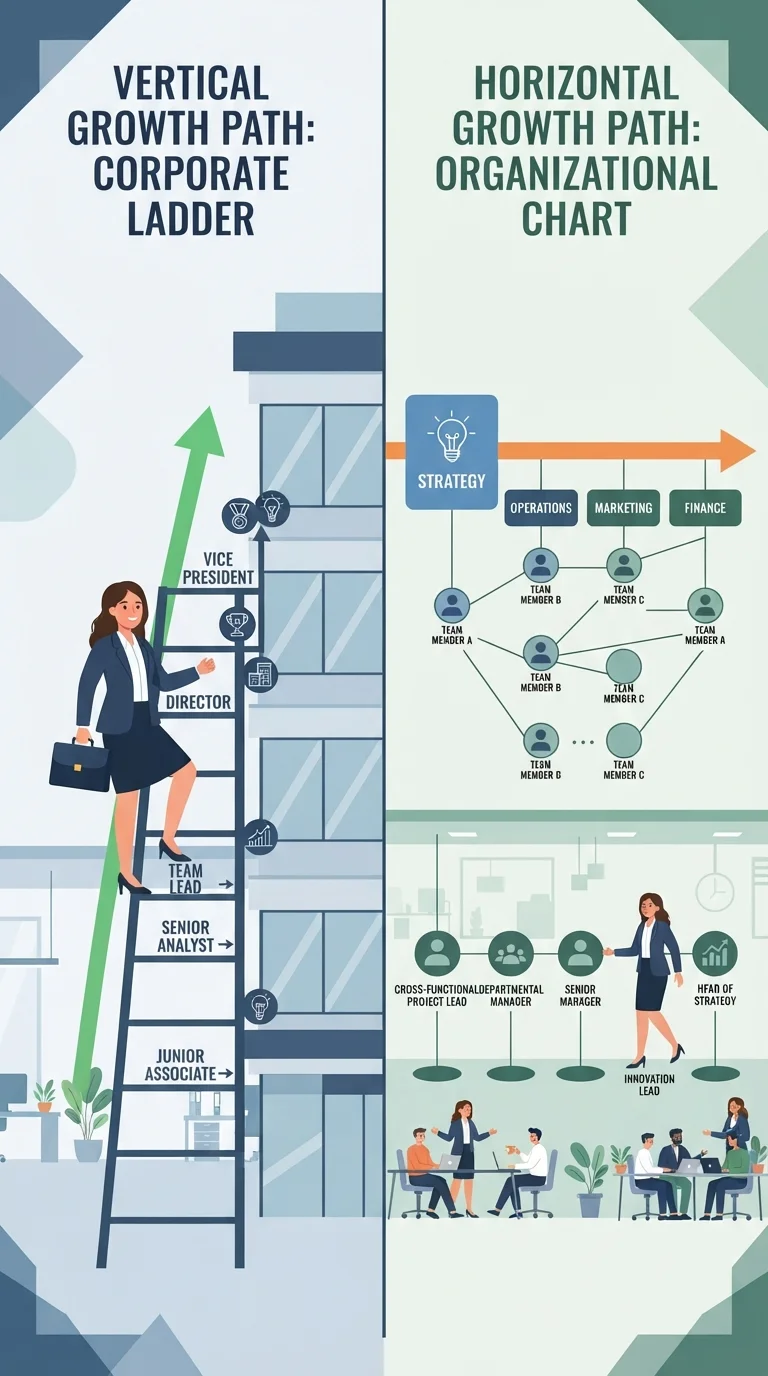
Option A
Vertical Career Move
The traditional climb — moving up the organizational ladder.
Best for: Workers seeking increased authority, higher pay, and formal recognition of their expertise.
Option B
Lateral Career Move
The strategic sidestep — expanding skills by moving across roles.
Best for: Workers looking to broaden their skill set, explore new functions, or reposition for future advancement.
What Separates a Vertical Move from a Lateral One
A vertical career move means advancing to a higher level within your organization or field — typically a promotion that comes with a new title, additional responsibilities, and usually a pay increase. Think moving from associate to manager, or from analyst to senior analyst. The defining feature is that you're taking on more seniority.
A lateral career move — sometimes called a sideways move — means shifting to a different role at roughly the same organizational level. Your title or pay may not change significantly, but your function, team, or even industry might. A marketing coordinator who moves into a project coordinator role within the same company is making a lateral move. So is a customer service specialist who transfers to an inside sales role at the same pay grade.
Both types of moves count as career development. As our guide to what career growth actually means explains, advancement isn't limited to climbing a title hierarchy — it includes gaining skills, expanding influence, and building options.
| Criterion | Vertical Move | Lateral Move |
|---|---|---|
| Direction | Up the organizational hierarchy | Across roles at a similar level |
| Typical title change | Yes — higher-level title | Often minimal or none |
| Pay impact | Usually increases | May stay the same or increase slightly |
| Skill focus | Deepens existing expertise | Broadens skill set across functions |
| Risk level | Higher expectations, more visibility | Lower pressure, but can feel like a step back |
| Best timing | When you've demonstrated clear readiness | When you need growth, reset, or new direction |
| Long-term effect | Builds authority and formal leadership track | Builds versatility and career resilience |
The Real Trade-offs Worth Knowing
Vertical moves come with visible rewards, but they also carry expectations. When you step into a higher-level role, the performance bar rises. You may be managing people for the first time, owning a budget, or representing your team in executive conversations. Before pursuing a promotion, a structured self-assessment checklist can help you gauge whether your skills, visibility, and timing are genuinely aligned.
Lateral moves are often underestimated — or even viewed with suspicion by people who assume career progress only runs upward. But organizations increasingly recognize the value of employees who understand multiple functions. A lateral move can also be a smart response to a dead-end role, a toxic team dynamic, or a field that isn't growing. It's a legitimate strategic tool, not a consolation prize.
~70%
Internal mobility rate among high performers
LinkedIn's Workforce Learning Report has found that employees who make internal moves are significantly more likely to stay with their employer long-term than those who don't.
2–3 years
Typical tenure before a meaningful lateral move
Career coaches and HR practitioners generally suggest staying in a role long enough to demonstrate impact — usually at least two years — before pursuing a lateral transition.
One consideration worth naming: lateral moves within the same company tend to carry less risk than changing employers entirely. When you move across roles internally, you already understand the culture, systems, and key relationships. External lateral moves — switching companies at a similar level — can offer a pay bump or a reset but require rebuilding context from scratch. For a closer look at that trade-off, see our article on staying at one company vs. changing jobs to advance.
How to Decide What Makes Sense for You Right Now
Start by separating what you want from what you think you're supposed to want. Not everyone thrives in management roles, and not every experienced professional needs to stay in the same lane. Ask yourself: Do I want more responsibility and formal authority — or do I want new challenges and broader skills? The answer shapes which type of move serves you.
Also consider timing. If you've been in your current role for less than a year, a lateral move may look reactive to hiring managers. If you've been in the same role for four or five years without advancement, a lateral move might refresh your trajectory while you build toward a stronger promotion case later.
Your relationships and support network matter too. Mentors and sponsors can provide perspective on which move fits your longer-term path — mentors by sharing experience, sponsors by actively advocating for you in rooms where decisions get made.
Finally, remember that careers rarely follow a single straight line. Understanding what advancement actually involves across a full career can help you see that vertical and lateral moves often alternate — each one building the foundation for the next.
A Note on Job Titles and Vocabulary
Terms like 'lateral,' 'promotion,' and 'transfer' can mean different things across industries and employers. Some organizations have flat structures where traditional vertical moves are limited; others use title changes liberally. Our plain-language glossary of career advancement terms can help you decode what specific language means in your workplace context.
The content on this site is for informational purposes only and is not a substitute for professional advice. Always consult a qualified professional for guidance specific to your situation.