

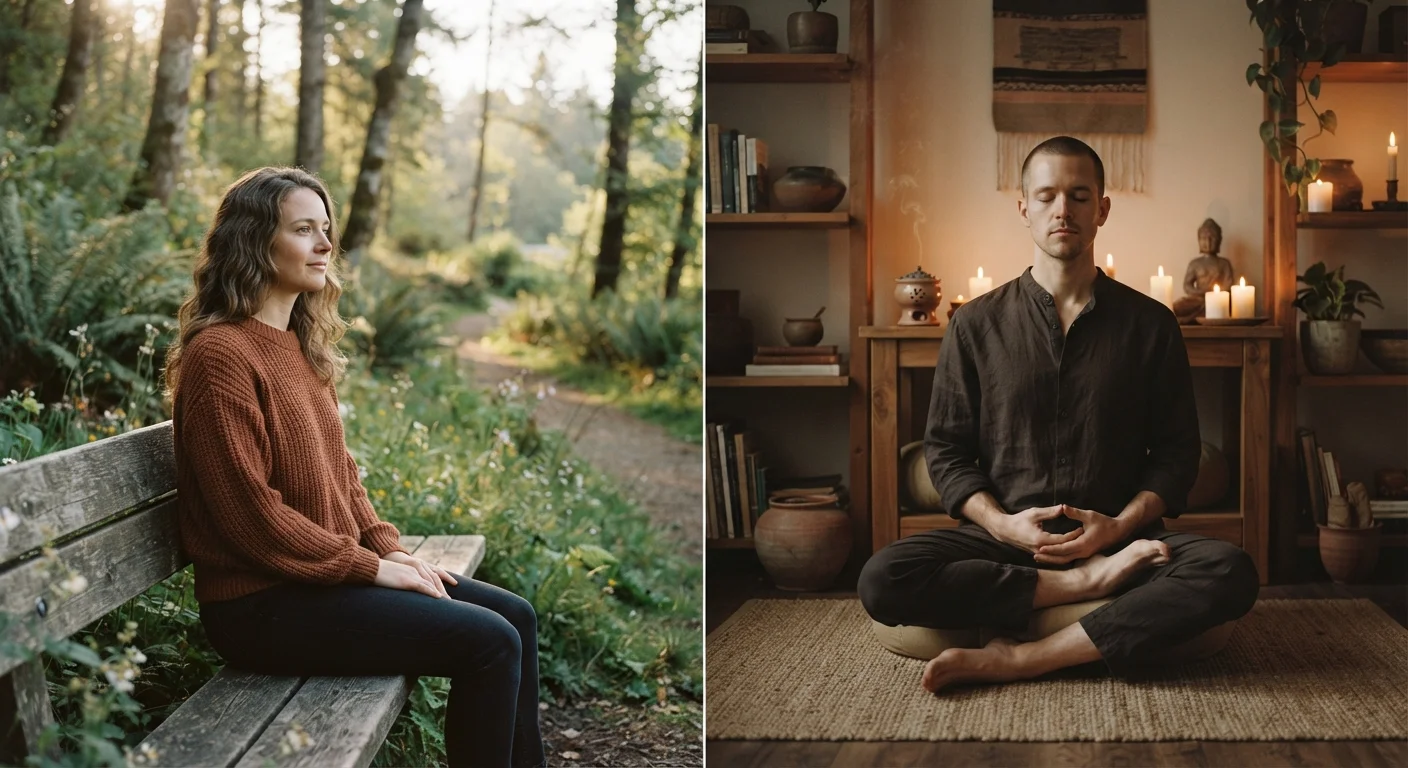
Option A
Mindfulness
The always-available awareness practice.
Best for: People who want to reduce stress and stay present throughout their everyday routines without setting aside dedicated practice time.
Option B
Meditation
The structured, intentional mental training session.
Best for: People who want a focused, repeatable practice to build concentration, emotional regulation, and inner calm over time.
What Each Practice Actually Is
Mindfulness is the practice of paying deliberate, non-judgmental attention to the present moment — noticing your thoughts, feelings, and surroundings without getting swept away by them. It's a quality of awareness, not a specific activity. You can be mindful while cooking, commuting, or having a conversation.
Meditation is a formal, intentional practice where you set aside time to train your attention in a structured way. It often involves sitting quietly, focusing on your breath or a repeated phrase (called a mantra), and gently returning your focus whenever your mind wanders. Meditation is essentially a dedicated exercise session — but for your mind.
The key distinction: mindfulness is something you are; meditation is something you do. Many styles of meditation use mindfulness as their core tool, which is why the two terms get tangled together so easily. Understanding what mental wellness really means can help put both practices in helpful context.
| Criterion | Mindfulness | Meditation |
|---|---|---|
| What it is | A quality of present-moment awareness | A structured, timed mental practice |
| When you do it | Anytime, woven into daily life | Dedicated sessions, usually set aside |
| Time required | No fixed time — moments count | Typically 5–30 minutes per session |
| Equipment needed | None | None (apps or guides optional) |
| Learning curve | Gentle — accessible immediately | Moderate — benefits build with repetition |
| Common formats | Mindful eating, walking, listening | Focused attention, body scan, loving-kindness |
| Primary goal | Stay present in the current moment | Train specific mental skills over time |
What the Research Suggests
Both practices have been studied for their potential effects on stress, anxiety, and overall well-being. According to the National Institutes of Health (NIH), meditation research has shown promising results for reducing stress and improving attention, though researchers note that study quality varies and more rigorous work is still needed.
Mindfulness-Based Stress Reduction (MBSR) — an eight-week structured program developed by Dr. Jon Kabat-Zinn — is one of the most studied mindfulness interventions. It blends formal meditation with informal mindfulness practices and has been reviewed in clinical literature for outcomes related to stress, chronic pain, and mood. The Mayo Clinic notes that relaxation techniques including meditation may help manage symptoms associated with stress-related conditions, but emphasizes these are complementary approaches, not replacements for professional medical care.
8 weeks
Typical length of MBSR programs
Mindfulness-Based Stress Reduction programs studied in clinical research generally run eight weeks and combine formal meditation with everyday mindfulness practice.
18%
U.S. adults who meditate
A 2017 CDC National Health Interview Survey found that approximately 14–18% of U.S. adults reported using meditation as a complementary health approach, up from earlier survey periods.
It's worth remembering that personal experience varies widely. What research describes at a population level may look quite different for any individual. If you're dealing with significant stress, anxiety, or burnout, a healthcare professional can help you figure out whether these tools belong in your overall plan.
How to Choose — or Combine Both
There's no rule that says you must pick one. In practice, many people layer both: starting a morning with 10 minutes of seated meditation, then carrying mindful awareness into the rest of their day. Think of meditation as the gym and mindfulness as staying active throughout the week.
If you're not sure where to begin, consider your lifestyle and what feels sustainable. Mindfulness requires almost no ramp-up — simply pausing to notice three slow breaths before a meeting counts. Meditation asks for a little more commitment: a quiet spot, a consistent time, and patience with an inevitably wandering mind.
Either path benefits from curiosity rather than pressure. Good intentions around self-care can backfire when expectations become another source of stress, so aim for gentle consistency over perfection. Both practices are skills that develop gradually — progress, not performance, is the goal.
A Note on Special Populations
Mindfulness and meditation are generally considered safe for most adults exploring general wellness. However, some individuals — including those with trauma histories, certain psychiatric conditions, or who are pregnant — may find specific practices uncomfortable or need modified guidance. If you belong to any of these groups, speak with a qualified mental health or healthcare professional before starting a new practice.
This article is for general informational purposes only and is not a substitute for professional medical or mental health advice. If you are experiencing significant mental health symptoms, please consult a qualified healthcare professional.
The content on this site is for informational purposes only and is not a substitute for professional advice. Always consult a qualified professional for guidance specific to your situation.