

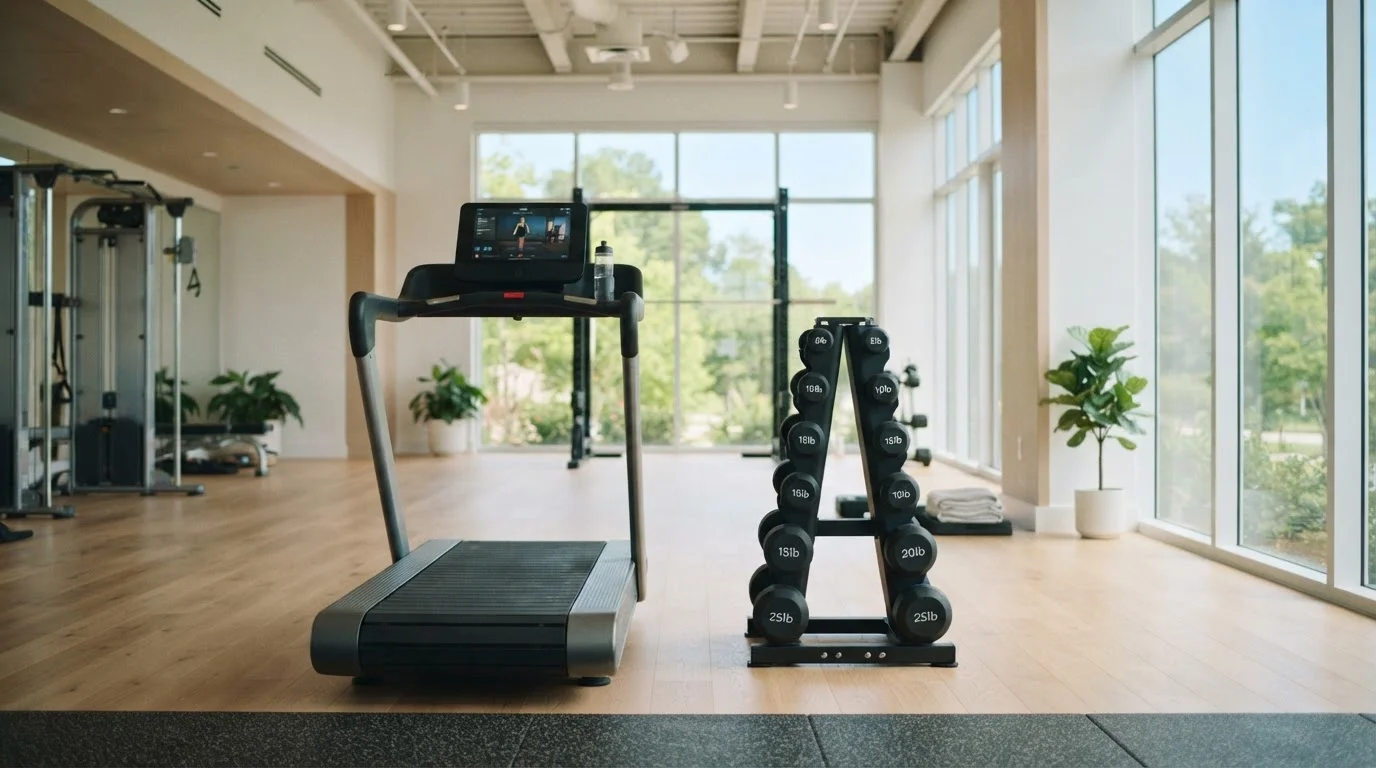
Option A
Cardio Training
The heart-health and endurance foundation.
Best for: Beginners who want to improve cardiovascular fitness, boost energy, and build an early movement habit.
Option B
Strength Training
The muscle-building and metabolic powerhouse.
Best for: Beginners focused on building functional strength, protecting joints, and supporting long-term metabolic health.
Why Beginners Often Feel Pulled in Two Directions
Walk into any gym or scroll through any fitness app and you'll find passionate advocates for both cardio and strength training. For someone just starting out, this can feel paralyzing. The good news is that the debate is less urgent than it seems — both approaches support your health in meaningful ways, and they work best together.
That said, understanding what each type of exercise actually does helps you make smarter choices about where to begin. Before you lace up your shoes, it's also worth checking out our beginner fitness readiness checklist to make sure you're set up for a safe start.
What Cardio and Strength Training Each Do for Your Body
Cardio training — also called aerobic exercise — includes activities that raise your heart rate sustainably over time: walking, jogging, cycling, swimming, and dancing. According to the CDC, regular aerobic activity improves heart and lung function, helps manage blood pressure, supports mood, and reduces the risk of chronic disease.
Strength training — also called resistance training — involves working your muscles against a load, whether that's body weight, free weights, or resistance bands. The NIH notes that it builds muscle mass, strengthens bones, improves balance, and supports a healthy metabolism. Many beginners overlook it, but it's just as important as cardio for overall health.
| Criterion | Cardio Training | Strength Training |
|---|---|---|
| Primary benefit | Heart and lung health | Muscle and bone strength |
| Common beginner options | Walking, cycling, swimming | Bodyweight exercises, resistance bands |
| Equipment needed | Minimal (shoes, space) | Low (bands, body weight) to moderate |
| Calorie burn during session | Typically higher per session | Typically lower per session |
| Resting metabolic effect | Moderate boost post-exercise | Greater long-term boost via muscle mass |
| Injury risk for beginners | Low with moderate intensity | Low with proper form and light load |
| Mood and stress benefits | Well-established | Increasingly supported by research |
One common misconception is that strength training is only for people who want to look muscular. In reality, it's foundational for functional movement — the kind that helps you carry groceries, climb stairs, and avoid injury. Our article on common fitness myths addresses several of these misunderstandings in detail.
What the Guidelines Actually Say
The U.S. Department of Health and Human Services Physical Activity Guidelines for Americans recommend that adults aim for at least 150 minutes of moderate-intensity aerobic activity per week, plus muscle-strengthening activities on two or more days per week. These aren't competing recommendations — they're designed to work alongside each other.
150 min
Weekly moderate aerobic activity recommended
Per the U.S. Department of Health and Human Services Physical Activity Guidelines for Americans.
2x/week
Minimum strength training sessions advised
Federal guidelines recommend muscle-strengthening activity on at least two days per week for adults.
~80%
Adults not meeting both activity guidelines
The CDC estimates most American adults fall short of recommendations for both aerobic and muscle-strengthening activity.
For beginners, this doesn't mean you need to do all of it right away. Starting with 20–30 minutes of walking a few days a week, then gradually adding bodyweight exercises like squats and push-ups, is a perfectly reasonable approach. Our guide to essential bodyweight movements is a helpful starting point for the strength side of things.
How to Decide Where to Start
If you're truly a beginner with no regular exercise habit, the most important factor isn't which type is theoretically superior — it's which one you'll actually do. Research consistently shows that adherence is the biggest predictor of results. A walk you actually take beats a perfect gym program you never start.
That said, here are a few practical guides:
- If movement feels daunting: Start with low-intensity cardio like walking. It's accessible, free, and easy to scale up.
- If you have joint concerns or want to avoid injury: Talk to a healthcare provider first, then consider gentle strength work to stabilize and support your body.
- If you're motivated but prone to burnout: Resist the urge to go all-out immediately. Our article on why consistency beats intensity explains why modest, steady effort outperforms hard early pushes.
Many beginners also find that understanding why people quit exercise helps them build more realistic expectations from the start.
This article is for general informational purposes only and does not constitute medical advice. Please consult a qualified healthcare professional before beginning any new exercise program, especially if you have existing health conditions or concerns.
The content on this site is for informational purposes only and is not a substitute for professional advice. Always consult a qualified professional for guidance specific to your situation.