

Summary
18 items · 20–40 minutes
Why a Readiness Check Matters Before You Begin
Starting a new fitness routine is one of the most positive steps you can take for your overall health — but jumping in without any preparation is one of the most common reasons beginners lose momentum within the first few weeks. A quick readiness check before day one helps you spot potential obstacles, set a realistic starting point, and protect yourself from early injury or frustration.
This checklist is designed for total beginners or anyone returning to exercise after a long break. You don't need to complete every item perfectly — the goal is awareness, not perfection. Work through each section at your own pace, and remember: starting small and staying consistent will always outperform going all-out and burning out. For more on that, see why steady effort beats intensity for new exercisers.
This article is for general informational purposes only and is not a substitute for professional medical advice. Always consult a qualified healthcare provider before starting a new exercise program, particularly if you have any health conditions or concerns.
Check With Your Doctor First
If you have a heart condition, high blood pressure, diabetes, joint problems, or any other chronic health condition, please speak with a qualified healthcare provider before beginning any new exercise program. This is also strongly recommended if you are pregnant, postpartum, or haven't been physically active for an extended period. Your provider can help you identify safe starting points and any modifications you may need.
What You'll Need to Get Started
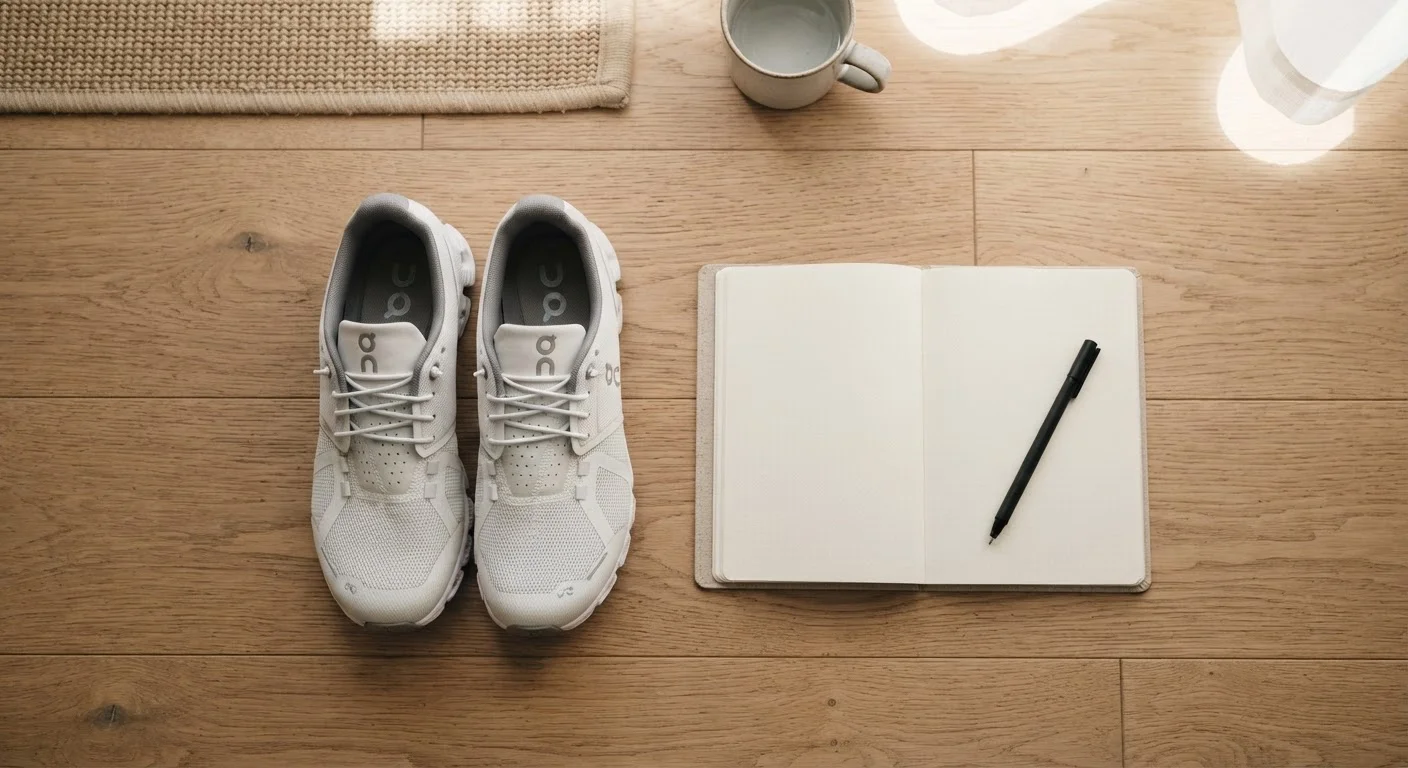
Good news: you need far less than most people think. The tools below cover the basics for a safe, comfortable start — no expensive equipment required.
Supportive Athletic Shoes
Proper footwear cushions impact, supports your foot's structure, and significantly lowers your risk of common beginner injuries like shin splints.
Water Bottle
Staying hydrated before, during, and after exercise is essential for performance and recovery — even during low-intensity sessions.
Notebook or Phone Notes App
Writing down your goals, schedule, and early progress helps reinforce commitment and lets you spot patterns over time.
Free Activity Tracking App
A basic step counter or workout log (many are free on most smartphones) makes it easy to visualize consistency without added cost.
Fitness Mat or Towel
Useful for floor-based stretching, yoga, or bodyweight exercises — a folded towel works perfectly as a beginner substitute.
Your Pre-Start Readiness Checklist
Work through each group below before your first workout. Items marked must are non-negotiable for safety; should items are strongly recommended; and nice-to-have items will enhance your experience but aren't essential on day one.
Health & Safety Preparation
Goal Setting & Planning
Gear & Environment
Recovery & Progress Tracking
Once you've worked through these steps, you'll be ready to put them into action. Our guide on starting movement from zero in your first month walks you through exactly what to do next.
Don't Skip the Recovery Days
One of the most common mistakes beginners make is exercising every single day in the first week out of enthusiasm. Muscles and connective tissue need time to repair and strengthen after exercise — skipping rest days dramatically increases your risk of overuse injuries that can sideline you for weeks. Rest is not a reward for hard work; it is a required part of the process.
Setting Yourself Up to Actually Stick With It
Preparation is only half the equation — the other half is building the conditions that keep you going past the first few weeks. Research consistently shows that most people quit new routines not because exercise is too hard, but because expectations were set too high too soon. Understanding why beginners quit exercise and how to prevent it can help you sidestep the most common traps.
A few practical strategies that support long-term consistency:
- Anchor your workouts to an existing habit — for example, moving after your morning coffee rather than trying to carve out a brand-new time slot.
- Plan for imperfect weeks. Missing one session doesn't erase your progress. What matters is returning to your routine quickly.
- Celebrate process wins, not just outcomes. Showing up three times in a week is worth acknowledging, regardless of the scale or the stopwatch.
You've already done something meaningful by running through this checklist. That kind of intentional preparation is exactly what separates routines that last from ones that don't.
The content on this site is for informational purposes only and is not a substitute for professional advice. Always consult a qualified professional for guidance specific to your situation.