

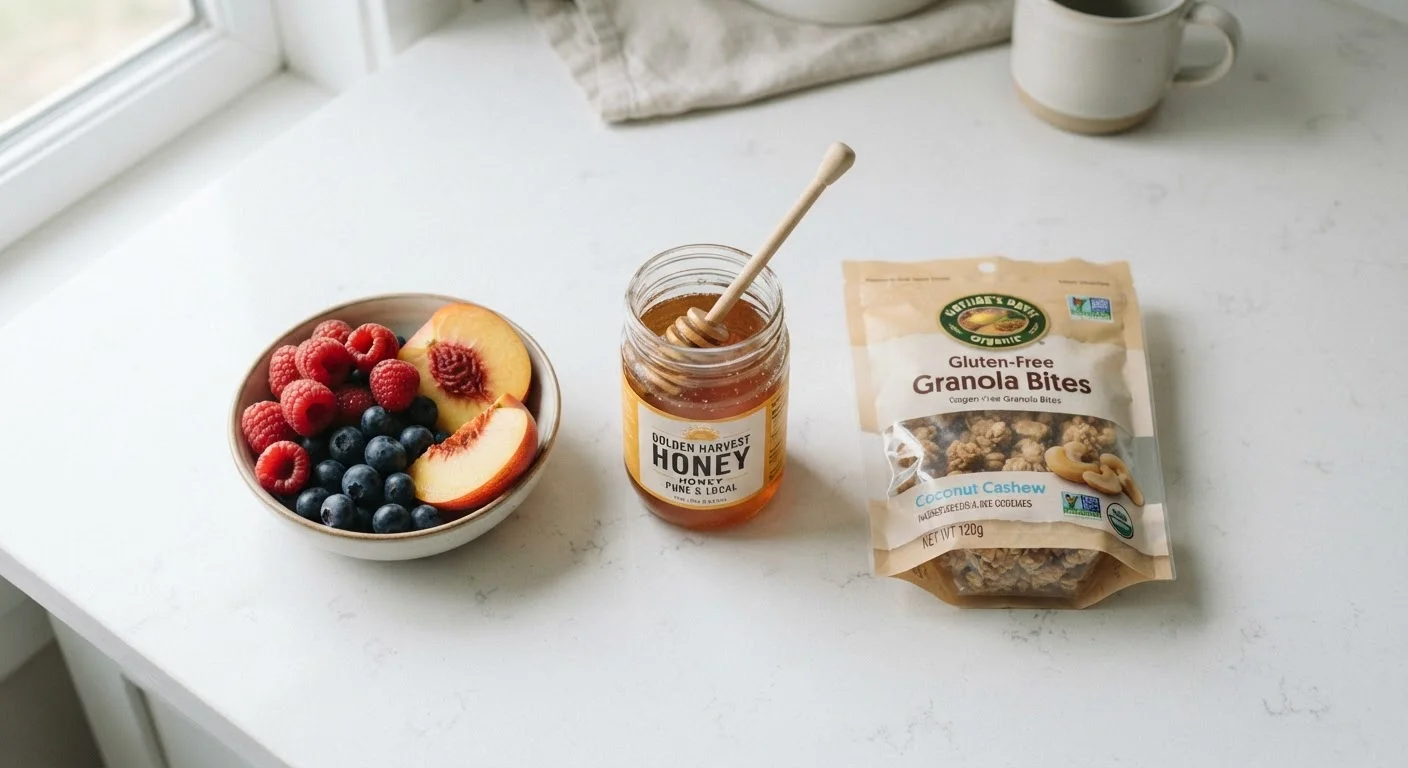
Why Sugar Has Two Very Different Stories
Sugar feels like a simple concept until you look closely at a food label. An apple and a fruit-flavored snack bar might each list 12 grams of sugar — but those numbers are telling completely different stories. Understanding the difference between natural and added sugar isn't about avoiding sweetness; it's about knowing what else comes along with it.
For a broader look at how to read everything a food label communicates, see what the Nutrition Facts label is actually telling you.
17 tsp
Average daily added sugar intake for U.S. adults
According to CDC data, the average American adult consumes about 17 teaspoons of added sugar per day — well above the recommended limit.
10%
Recommended daily calorie limit from added sugars
The 2020–2025 Dietary Guidelines for Americans recommend keeping added sugars below 10% of total daily calories.
60+
Names added sugars can appear under on labels
Sugar appears in ingredient lists under more than 60 different names, making it one of the most disguised ingredients in packaged foods.
Natural Sugar: It Comes With Company
Natural sugars are found in whole foods that haven't been processed. The lactose in milk and the fructose in a peach are both natural sugars. What sets them apart from added sugars isn't the sugar molecule itself — gram for gram, fructose is fructose — it's what surrounds them in the food.
Whole fruit, for example, delivers its sugar alongside fiber, water, vitamins, and antioxidants. That fiber slows digestion, which in turn slows how quickly glucose enters the bloodstream. Dairy brings calcium and protein. In both cases, the sugar is embedded in a nutritional package that makes it behave differently in the body than isolated sweeteners do.
Fruit Juice Is a Common Middle Ground
100% fruit juice contains only naturally occurring sugars and no added sugars on the label — but it lacks the fiber found in whole fruit. Without fiber, the natural sugars in juice are absorbed more quickly than those in a whole piece of fruit. Whole fruit is generally the more nutritionally complete choice, though juice can still be part of a balanced diet in reasonable amounts.
Added Sugar: Sweetness Without the Package
Added sugars are introduced to foods during manufacturing or preparation. They include the obvious (white sugar stirred into a cookie recipe) and the less obvious (dextrose added to a loaf of bread, or grape juice concentrate used to sweeten a "natural" cereal). Their job is typically to improve taste, texture, or shelf life — not to add nutritional value.
Because added sugars arrive without the fiber, protein, or micronutrients found in whole foods, they're digested more quickly. Over time, routinely consuming large amounts of added sugar has been associated — in substantial observational research — with increased risk of conditions like type 2 diabetes, cardiovascular disease, and excess weight gain, according to guidance from institutions such as the CDC and the American Heart Association.
Understanding ingredient lists more broadly can also help here. See reading an ingredient list without getting confused by chemistry for more context on how packaged food labels work.
Check the Added Sugars Line First
When evaluating a packaged food, go straight to the "Includes Added Sugars" sub-line on the Nutrition Facts panel rather than Total Sugars alone. Total Sugars combines both natural and added, which can be misleading. The Added Sugars line tells you specifically what the manufacturer put in — that's the number most dietary guidance refers to when setting limits.
Decoding the Label: Where to Look
The updated Nutrition Facts panel, phased in by the FDA for most manufacturers, now shows a dedicated line: Includes X g Added Sugars beneath Total Sugars. This makes it possible to see at a glance how much of a food's sweetness was built in versus put in.
The ingredient list tells its own story. Added sugars appear under a wide range of names — more than 60 by some counts. A few common ones to recognize:
- Names ending in -ose: sucrose, fructose, dextrose, maltose
- Syrups: corn syrup, high-fructose corn syrup, rice syrup, malt syrup
- "Natural" sweeteners: honey, maple syrup, agave nectar, coconut sugar
- Concentrates: fruit juice concentrate, cane juice
Remember, ingredients are listed in descending order by weight. If a sweetener appears in the first three or four ingredients, it makes up a meaningful portion of the food.
A Realistic Approach to Sugar in Your Diet
The goal here isn't to make sugar a forbidden subject. The 2020–2025 Dietary Guidelines for Americans suggest that added sugars make up less than 10% of your daily calorie intake — a guideline, not a moral rule. Most Americans do consume more added sugar than that, largely because it's prevalent in beverages, condiments, and processed foods where it isn't always obvious.
Small, sustainable shifts tend to work better than elimination. Swapping a sweetened beverage for water a few times a week, checking the added sugars line before buying a packaged food, or choosing whole fruit over a fruit-flavored snack are the kinds of low-pressure changes that add up over time.
For related context on how other macronutrients are framed on labels, fats that show up in your diet and what each one does covers a similar breakdown for dietary fat.
“The science is clear that too much added sugar in the diet is detrimental to health. It's not about banning sugar — it's about awareness and making small, informed shifts.”
— Frank Sacks, Professor of Cardiovascular Disease Prevention, Harvard T.H. Chan School of Public Health
This article is for informational purposes only and is not a substitute for professional medical or dietary advice. Speak with a qualified healthcare provider before making significant changes to your diet.
Frequently Asked Questions
Added sugars are any sugars or caloric sweeteners that are added to foods during processing or preparation. This includes white sugar, brown sugar, high-fructose corn syrup, honey, maple syrup, molasses, and fruit juice concentrates, among many others. The FDA requires these to be listed separately on the Nutrition Facts panel.
Natural sugars in whole foods like fruit come alongside fiber, water, and nutrients that slow absorption and provide additional health benefits. Added sugars, by contrast, contribute calories without those accompanying nutrients. Most health guidance focuses on limiting added sugars rather than avoiding naturally occurring ones.
The 2020–2025 Dietary Guidelines for Americans recommend limiting added sugars to less than 10% of total daily calories. For a 2,000-calorie diet, that works out to about 50 grams, or roughly 12 teaspoons. The American Heart Association suggests even lower limits for additional heart-health benefit.
Yes. Even though honey is a natural product, it is considered an added sugar when it is mixed into foods during processing or preparation. Its nutritional profile is not meaningfully different from other sweeteners when consumed in the same amounts.
Added sugars appear under many names. Look for anything ending in "-ose" (such as fructose or maltose), syrups of any kind, nectars, juice concentrates, molasses, and malt. Ingredients are listed in descending order by weight, so finding sugar near the top signals a significant amount.
Not necessarily. "No sugar added" means no sugars were added during processing, but the food may still contain naturally occurring sugars from fruit, dairy, or other whole-food ingredients. Always check both the Total Sugars and Added Sugars lines on the Nutrition Facts panel for the full picture.
The content on this site is for informational purposes only and is not a substitute for professional advice. Always consult a qualified professional for guidance specific to your situation.