

Why Most Packing Advice Falls Short
Most packing guides are written for a specific trip type — a beach vacation, a business trip, a European backpacking adventure. The problem is that the underlying logic rarely gets explained, so readers can't adapt it when their situation is slightly different.
What actually works is a set of principles that hold regardless of destination, duration, or travel style. Whether you're heading out for a long weekend or three weeks abroad, the same core thinking applies. The goal of this guide is to give you that foundation — so you never start from scratch again.
If you're also budgeting your trip carefully, this pre-booking checklist pairs well with these principles before you commit to any plans.
The Core Packing Principles
These practices apply across virtually every trip type. Apply them consistently and packing becomes a reliable, low-stress process rather than a last-minute scramble.
Build your packing list around activities, not calendar days.
Counting 'one outfit per day' leads to an overstuffed bag every time. Instead, list the specific activities you'll actually do — hiking, a nice dinner, long travel days — and pack one outfit that works for each type. Most clothes can be worn more than once.
Choose a color palette before choosing individual items.
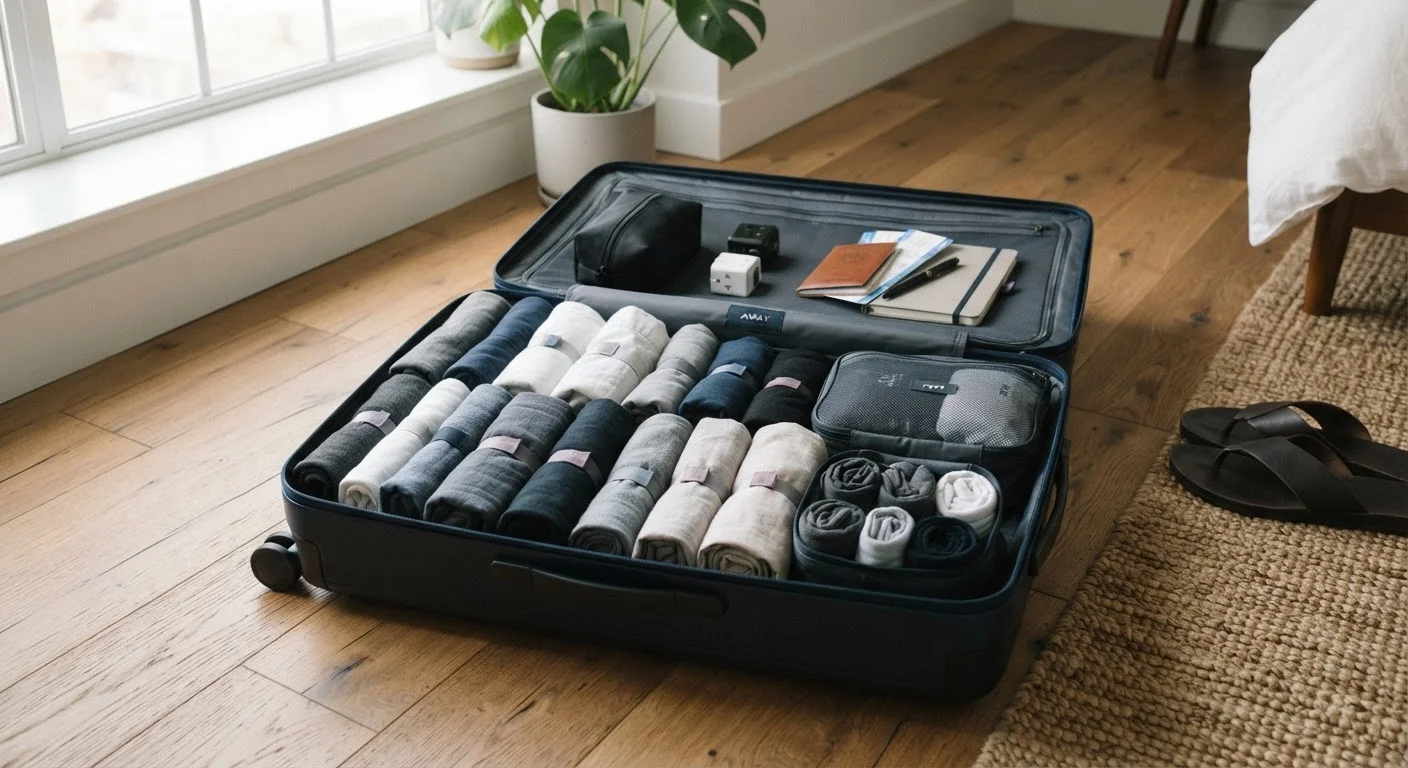
Packing items that share two or three base colors means every piece can mix and match with the others, multiplying your outfit options without multiplying the number of items. This is the single most effective technique for packing light without feeling underdressed.
Lay everything out, then remove at least one-third before packing.
The physical act of seeing all your items together — before they go into a bag — reveals redundancy that isn't obvious when you're mentally listing. Removing a third forces prioritization and almost always results in a bag you can comfortably carry.
Pack toiletries in travel-size containers and keep them permanently ready.
Rebuilding your toiletry kit from scratch before every trip wastes time and often leads to forgotten items. A dedicated, always-packed toiletry bag eliminates this friction and ensures consistency.
Use your bag's weight as an objective limit, not just its capacity.
A bag can technically hold more than you should carry. Many travelers fill available space by default, which leads to bags that are legal for check-in but exhausting to manage. Setting a personal weight ceiling — regardless of bag size — keeps things manageable.
Separate 'what you might need' from 'what you will need.'
Anxiety-packing — bringing items just in case — is the leading cause of overstuffed bags. Most 'just in case' items are available to purchase at the destination if genuinely needed. Distinguishing between likely needs and hypothetical ones sharpens your list significantly.
Quick Wins You Can Apply Right Now
You don't need to overhaul your entire travel routine to pack better. A few targeted changes make an outsized difference — especially if you're preparing for an upcoming trip.
For cruise travel specifically, the packing calculus changes slightly — formal nights, port-day gear, and limited cabin storage all require extra planning. See our cruise packing checklist for a trip-specific breakdown.
Building Toward a Master Packing List
A master packing list is a living document — not a static inventory. Start by writing down everything you think you need for a typical trip, then use each journey to refine it. After every trip, note what you never touched and remove it. Note what you wished you'd brought and add it.
Start Your List Three Days Before You Pack
Don't write and pack on the same day. Create your list a few days before you travel, then let it sit. You'll almost always think of something you missed — or realize something you planned to bring isn't necessary. This small buffer consistently produces better-packed bags.
Over time, your list becomes a personal travel asset that's tailored to how you actually travel. Keep it in a notes app or a simple document so it's available when you need it.
Once your packing is squared away, turn your attention to pre-departure logistics. Our pre-departure checklist for occasional travelers covers the small-but-important things that are easy to overlook when you only travel once or twice a year. And if you want to think through safety documentation before you leave, building a travel safety plan is a helpful companion resource.
Carry-On vs. Checked Baggage: Worth Knowing
Packing into a carry-on isn't always possible — some trips genuinely require more gear. But when it is possible, the benefits extend beyond just saving on baggage fees. Carry-on-only travel means faster airport transitions, no waiting at baggage claim, and zero risk of a checked bag being lost or delayed. If you're weighing the trade-offs, this overview of carry-on-only travel lays out the full case.
The content on this site is for informational purposes only and is not a substitute for professional advice. Always consult a qualified professional for guidance specific to your situation.