

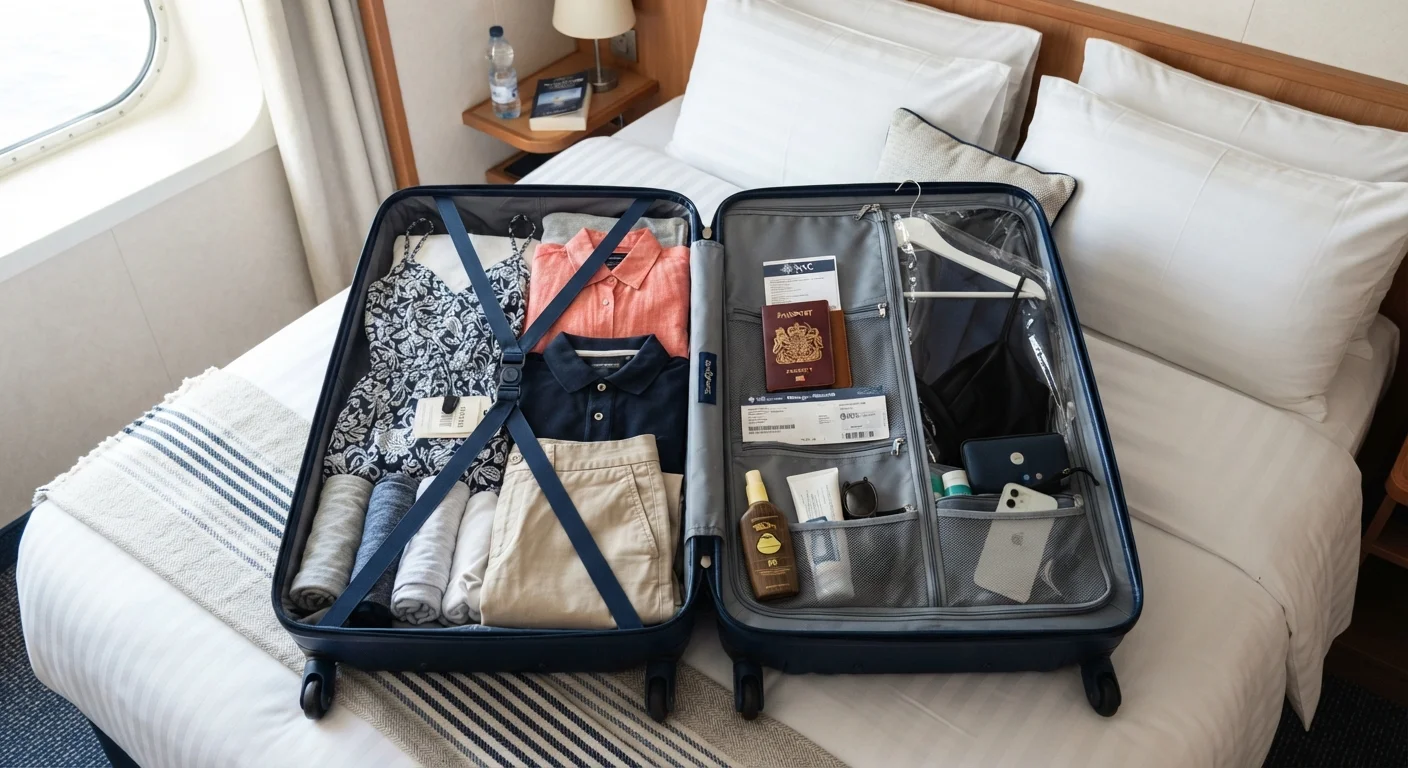
Summary
32 items · 30–60 minutes
Why Cruise Packing Is Different
Packing for a cruise isn't the same as packing for a hotel stay or a backpacking trip. You'll be living out of a single cabin for days or weeks, navigating dress codes for multiple dining venues, stepping off the ship into tropical ports, and potentially dealing with rough seas — all on the same voyage. The checklist below cuts through the guesswork so you arrive prepared and don't waste money buying basics onboard at inflated prices.
Before you start pulling things from your closet, review your cruise line's specific guidelines. Policies on prohibited items, luggage size limits, and dress codes vary by line. Also consider reading up on what to expect from boarding to disembarkation — knowing the timeline helps you understand when you'll need each item.
Cruise Line's Prohibited Items List
Verify what items are banned before packing — each line publishes its own list online, and confiscated items are not returned until disembarkation.
Cabin-Safe or Small Lockbox
Secure your passport, extra cash, and valuables in the in-cabin safe when ashore.
Packing Cubes
Organize clothing by category within your suitcase so unpacking into small cruise cabin drawers is faster and neater.
Portable Power Bank
Keep your phone charged during long port excursions when you're away from cabin outlets for hours.
The Complete Cruise Packing Checklist
Work through each category below before you zip your bag. Items marked must are non-negotiable; should items are strongly recommended for most voyages; nice to have items depend on your itinerary and personal preferences.
Documents & Financial
Clothing & Dress Codes
Toiletries & Health
Carry-On Essentials (Embarkation Day)
Port Day Gear
What to Leave Behind
Your Luggage Disappears the Night Before Disembarkation
On the final night of your cruise, you'll place your main luggage outside your cabin door for collection — and you won't see it again until the terminal. Pack a separate overnight bag with everything you need for that last night and the next morning: medications, a change of clothes, toiletries, travel documents, and any valuables. This surprises many first-time cruisers who aren't expecting it.
Wondering what you can leave behind? Skip the full-size hair dryer (cabins almost always have one), hotel-size shampoos (bring what you like), and heavy hardcover books (add them to your e-reader instead). If you're watching onboard spending, see our guide on budgeting for onboard and port costs before you sail.
Verify Entry Requirements for Every Port
Each port of call may have its own entry requirements, including proof of vaccination, identification, or local permits for certain activities. Requirements can change with little notice. Always check the official government travel advisory site for each destination and confirm requirements with your cruise line before departure — do not rely solely on this checklist or any single source.
Special Situations Worth Planning For
Seasickness: Motion sickness can affect even experienced sailors. Pack over-the-counter remedies such as meclizine tablets or acupressure wristbands in your carry-on so they're accessible on embarkation day. Onboard medical centers stock remedies, but at a steep markup.
Health conditions: If you manage a chronic illness or take prescription medications, bring more than enough supply for the full voyage plus a few extra days in case of itinerary changes. Keep medications in their original labeled containers and store them in your carry-on, not in checked luggage. For broader guidance, see what to consider before booking if you have a health condition.
Travel insurance: A packing list isn't complete without thinking about protection. Cruise-specific policies can cover trip cancellations, missed ports, and medical evacuations — situations a standard policy may not. Learn what cruise travel insurance typically covers before your departure date.
This article provides general travel information for educational purposes. Verify all documentation requirements, health guidelines, and cruise line policies with official sources before your trip.
The content on this site is for informational purposes only and is not a substitute for professional advice. Always consult a qualified professional for guidance specific to your situation.