

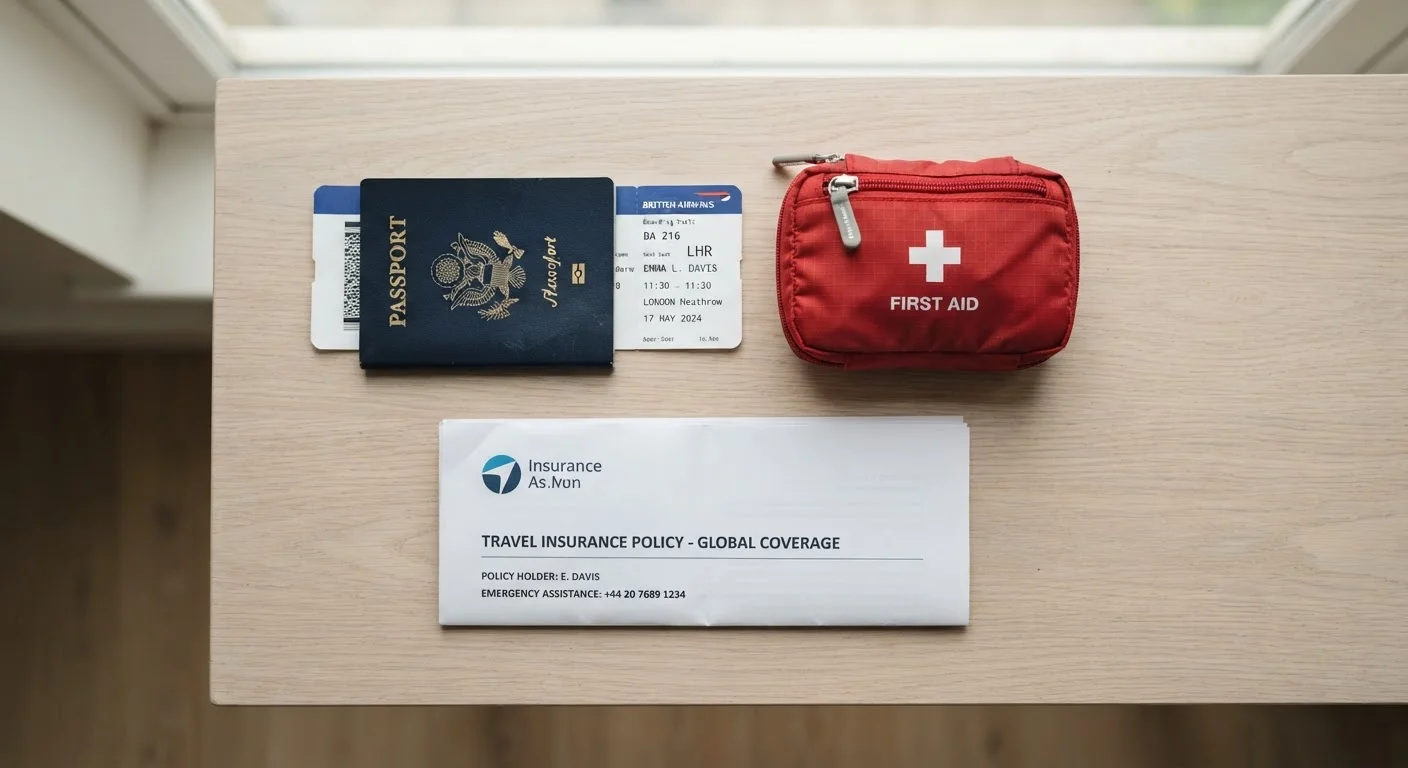
What Travel Insurance Is — and Isn't
Travel insurance is not a blanket safety net that covers every inconvenience. It's a contract with a defined list of covered events, exclusions, and dollar limits. Understanding this distinction is the most important step before purchasing any policy.
Most standard travel insurance plans bundle several types of coverage together. The core components typically include:
- Trip cancellation — reimburses prepaid, non-refundable costs if you cancel for a covered reason before departure.
- Trip interruption — covers costs if you must cut a trip short after it begins, such as a medical emergency mid-trip.
- Emergency medical coverage — pays for unexpected illness or injury treatment while traveling.
- Medical evacuation — covers the cost of transporting you to an appropriate medical facility, which can run into tens of thousands of dollars internationally.
- Baggage loss or delay — reimburses you for lost, stolen, or significantly delayed luggage.
- Travel delay — provides a daily allowance for meals and accommodations if your trip is delayed by a covered cause.
What you're buying is financial protection against a specific list of disruptions — not protection against all possible disruptions. That distinction matters enormously when a claim is denied.
For a broader look at how travel insurance fits alongside other policy types, see this plain-language breakdown of travel insurance coverage types.
The Most Common Coverage Gaps to Know
Even travelers who buy insurance are often surprised to learn what their policy doesn't cover. These are the gaps that catch people off guard most often:
"Cancel for Any Reason" Is a Separate Upgrade
Standard trip cancellation coverage only pays for cancellations due to specific listed reasons. If you want the freedom to cancel for personal, work, or other unlisted reasons, you'll need to add a Cancel for Any Reason (CFAR) rider. CFAR typically reimburses 50–75% of your prepaid costs — not 100% — and must be purchased within a defined window after booking, usually within 14 to 21 days of your first deposit.
Pre-Existing Conditions
If you have a health condition that existed before you purchased your policy, any claim related to that condition is likely to be denied under a standard plan. The window to add a pre-existing condition waiver is narrow — often 14 to 21 days after your first trip deposit. Miss that window, and you may not be able to get coverage for it at all.
"Known" Events
Once a major storm, airline strike, or other disruptive event has been publicly announced, it becomes a "known" event — and insurers will not cover cancellations or losses tied to it if you purchase the policy after the announcement. Buying insurance early, before any disruptions are known, is always the better approach.
Pandemic-Related Cancellations
Coverage for pandemic-related disruptions is inconsistent across policies. Some plans have added COVID-19-related benefits; many still exclude them entirely or only partially cover them. Read this section of any policy carefully.
Adventure and High-Risk Activities
Standard policies frequently exclude injuries related to adventure sports — skiing, scuba diving, motorcycling, or similar activities — unless you purchase a specific rider or choose a plan designed for adventure travelers. If your trip involves physical activities beyond typical sightseeing, verify whether your policy covers medical care related to those activities.
First-time travelers often make assumptions about what's included that lead to expensive surprises. See what first-time travelers commonly assume is covered for related guidance.
Medical Coverage Abroad: A Critical Gap Most Americans Miss
Many Americans traveling internationally assume their domestic health insurance will work the same way overseas. In most cases, it won't. Medicare, for example, generally does not cover care received outside the United States. Many private plans have limited international benefits or require you to pay out of pocket first and seek reimbursement later.
$50,000–$100,000+
Typical cost of international medical evacuation
The U.S. Travel Insurance Association and travel health organizations cite medical evacuation as one of the costliest travel emergencies, with remote-location airlifts frequently exceeding six figures.
~37%
Americans who buy travel insurance for international trips
U.S. Travel Insurance Association research has found that fewer than half of American international travelers purchase travel insurance before departing.
14–21 days
Typical window to add a pre-existing condition waiver
Most insurers require the waiver to be purchased within a short window after the first trip deposit is made; this window varies by insurer and policy.
Emergency medical evacuation is where this gap becomes most financially dangerous. Airlifting a patient from a remote location or a country with limited medical infrastructure to an appropriate facility can cost $50,000 to well over $100,000. Standard travel medical coverage may help pay for treatment, but evacuation coverage is a separate benefit — and one worth confirming is included in your plan.
If you have ongoing health needs or are traveling to destinations with limited healthcare infrastructure, consider a plan that specifically emphasizes robust medical and evacuation benefits rather than defaulting to the cheapest bundled option.
This article provides general information about travel insurance and is not a substitute for personalized insurance, financial, or legal advice. Coverage terms vary by insurer and state. Always read your actual policy documents and consult a licensed insurance professional for guidance specific to your situation.
How to Read a Policy Before You Buy
The Summary of Benefits that appears in most insurance marketing materials is not the full policy. It highlights covered events but often glosses over exclusions, sublimits, and documentation requirements. Before purchasing, look for these specific sections in the actual policy document:
Buy Insurance Early — Right After Your First Deposit
Purchasing travel insurance as soon as you make your first non-refundable trip deposit gives you the best chance at broad coverage. It locks in eligibility for pre-existing condition waivers, protects you against events that haven't yet been announced, and ensures the longest possible coverage window for trip cancellation benefits.
- Covered reasons — For trip cancellation, list the exact events that qualify. Common covered reasons include serious illness or injury, death of a family member, jury duty, and natural disasters. "I changed my mind" is never a covered reason under a standard policy.
- Exclusions — This section tells you what is explicitly not covered. Read it thoroughly.
- Benefit limits and sublimits — A policy may advertise $2,000 in baggage coverage, but have a $250 sublimit per item and a $500 limit on electronics.
- Claims documentation requirements — Know what proof you'll need before you need it. Airline delay letters, medical records, and police reports are common requirements.
- Claim notification deadlines — Many policies require you to notify the insurer within a specific timeframe after a covered event. Missing this window can result in a denied claim.
If a claim is denied and you believe it was wrongly rejected, you generally have the right to appeal. Understanding that process in advance is worthwhile — for context, see what to do when an insurance claim is denied.
Travel insurance is one piece of being a prepared traveler. For broader coverage of overlooked insurance gaps, this guide on common coverage gaps is worth reviewing before your next trip.
Frequently Asked Questions
Standard trip cancellation coverage only pays out for covered reasons listed in the policy, such as serious illness, death of a family member, or a natural disaster at your destination. If you want flexibility to cancel for personal reasons, you'd need a "Cancel for Any Reason" (CFAR) add-on, which typically reimburses 50–75% of prepaid costs and must be purchased shortly after your initial trip deposit.
Most standard policies exclude pre-existing conditions, defined as any illness or injury you had before purchasing the policy. However, many insurers offer a pre-existing condition waiver if you buy the policy within a specific window — often 14 to 21 days — after making your first trip deposit. Check your policy's exact definition of "pre-existing condition," as it varies by insurer.
Travel insurance medical coverage and your domestic health insurance serve different purposes and should not be confused. Many U.S. health plans provide little to no coverage outside the country. Travel insurance can fill that gap with emergency medical and evacuation benefits, but it generally is not designed as a substitute for comprehensive health coverage.
Most travel insurance policies include baggage loss or delay coverage, but reimbursement limits are often modest — commonly $500 to $2,500 total, with per-item caps. High-value items like electronics or jewelry may be excluded or separately limited. You'll also need documentation such as a property irregularity report from the airline to file a claim.
For short, inexpensive domestic trips, the cost-benefit analysis often tilts away from travel insurance. However, it can make sense if you've prepaid significant non-refundable costs (hotels, tours, events), or if you're traveling during a season prone to weather disruptions. Evaluate your specific non-refundable expenses before deciding.
Contact your insurer as soon as possible after the covered event occurs — many policies have notification requirements with tight deadlines. Gather all supporting documentation: receipts, medical records, airline delay confirmations, or police reports as applicable. Submit your claim through the insurer's official process and keep copies of everything you send.
The content on this site is for informational purposes only and is not a substitute for professional advice. Always consult a qualified professional for guidance specific to your situation.