

Why Fit Is the Foundation of Every Great Outfit
Ask any professional stylist what makes the biggest difference in how someone looks, and the answer is almost always the same: fit. A $20 pair of trousers that fits your body well will look sharper than a $200 pair that bags or bunches in the wrong places. That's not marketing — it's just how clothing works visually.
When clothes fit correctly, the eye reads the garment cleanly. Shoulders sit where your shoulder actually ends. Sleeves reach your wrist without swallowing your hand. Trousers follow the line of your leg without pulling at the thigh or pooling at the ankle. None of this requires an expensive tailor for every piece, though tailoring even one or two key items can be a worthwhile investment.
A simple self-check: stand in front of a mirror in your outfit and move naturally — sit down, reach up, walk a few steps. If you're tugging, pulling, or adjusting constantly, the fit isn't working for you.
If you find a brand or cut that fits your body well, note the specific size and style name — sizing varies wildly between brands, and your ideal fit in one label may be completely different in another.
Fit inconsistency across brands is one of the most common frustrations shoppers face, and keeping a simple record eliminates repeat guesswork.
Before donating a piece because it "doesn't look right," try it with a different bottom or tuck the hem — sometimes a simple styling tweak rescues an item you were ready to give up on.
Small changes in how a garment is worn can dramatically alter its visual impact, and this approach extends a wardrobe's useful range without spending anything.
Building a Practical Everyday Wardrobe
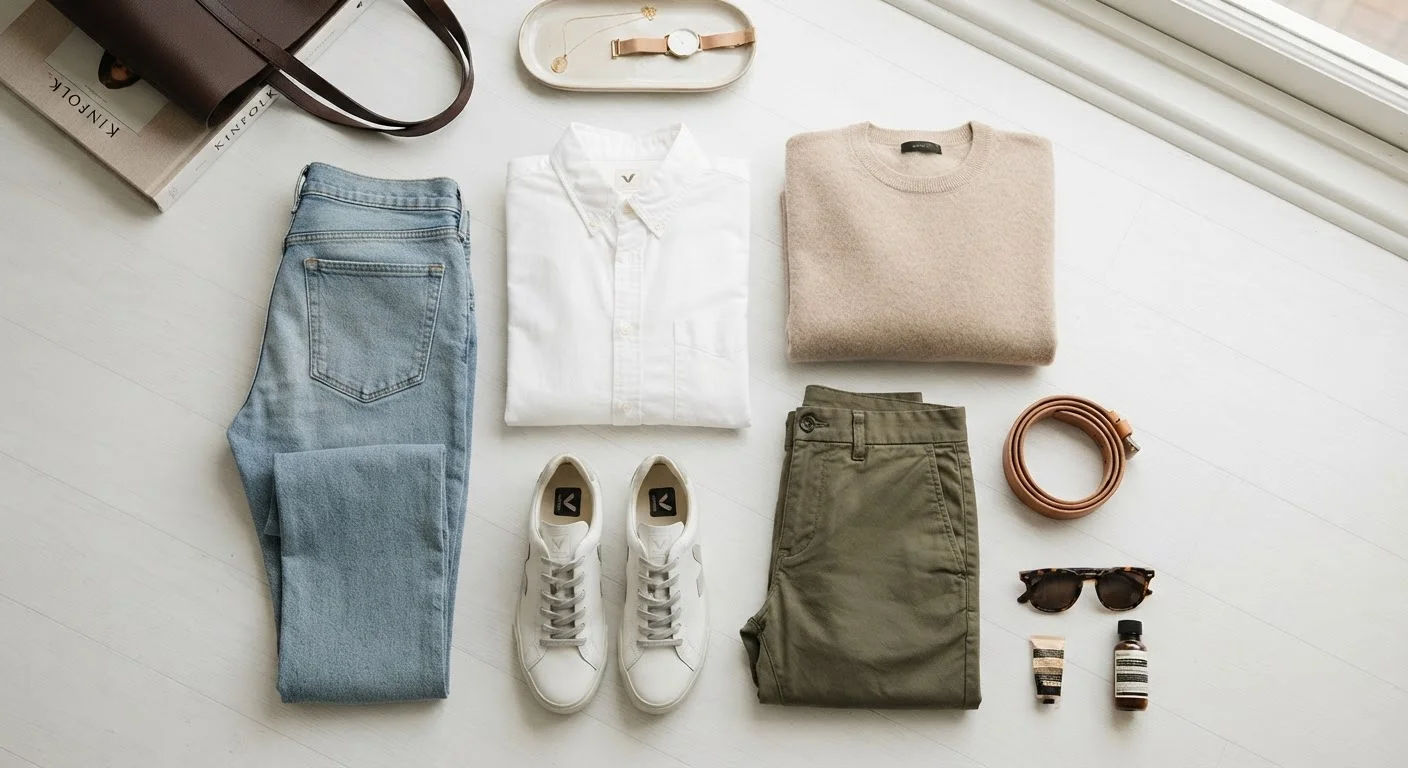
The idea of a "capsule wardrobe" — a small set of versatile, mix-and-match pieces — gets talked about a lot, and for good reason: it works. Rather than a closet stuffed with single-use items, a practical wardrobe centers on a handful of neutral foundational pieces (think white, black, navy, grey, tan) that pair easily with almost anything, then adds a few items with more personality or color.
Core everyday staples to consider building around include:
- Well-fitting jeans in a versatile wash
- A couple of plain or lightly textured T-shirts in neutral tones
- A button-front shirt (chambray or Oxford cloth works for many occasions)
- Comfortable flat shoes and one pair of clean sneakers
- A simple layering piece — a cardigan, lightweight jacket, or structured blazer
The goal isn't minimalism for its own sake; it's making sure every item you own works with other items you own. That's what turns a closet into an actual wardrobe. For concrete outfit combinations built from pieces like these, see our everyday outfit formulas guide.
~$1,700
Average annual American clothing spend
According to the U.S. Bureau of Labor Statistics Consumer Expenditure Survey, American households spend roughly this amount on apparel and related services each year.
30+
Wears to justify keeping a garment
Fashion sustainability researchers often suggest 30 wears as a rough benchmark for a garment delivering genuine value relative to its production cost.
Understanding Color Without Overthinking It
Color theory sounds intimidating, but for everyday dressing you really only need a few practical ideas. The simplest starting point: neutrals mix with nearly everything, so anchoring outfits in neutral tones reduces the chance of a clash. From there, adding one deliberate pop of color — in a shirt, scarf, bag, or shoe — keeps things interesting without requiring a design degree.
A few grounding principles that tend to hold up in practice:
- Analogous colors (colors sitting next to each other on a color wheel, like navy and teal) are low-risk pairings.
- Complementary colors (opposites on the wheel, like rust and blue) create contrast and feel bolder — great when you want an outfit to stand out.
- Tonal dressing — wearing different shades of the same color family head to toe — looks intentional and is surprisingly easy to pull off.
If you're ever unsure, defaulting to a neutral base (navy, white, grey, tan, black) with one color accent is a reliable approach that rarely goes wrong.
Dressing for Different Occasions
One of the most common anxieties around fashion is not knowing what to wear to a specific event. The honest truth: dress codes in everyday American life have loosened significantly, and most situations fall somewhere on a spectrum from casual to smart casual to business casual to formal.
Rather than memorizing rules, try reading context clues: Where is it? Who else will be there? What's the purpose of the event? A weekend barbecue, a job interview, a wedding, and a first date each call for something different — but you don't need four entirely different wardrobes to cover them. Smart item selection and a few swappable pieces do the heavy lifting.
Avoid Overdressing AND Underdressing
When in doubt about a dress code, it's generally safer to err slightly more polished than too casual — but arriving drastically overdressed can feel just as awkward as underdressing. When you genuinely can't read the context, a simple, well-fitted outfit in neutral tones tends to work across most situations without standing out for the wrong reasons.
For a practical checklist you can consult before any event, see Getting Dressed for Different Occasions — it covers essentials from casual weekends to formal events in a quick-scan format.
Caring for Your Clothes So They Last
Clothing care is one of the most underrated parts of personal style — and one of the most cost-effective. Washing clothes incorrectly, drying on high heat unnecessarily, or storing garments poorly can shorten their lifespan by years. The care label sewn into every garment is there for a reason; taking 10 seconds to read it before laundering can prevent a lot of shrinkage, fading, and fabric damage.
A few habits that protect your wardrobe over time:
- Wash most items in cold water — it's gentler on fabric and uses less energy.
- Air-dry anything delicate, structured (like blazers), or prone to shrinking.
- Hang or fold items properly — cramming clothes into a drawer creates wrinkles and stress on seams.
- Deal with stains promptly; letting them set makes removal much harder.
- Use a fabric shaver (also called a lint remover or depiller) to restore the surface of pilling knitwear.
Taking care of what you already own is genuinely one of the most budget-friendly style moves you can make. And if you're interested in rounding out a complete personal care approach, our Beauty Basics hub covers skincare and makeup fundamentals in the same accessible spirit.
Store Seasonal Items Properly
Before packing away off-season clothes, wash them first — oils and odors set over time and attract pests. Breathable cotton storage bags protect better than sealed plastic bins, which can trap moisture and cause mildew.
The content on this site is for informational purposes only and is not a substitute for professional advice. Always consult a qualified professional for guidance specific to your situation.