

Why Dress Codes Are So Confusing (And How to Fix That)
You get the invitation. You see the words smart casual or business casual — and suddenly you're standing in front of your closet wondering what any of it means. You're not alone. Dress code labels are notoriously inconsistent, and different hosts, workplaces, and regions can use the same term to mean slightly different things.
This guide cuts through the noise. Think of it as your plain-language decoder ring for the dress codes you'll actually encounter — at job interviews, weddings, office parties, dinners out, and everything in between. Once you understand the underlying logic of each level, choosing an outfit becomes a lot less stressful.
If you want to go further, our occasion-by-occasion style checklist helps you verify you've covered all the essentials before heading out the door.
Business Casual
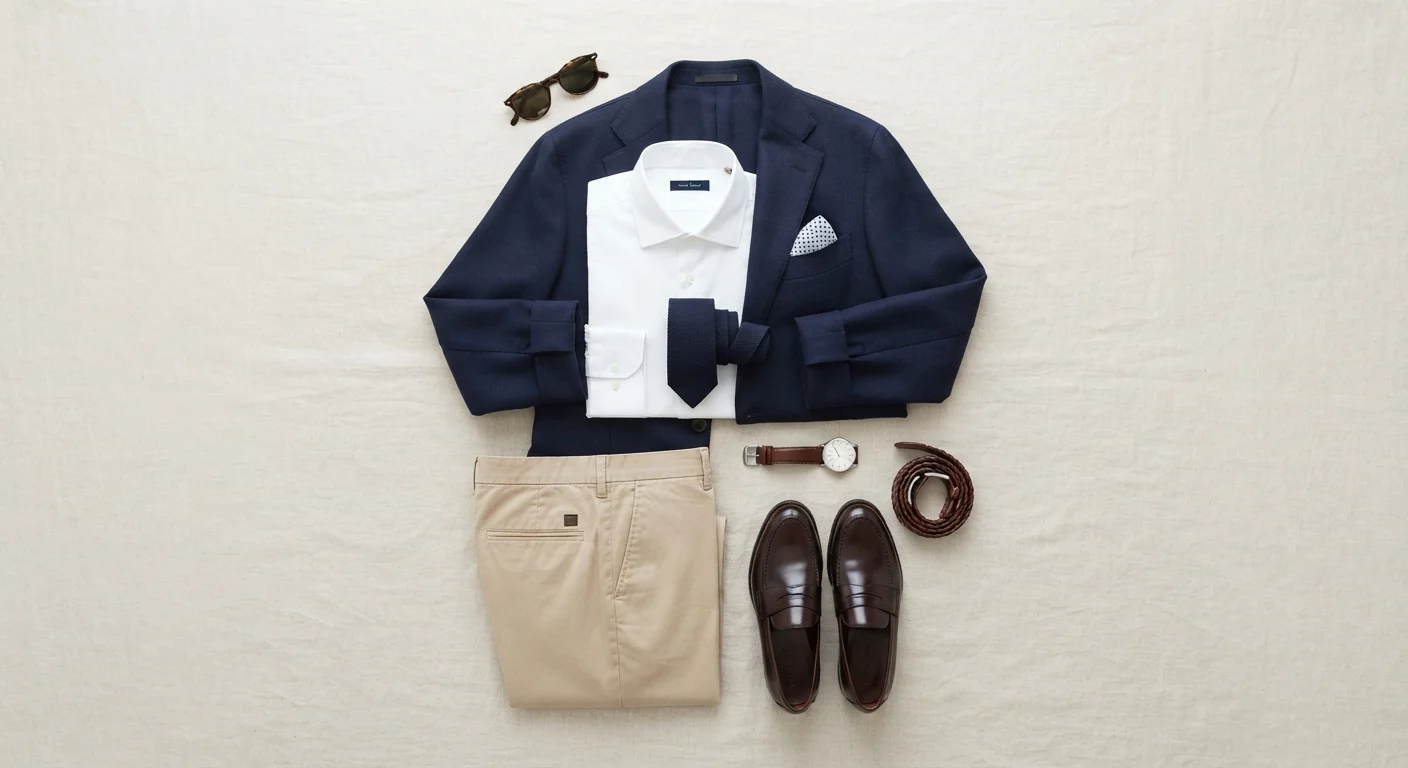
A professional dress code that's less formal than traditional office attire. It typically includes collared shirts, slacks or chinos, and neat shoes — without requiring a full suit and tie.
Smart Casual
A flexible, everyday-elevated dress code that sits between casual and business casual. It means looking intentionally put-together without being formal — clean clothes, good fit, thoughtful footwear.
Semi-Formal
An occasion-appropriate dress code one step below black tie. For most people, it means a suit or coordinated formal separates; for others, a cocktail or midi formal dress.
Dress Code
A set of clothing expectations for a specific setting or event. Dress codes range from casual to white tie and signal what level of formality is expected of guests or attendees.
Cocktail Attire
Often used interchangeably with semi-formal, cocktail attire typically means a knee- to midi-length formal dress or a suit, worn for evening events or upscale gatherings.
Fit
How clothing sits on your body — whether it's too loose, too tight, or just right. Proper fit is widely considered the single biggest factor in whether an outfit looks polished, regardless of price.
The Three Dress Codes You Need to Know
Most everyday Americans will encounter these three dress codes far more than any other. Here's exactly what each one expects.
| Most misunderstood dress code | Smart Casual |
| Business Casual key item | Collared shirt + tailored trousers or chinos |
| Semi-Formal occasion examples | Weddings, galas, formal dinners |
| Universal tip | When in doubt, dress one level up |
| Factor that matters most | Fit — more than brand or price |
Business Casual
The vibe: Professional, but not buttoned-up. Think: you look like you work somewhere respectable, but you left the tie at home.
- For most people: Slacks or chinos, a collared shirt (polo or button-down), loafers or leather shoes. Blazer optional but always a safe addition.
- Dresses and skirts: Midi or knee-length, in solid or subtle patterns. Avoid anything short, strapless, or made of loungewear fabric.
- Footwear: Clean, closed-toe shoes. Heels, flats, loafers, or low-profile sneakers in some workplaces — but when in doubt, skip the sneakers.
- Avoid: Ripped jeans, athletic wear, flip-flops, graphic tees, anything sheer or very tight.
Smart Casual
The vibe: Relaxed but intentional — you put thought into this outfit, and it shows. This is the most flexible code, which is also why it trips people up most often.
- For most people: Dark, well-fitting jeans or chinos paired with a neat top — a tucked-in blouse, a structured sweater, or a casual button-down works well.
- Dresses and skirts: A midi wrap dress or a skirt with a tailored top reads perfectly. Casual sundresses usually fall below this level.
- Footwear: Ankle boots, clean leather sneakers, loafers, or heeled sandals. The key is that shoes look intentional, not accidental.
- Avoid: Gym clothes, very casual flip-flops, oversized hoodies, or anything that looks like you grabbed it off the bedroom floor.
Semi-Formal
The vibe: Elevated and occasion-appropriate — this is a step below black tie, but a significant step above smart casual. Common at weddings, galas, and formal dinners.
- For most people: A suit (matching jacket and trousers) in a neutral color, with a dress shirt and tie. A blazer with coordinated dress trousers also works.
- Dresses and skirts: A floor-length or midi formal dress, a cocktail dress, or a dressy skirt with a formal blouse. Rich fabrics like satin, crepe, or lace are right at home here.
- Footwear: Dress shoes, heels, or formal flats. Sneakers — even stylish ones — are a no.
- Avoid: Casual jeans (even dark ones), T-shirts, casualwear in any form.
When you're not sure which level an event calls for, it's almost always safer to go one step up rather than one step down. Looking slightly overdressed reads as respectful; underdressed can read as careless. For everyday outfit ideas that sit comfortably within these codes, see our repeatable outfit formulas guide.
Fit, Condition, and the Details That Actually Matter
Here's a truth that stylists repeat constantly: fit matters more than price. A well-fitting outfit in any dress code will always read better than an expensive one that doesn't fit your body. Clothes that are too baggy can look sloppy; clothes that are too tight can look uncomfortable and unprofessional. When you're evaluating a piece for a specific dress code, ask whether it fits properly before asking whether it's the right category.
Condition is equally important. Wrinkled, pilled, or visibly worn-out clothes will undercut any outfit, regardless of the dress code. A quick steam or iron, and a lint roller, can make an enormous difference.
Finally, accessories are not an afterthought — they're how you signal intentionality. A neat belt, simple jewelry, or a structured bag can elevate a basic outfit into something that genuinely looks put-together. You don't need a lot; you just need a few things that work well with what you're wearing. For guidance on dressing in a way that genuinely works for your body — without outdated rules — check out our article on dressing for your body shape.
When the Dress Code Is Left Unstated
If an invitation doesn't specify a dress code, look for context clues: the venue, the type of event, and the time of day. A dinner at a restaurant usually implies smart casual at minimum; a backyard cookout implies casual. When in doubt, it's perfectly acceptable to ask the host — most people appreciate that you want to get it right.
The content on this site is for informational purposes only and is not a substitute for professional advice. Always consult a qualified professional for guidance specific to your situation.