

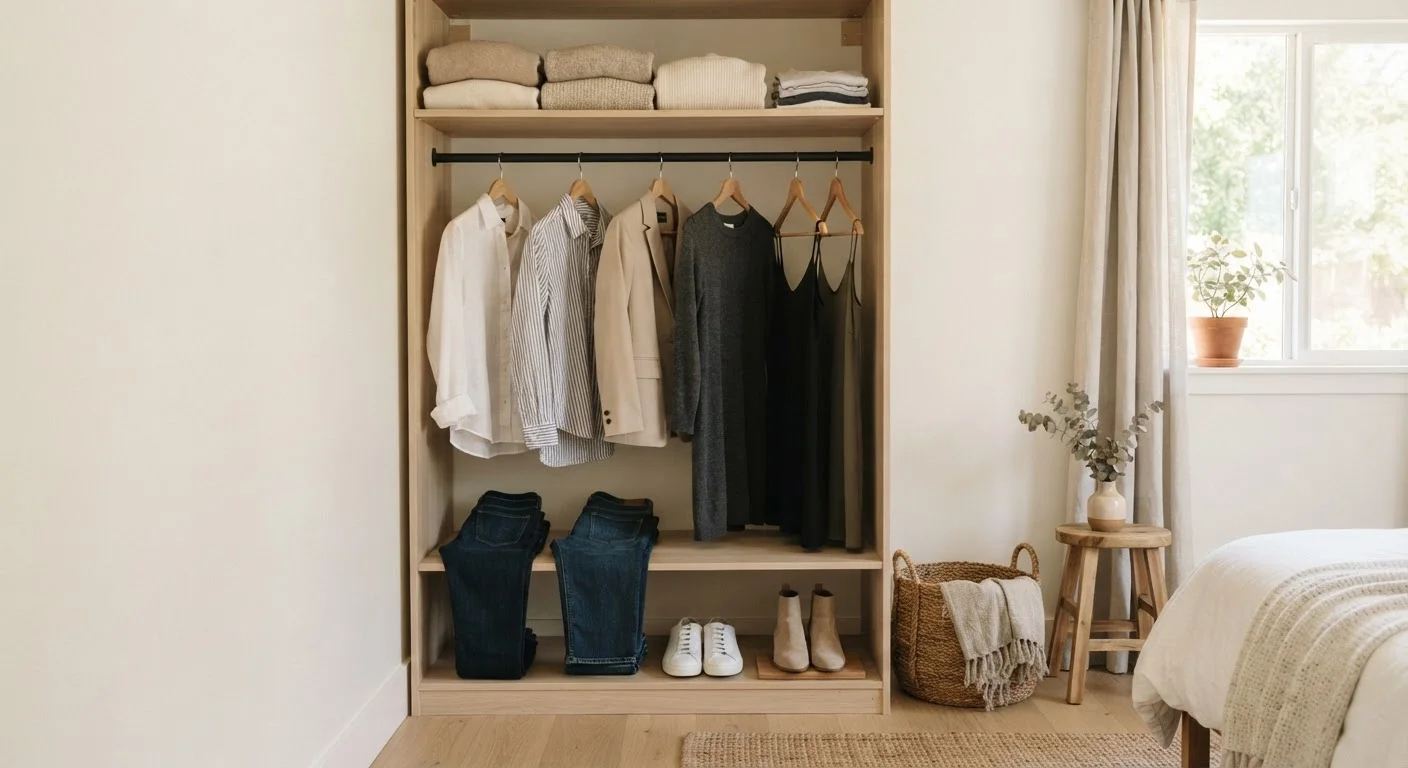
The Core Idea Behind a Capsule Wardrobe
Strip away the Instagram aesthetics and minimalism blogs, and a capsule wardrobe is just a practical answer to one common problem: owning a lot of clothes but feeling like you have nothing to wear. The concept works by reducing your collection to items that are versatile enough to combine in multiple ways, so every piece genuinely earns its place.
Think of it like a well-stocked pantry versus a crowded one. A pantry with a hundred random ingredients can still leave you stumped at dinnertime. A smaller pantry with ingredients that work together? You can put something good together almost automatically. Clothing works the same way.
It's worth noting that "capsule wardrobe" gets used loosely. Some people mean a strict 33-item challenge. Others mean simply owning less and being more intentional. Both interpretations are valid — the underlying principle is the same.
~$1,700
Average annual US clothing spend per household
According to the U.S. Bureau of Labor Statistics Consumer Expenditure Survey, American households spend roughly this amount on apparel and related services each year.
20%
Clothes worn regularly from the average closet
A commonly cited figure in wardrobe and consumer behavior research suggests most people wear a small fraction of what they own on a regular basis.
What Actually Goes Into One
A typical capsule wardrobe leans on classic, durable pieces with broad styling range — think dark jeans, plain crewneck sweaters, button-down shirts, simple dresses, and a neutral jacket or two. These are sometimes called "wardrobe staples," and they're popular in capsule thinking precisely because they don't go out of style quickly and they mix with almost anything.
Color coordination matters more than raw quantity. A collection of 30 pieces that all work together produces far more outfit combinations than 80 pieces that clash or require specific pairings. Most capsule approaches use a neutral base with a few accent pieces for personality.
If you want to go deeper on which specific items tend to do the most work, our guide to pieces that pull any outfit together breaks down the workhorses worth prioritizing.
Start With a Neutral Color Base
When building or editing toward a capsule, try anchoring your palette with two or three neutrals that you genuinely like wearing — navy and white, black and gray, camel and olive are common pairings. Once the base is cohesive, adding one or two colors you love becomes easy rather than chaotic.
How to Start Without Buying Anything New
The smartest first move is an edit, not a shopping trip. Pull everything out of your closet and ask one honest question about each item: do you actually wear this? Not "could you," not "might you someday" — do you, regularly? Anything that hasn't been worn in the past year is a strong candidate to donate or pass on.
What remains is your working capsule draft. From there, look for patterns — what colors appear repeatedly? What silhouettes feel comfortable? Those patterns reveal your natural preferences and point toward what, if anything, is genuinely missing.
For anyone starting with very little, our practical guide to building a wardrobe from nothing walks through realistic first steps without assuming a big budget.
Is It Actually Worth the Effort?
Honestly, it depends on what's frustrating you about your current wardrobe. The biggest real-world benefits people report are reduced decision fatigue in the morning and less money spent on impulse buys that don't end up getting worn. If either of those sounds familiar, the concept is probably worth exploring.
The downsides are real too. Maintaining a capsule wardrobe takes discipline — resisting sales, being selective about new additions, and doing periodic edits. It also doesn't suit everyone's personality; some people genuinely enjoy variety and self-expression through frequent wardrobe changes, and that's completely valid. Our article on the case for owning fewer clothes gives an honest look at both sides before you make any big decisions.
For most people, a loose version of the capsule idea — owning less, choosing more intentionally, and leaning on repeatable outfit formulas — delivers most of the benefit without requiring a radical overhaul.
Frequently Asked Questions
There's no fixed number, but most interpretations suggest somewhere between 25 and 50 total clothing items, not counting accessories, underwear, or workout gear. The goal is having only what you regularly wear, so the right number depends on your lifestyle and laundry habits.
Not at all. The best starting point is your existing closet. You edit out what you don't wear, identify what's missing, and only shop to fill genuine gaps. Most people are surprised how much they already have.
No — it's a practical system that can work for anyone who wants less morning stress and a more functional closet. You can adapt the concept to your own style, color preferences, and life demands without going full minimalist.
Neutral tones — like navy, gray, white, black, camel, and olive — are popular because they mix and match easily. That said, your capsule can include colors you genuinely love; the key is making sure most pieces coordinate with each other.
Yes. If your job has a dress code, your capsule simply reflects that reality. Many people maintain one set of work pieces and a smaller personal wardrobe — both following the same principle of wearing what you own consistently.
The content on this site is for informational purposes only and is not a substitute for professional advice. Always consult a qualified professional for guidance specific to your situation.