

What a Credit Score Actually Represents
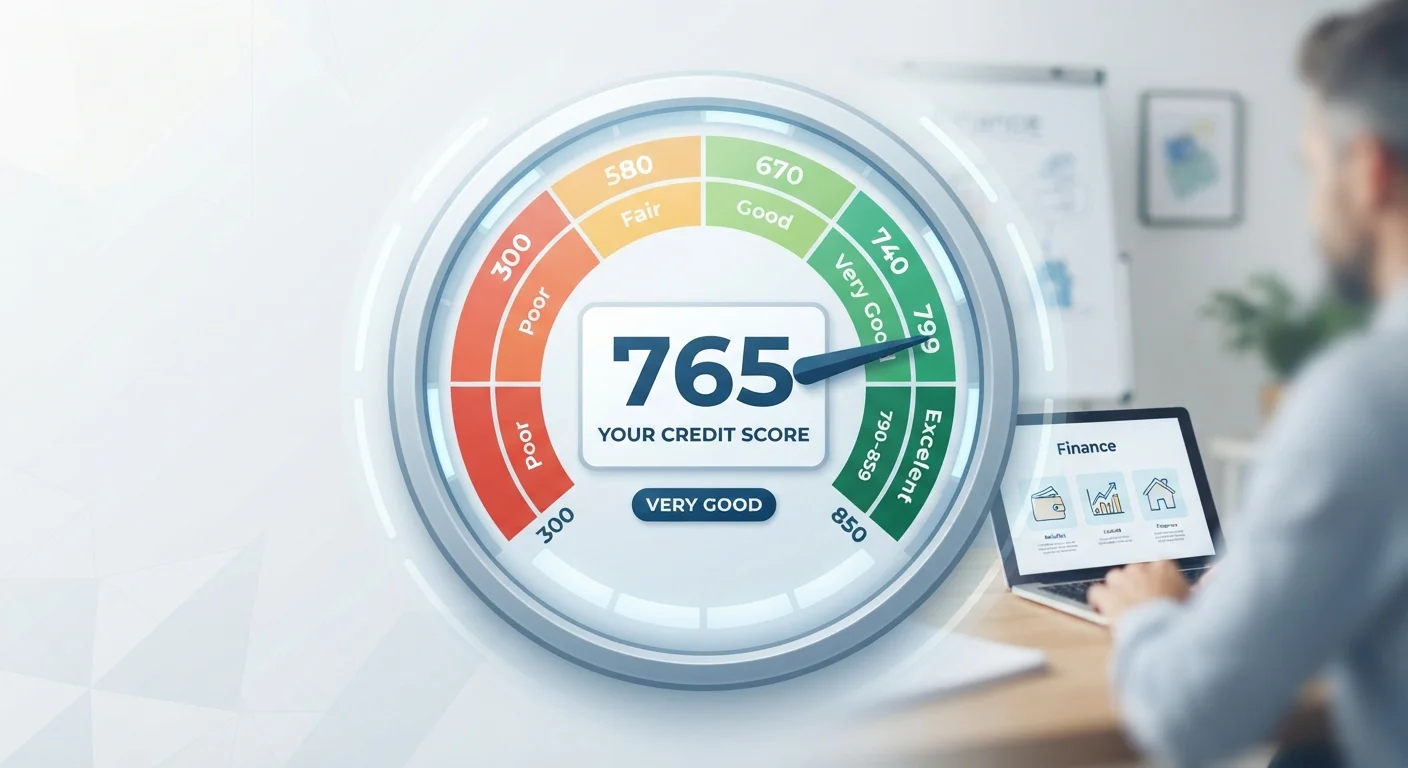
Think of a credit score as a financial report card — one that follows you around when you want to borrow money, sign a lease, or sometimes even apply for a job. It's a snapshot of your credit history compressed into a single number between 300 and 850.
That number doesn't come from thin air. It's calculated by credit scoring companies using data pulled from your credit reports, which are maintained by three major bureaus: Equifax, Experian, and TransUnion. Each bureau may have slightly different information, so your score can vary slightly depending on which one a lender checks.
If you're new to managing money overall, the beginner's guide to credit and savings is a good place to start building your foundation before diving deeper.
Your Score Can Vary by Bureau
Because Equifax, Experian, and TransUnion each maintain their own records, the data they hold on you can differ slightly. That means your score may not be identical across all three. When a lender checks your credit, they may pull from one bureau or all three, so it's worth reviewing reports from each.
How the Number Gets Calculated
Credit scoring models look at several categories of your credit behavior and assign weight to each one. While exact formulas vary, the FICO model — the most widely used — breaks it down roughly like this:
- Payment history — whether you've paid bills on time — carries the most weight.
- Credit utilization — how much of your available credit you're using — is also heavily weighted.
- Length of credit history — how long your accounts have been open.
- Credit mix — having a variety of account types, like a credit card and an installment loan.
- New credit — how recently you've applied for new accounts.
For a full breakdown of how each factor works, see our piece on the five factors behind your credit score. And if you want to understand one of the most powerful levers, how credit utilization works explains why that ratio can shift your score faster than almost anything else.
300–850
Standard FICO credit score range
The FICO Score, the most commonly used model by U.S. lenders, operates on this scale, with higher scores representing lower credit risk.
~1 in 5
Americans with errors on their credit report
The Federal Trade Commission has found that a significant share of consumers have errors on at least one credit report, underscoring the value of checking your reports regularly.
670+
FICO threshold for 'good' credit
According to FICO's published score ranges, a score of 670 or higher is generally considered 'good,' though individual lenders set their own approval standards.
Why Your Score Matters in Real Life
Your credit score affects more than just whether you qualify for a loan. Lenders use it to set the interest rate you'll pay — a lower score often means a higher rate, which costs you more over time. Understanding how borrowing costs connect to your score is easier when you also know what APR and interest rates actually mean.
Beyond loans, landlords routinely check credit scores when evaluating rental applications. A low score can lead to rejection or a requirement for a larger security deposit. Lenders also weigh your debt-to-income ratio alongside your credit score when deciding how much to lend you.
This article is for general informational purposes only and does not constitute financial or legal advice. For guidance specific to your situation, consider consulting a licensed financial professional.
Frequently Asked Questions
Generally, a score of 670 or above is considered 'good' under FICO's scale. Scores of 740 and above are often called 'very good,' and anything above 800 is considered 'exceptional.' Lenders set their own thresholds, so requirements can vary.
Your score can update as frequently as once a month, depending on when your lenders report account activity to the credit bureaus. Major changes — like paying off a balance or missing a payment — can shift your score quickly.
No. When you check your own score, it's called a 'soft inquiry' and has no impact on your score. Only 'hard inquiries' — generated when a lender checks your credit for a loan or card application — can temporarily lower your score.
Many banks and credit card issuers now offer free credit score access in their apps or online portals. You can also request free credit reports from all three major bureaus via AnnualCreditReport.com, the federally authorized source.
You can build a score through other credit accounts, such as student loans or auto loans. However, if you've never had any credit account, you may have no score at all — sometimes called being 'credit invisible.'
The content on this site is for informational purposes only and is not a substitute for professional advice. Always consult a qualified professional for guidance specific to your situation.