

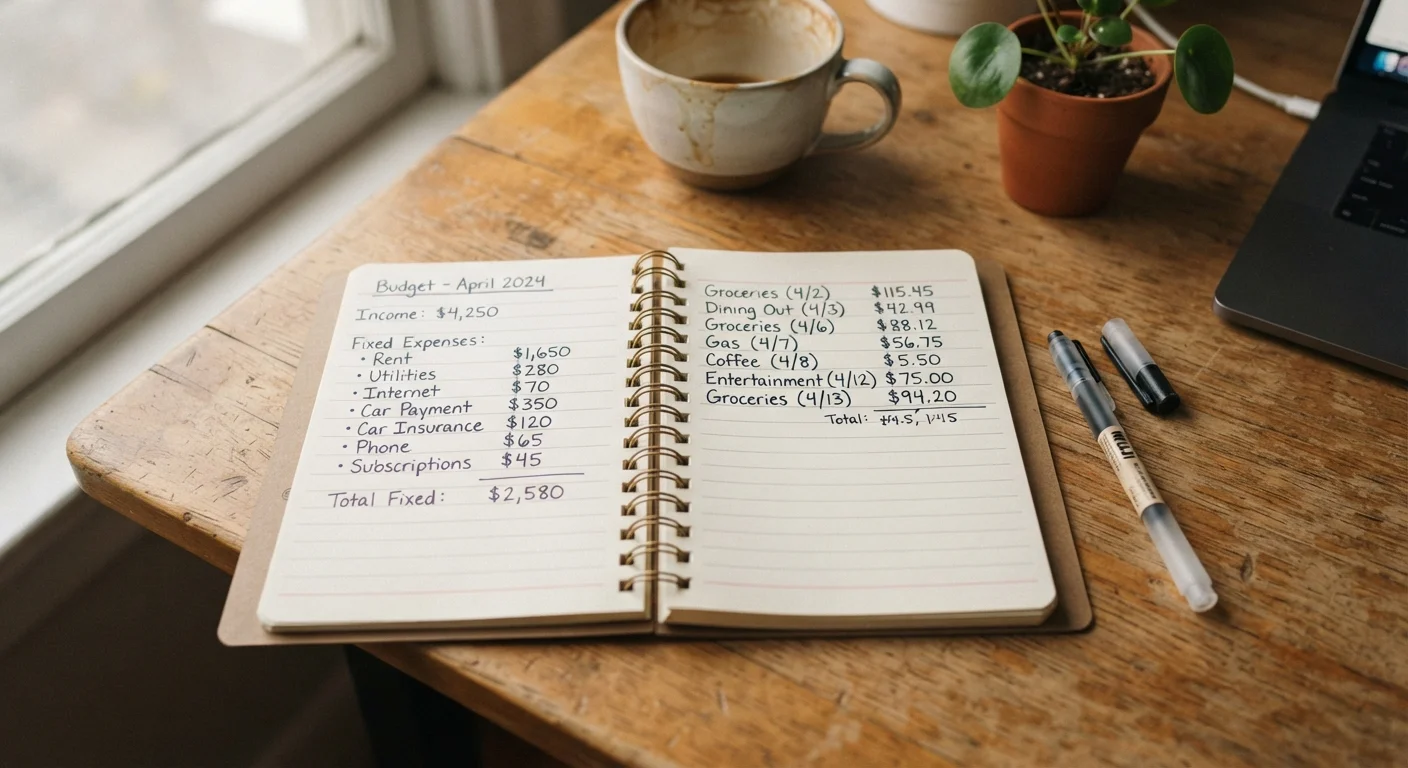
Our Verdict
Notebook budgeting is a genuinely effective method — not just a nostalgic curiosity. It works best when the physical act of writing helps you stay honest and deliberate about your spending. However, it demands consistency that apps can partially automate, and it offers no built-in safeguards against math errors or forgotten entries.
Notebook budgeting is best suited to beginners who want a low-pressure, low-tech starting point, anyone who finds screens distracting, and people who have tried apps without feeling a real connection to their budget numbers.
Why Some People Are Returning to Paper
Budgeting apps are everywhere, yet plenty of people still reach for a notebook. That's not stubbornness — it reflects something real about how writing by hand engages the brain differently than tapping a screen. Research in learning science has consistently found that handwriting slows information processing in a way that aids retention, a phenomenon sometimes called the "desirable difficulty" effect. Applied to budgeting, that friction may be a feature rather than a bug.
If you're just getting started with money management, building your first monthly budget from scratch can feel overwhelming with any tool. A blank notebook page is often less intimidating than an app asking for bank logins and permissions.
Writing by hand reinforces spending awareness
The physical act of recording each expense forces conscious attention in a way that automatic syncing does not. That momentary pause to write "$4.50 coffee" can prompt reflection that a background notification never triggers.
No subscription, login, or internet required
A notebook and pen cost a few dollars at most. There's no app to update, no account to secure, and no privacy policy to accept — particularly relevant for people cautious about sharing financial data with third-party services.
Highly customizable to your own categories
You design the layout, name the categories, and set the rules. Apps often impose preset categories that don't match everyone's spending patterns; a blank page imposes nothing.
Low barrier to entry for absolute beginners
There's no learning curve, no onboarding wizard, and no tech anxiety. Anyone who can write can start a notebook budget today without reading a manual.
Reduces screen time tied to finances
For people who find phones distracting, keeping budget work off a screen eliminates the temptation to check social media or shopping apps mid-session.
The Real Drawbacks You Should Know
Honest enthusiasm for notebook budgeting still has to reckon with its limitations. The biggest one is maintenance. A paper budget only reflects what you remember to write down. Miss a few days and your records become unreliable. Digital tools connected to your bank accounts log transactions automatically, reducing the risk of forgotten coffee runs and impulse purchases throwing off your totals.
There's also the math. Totaling columns, recalculating when you correct an error, and transferring figures month to month all create opportunities for mistakes. A spreadsheet catches arithmetic errors instantly; a notebook does not. If tracking spending triggers and behavioral patterns is a goal, apps that generate charts and category breakdowns give you visual data that a handwritten ledger can't easily replicate.
Easy to fall behind on entries
Unlike connected apps, a notebook captures nothing unless you actively write in it. A few skipped days can leave significant gaps, undermining the accuracy of your totals.
Prone to manual math errors
Adding columns by hand, especially across multiple categories, introduces arithmetic mistakes that a spreadsheet or app would catch automatically. Errors compound over time and can distort your understanding of where money is going.
No automatic transaction import
Every purchase must be logged manually, including small card transactions that are easy to forget. This makes notebook budgeting more time-intensive than app-based alternatives that pull data directly from bank accounts.
Limited trend analysis and visualization
Spotting patterns — like gradual spending creep in a particular category — is much harder from handwritten rows than from a chart generated by a digital tool. You'd need to do the analysis manually.
Risk of loss or damage
A lost or damaged notebook means losing your entire financial record for that period, with no backup. Digital tools typically store data in the cloud, making it retrievable even if your phone is replaced.
Practical Tips for Making It Work
If you want to try notebook budgeting, structure matters. Start by writing your monthly take-home income at the top of a fresh page, then list fixed expenses — rent, utilities, insurance — before moving on to variable categories like groceries, transportation, and entertainment. Leave a column for planned amounts and a column for actual spending.
Write in entries daily, ideally at the same time — right after dinner or before bed works for many people. Keep receipts in an envelope or pocket until you log them. A weekly five-minute tally keeps you from falling behind.
Keep It Simple at First
Beginners often abandon notebook budgeting because they design an overly elaborate system from day one. Start with just four or five spending categories — housing, food, transportation, personal, and savings — and add more only once the habit is established. A system you actually use beats a perfect system you abandon after two weeks.
Once you have a few months of data, build a monthly budget review routine so the numbers you've collected actually drive decisions. Raw data sitting in a notebook is only useful if you look back at it regularly.
Some people also find it helpful to use a hybrid approach: keep a small notebook for daily entries, then transfer totals to a simple spreadsheet at month's end for easier math and trend-spotting.
When to Reconsider Your Approach
No budgeting method works if you stop using it. If your notebook sits untouched for more than a week at a stretch, that's a signal — not a character flaw — that the format may not fit your life right now. Signs your current budget isn't working are worth recognizing early, whether you're on paper or digital.
Conversely, if you've downloaded several budgeting apps and abandoned all of them, it's worth asking whether the problem is the tool or the habit. Sometimes switching to paper is exactly the reset needed. Habits that make budgeting easier over time tend to be simple, consistent, and tied to daily routines — and a notebook can support that just as well as any app, as long as it's picked up regularly.
~1 in 3
Americans without a formal budget
Surveys by the National Foundation for Credit Counseling have repeatedly found that a significant share of U.S. adults do not follow a budget of any kind, highlighting how much room there is for any method to help.
65%
People who retain more from handwriting vs. typing
Studies on note-taking, including research published in Psychological Science, suggest handwriters encode information more deeply than those who type, a principle that may apply to financial record-keeping.
This article is for general informational purposes only and does not constitute personalized financial advice. Consider speaking with a qualified financial professional about decisions specific to your situation.
The content on this site is for informational purposes only and is not a substitute for professional advice. Always consult a qualified professional for guidance specific to your situation.