

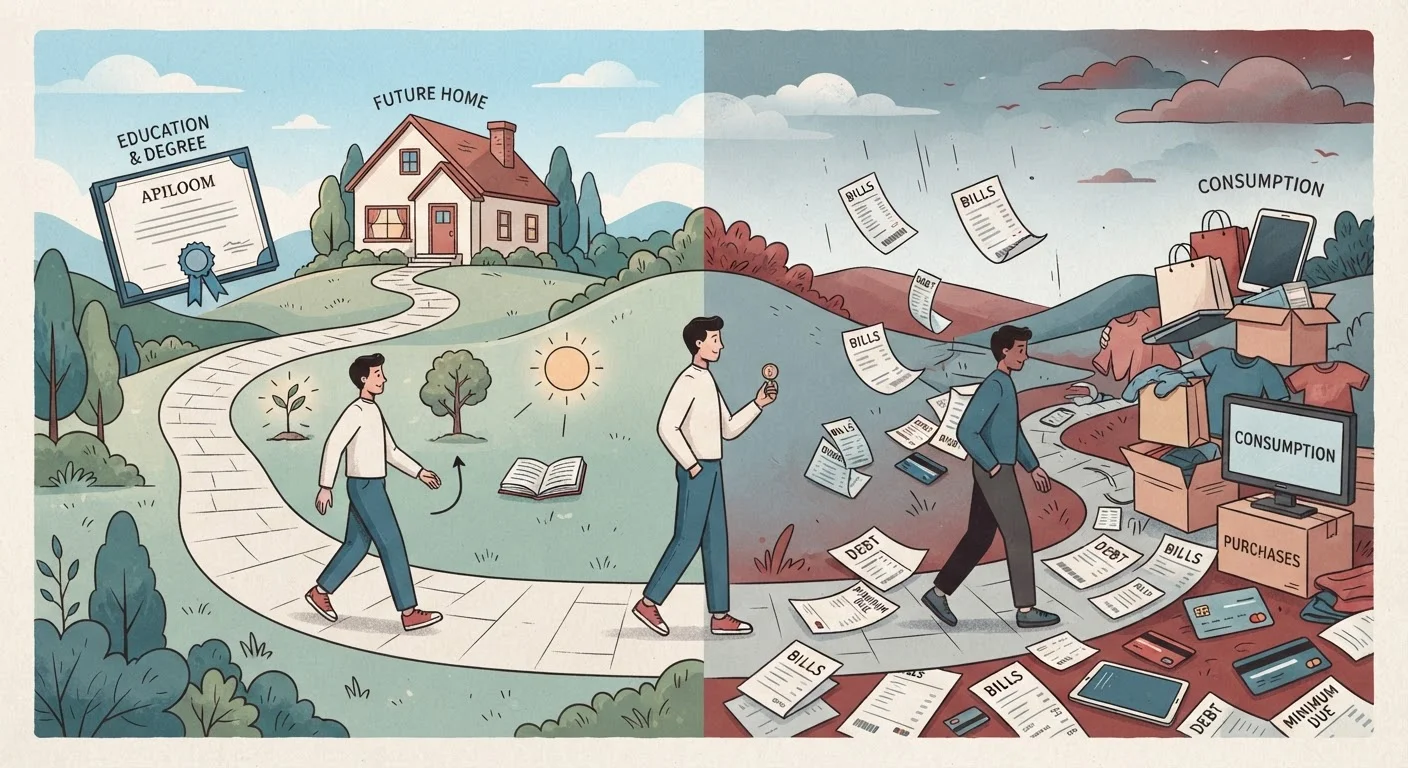
Where the Framework Comes From
The idea of sorting debt into 'good' and 'bad' categories has been a staple of personal finance advice for decades. The basic logic is straightforward: debt that helps you build wealth or increase earning power is good; debt spent on things that lose value or carry no long-term benefit is bad. Mortgages and student loans land in the good column. Credit cards and auto loans get the bad label.
That framing isn't entirely wrong - interest rates, asset appreciation, and earning potential are genuinely important factors. But the clean two-category system breaks down quickly when you look at how debt actually plays out in people's lives. For a fuller grounding in how credit and debt work before diving into the nuances, see Understanding Credit and Debt From the Ground Up.
Common Myths - and What's Actually True
Below are some of the most repeated beliefs about good and bad debt, alongside a clearer picture of what the evidence and real-world experience actually show.
Myth
Student loan debt is always 'good' because education increases your earning power.
Fact
Student loans can be a sound investment - but the outcome depends heavily on the field of study, total borrowed, and the job market a graduate enters.
A degree in a field with strong employment prospects and a loan balance proportional to expected starting salary can make sense financially. But borrowing $80,000 for a program with limited earning potential in a saturated field is a different calculation entirely. The loan doesn't become 'good' just because it funded education. The interest rate, repayment term, and actual post-graduation income all determine whether the debt helped or hurt.
Myth
A mortgage is always 'good debt' because real estate always appreciates.
Fact
Home values do not always rise, and a mortgage you can't comfortably afford carries real financial risk regardless of the asset behind it.
Real estate values declined sharply during the 2007-2009 financial crisis, leaving many homeowners owing more than their homes were worth - a situation known as being 'underwater.' Beyond market risk, a mortgage that stretches your budget too thin can strain your finances for years. The loan being secured by an asset doesn't automatically make it low-risk if the payment consumes most of your income or you're forced to sell at a loss.
Myth
All credit card debt is 'bad' and should be avoided entirely.
Fact
Credit card debt becomes expensive primarily because of high interest rates - carrying a balance is the real problem, not the card itself.
Credit cards paid in full each month carry no interest charge and can even provide benefits like purchase protection or cash back. The 'bad debt' label applies most accurately to revolving balances held at double-digit interest rates, where interest compounds and erodes buying power over time. Used as a short-term payment tool rather than a borrowing mechanism, a credit card is neither inherently good nor bad.
Myth
Taking on 'good debt' is always better than saving up and paying cash.
Fact
Borrowing costs money, and the right choice between debt and saving depends on the interest rate, opportunity cost, and your personal financial stability.
If you can earn a reliable return on savings that exceeds a loan's interest rate, carrying the debt may make mathematical sense. But that comparison depends on realistic assumptions about both the return and the borrowing cost. For most consumers, a guaranteed savings rate is more dependable than projected investment returns. Debt always introduces a fixed obligation into your budget - something savings do not.
Myth
The good debt/bad debt distinction tells you whether to take on a loan.
Fact
The category a debt falls into is a rough heuristic, not a decision tool. The terms of the specific loan and your current financial picture matter far more.
Two mortgages can look very different depending on the interest rate, loan-to-value ratio, and the borrower's income stability. Two student loans differ substantially based on the interest rate and repayment options available. Categorizing a loan type as 'good' before examining its specific terms is a shortcut that can lead to poorly informed decisions. The label is a starting point for thinking - not a substitute for analyzing the actual numbers.
Understanding how a loan is structured - whether it's backed by collateral or not - also shapes how much risk you're carrying. See Secured vs. Unsecured Debt: What's the Real Difference? for a clear breakdown of that distinction.
A More Useful Way to Evaluate Debt
Rather than asking 'is this good debt or bad debt?', a more practical set of questions includes: What is the actual interest rate, and can I afford it long-term? Does this loan give me something with lasting value - a home I'll live in, a skill that improves my income - or does it primarily fund consumption? What happens to this obligation if my income drops?
Those questions get you further than a label. Before signing any new loan or credit agreement, it's worth running through a structured checklist - Before You Take on New Debt: A Personal Finance Checklist walks through the key things to assess. And if you're already managing multiple debts, Debt Avalanche and Debt Snowball: A Side-by-Side Look compares two repayment strategies that work regardless of how a debt is categorized.
This article is for general informational and educational purposes only and does not constitute personalized financial, legal, or tax advice. Consult a qualified financial professional for guidance specific to your situation.
The content on this site is for informational purposes only and is not a substitute for professional advice. Always consult a qualified professional for guidance specific to your situation.