

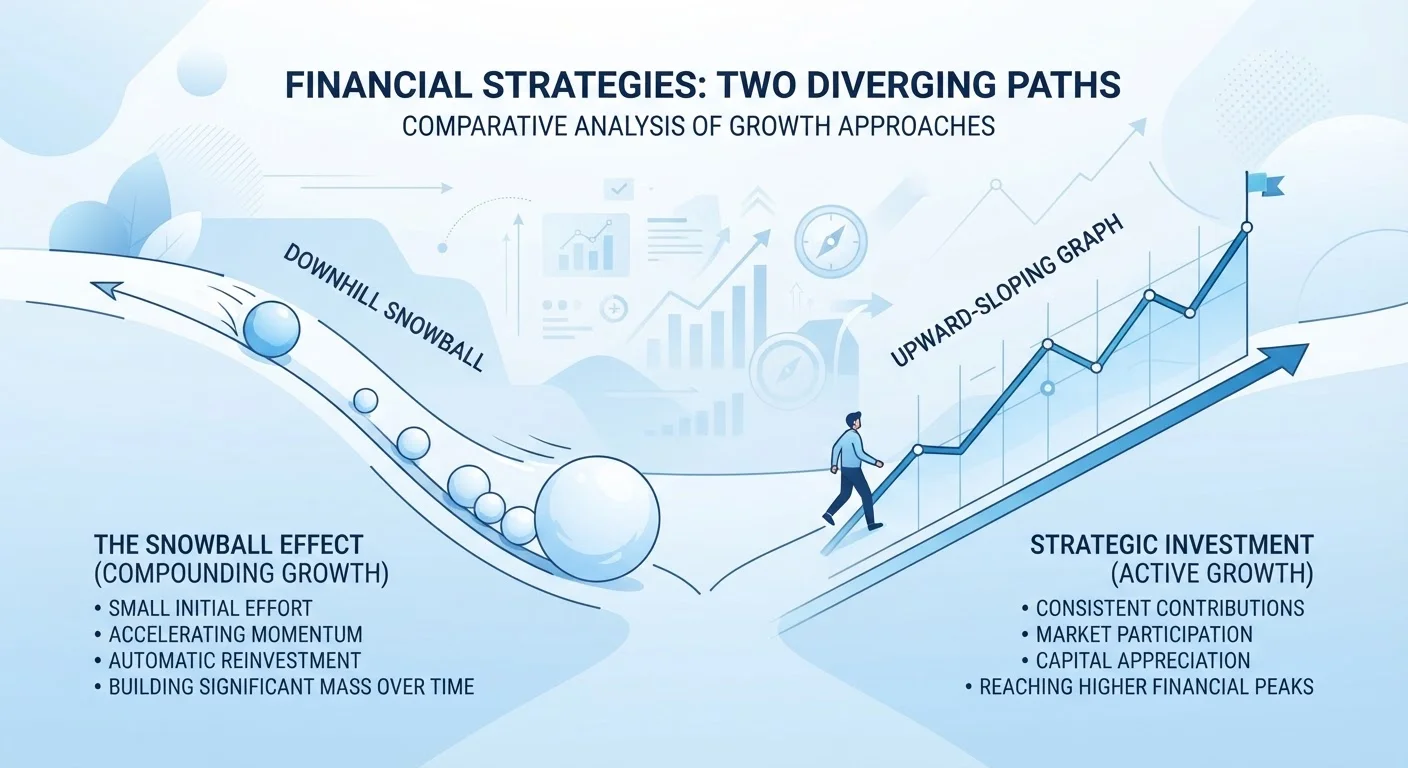
Option A
Debt Avalanche
The mathematically optimal approach to eliminating debt.
Best for: People who want to minimize total interest paid and are comfortable staying motivated without early quick wins.
Option B
Debt Snowball
The psychologically driven method that builds momentum through early wins.
Best for: People who need motivational milestones to stay on track and can accept paying somewhat more interest over time.
How Each Strategy Actually Works
Both the debt avalanche and debt snowball are structured repayment frameworks, not just loose advice to "pay more." They share one core mechanic: you make the minimum payment on every debt, and then direct any remaining available money to one designated target account. The difference is how you choose that target.
Debt Avalanche: You rank all your debts by interest rate, from highest to lowest. Extra payments go to the account with the steepest rate first. Once it's paid off, that account's freed-up payment amount rolls to the next highest-rate debt, and so on. Because you're attacking the most expensive debt first, less of your money is consumed by interest charges over time.
Debt Snowball: You rank debts by outstanding balance, smallest to largest. Extra payments go to the account with the lowest balance. Once cleared, the payment rolls forward to the next smallest. You eliminate accounts faster at the start, creating a sense of measurable progress even if those accounts carry lower interest rates.
To understand the broader landscape of how these fit into overall credit management, see our introduction to credit and debt.
| Criterion | Debt Avalanche | Debt Snowball |
|---|---|---|
| Payoff order | Highest interest rate first | Smallest balance first |
| Total interest paid | Lower (mathematically optimal) | Typically higher |
| Time to first payoff | Longer if high-rate debt is large | Faster - smallest balance cleared first |
| Motivational structure | Delayed gratification | Early, frequent wins |
| Best suited for | Disciplined, rate-focused planners | Motivation-driven, habit-building planners |
| Minimum payment rule | Pay minimums on all other debts | Pay minimums on all other debts |
| Complexity | Requires tracking interest rates | Requires tracking balances only |
The Real Cost Difference: Interest vs. Motivation
In pure mathematical terms, the avalanche method will almost always result in less total interest paid. When high-rate balances linger while you pay off smaller ones, interest compounds on a larger principal for longer. Depending on the interest rate gap between your debts, that difference can be substantial or relatively small.
But financial behavior research consistently shows that people are more likely to stick with a repayment plan when they experience tangible progress. A 2012 study published in the Journal of Marketing Research found that focusing on paying off individual accounts - rather than chipping away at aggregate debt - improved follow-through. This is the behavioral logic behind the snowball.
What that means practically: a method you abandon three months in saves you nothing. The avalanche is theoretically superior; the snowball is often more sustainable for people who struggle with motivation. Neither outcome is guaranteed - your consistency is the variable that matters most.
~$1,000+
Potential interest savings with avalanche on typical multi-debt scenarios
The exact savings depend on balances, rates, and repayment speed - but the gap widens significantly when high-rate debt carries a large balance.
29%
Average credit card interest rate in the US (approx.)
According to Federal Reserve data, average credit card rates have risen sharply in recent years, making the choice of repayment order more consequential than ever.
3 in 10
US adults carrying credit card debt month to month
Federal Reserve survey data suggests a significant share of American households revolve a balance, underlining why a structured repayment strategy matters.
If you're also weighing whether to consolidate before choosing a strategy, our overview of debt consolidation trade-offs is worth reviewing first.
Choosing the Right Method for Your Situation
There's no single correct answer, and this article is general financial education - not personalized advice for your specific circumstances. A licensed financial professional can help you evaluate your options given your full picture.
That said, a few practical considerations can guide your thinking:
- Check the rate gap. If your highest-interest debt carries a rate of 24% and your smallest balance carries 6%, the interest savings from the avalanche are significant. If rates are clustered closely together, the cost difference between methods shrinks considerably.
- Assess your track record. If you've started repayment plans before and abandoned them, the snowball's early wins may be worth the modest additional interest cost.
- Consider hybrid approaches. Some people pay off one or two small accounts for a motivational boost, then shift to an avalanche order. There's nothing stopping you from adapting the framework to your needs.
- Keep minimum payments current. Both strategies depend on staying current on all accounts. Missing payments elsewhere defeats the purpose and damages your credit profile.
Also worth reading before taking on any additional debt: our personal finance checklist for new debt, which covers income stability and exit options. And if you're still managing revolving credit card balances, our piece on carrying a balance versus paying in full explains what that costs you month to month.
This article is for general informational and educational purposes only and does not constitute personalized financial, legal, or tax advice. Consult a qualified financial professional before making decisions about your own debt repayment strategy.
The content on this site is for informational purposes only and is not a substitute for professional advice. Always consult a qualified professional for guidance specific to your situation.