

Where the Number Comes From
Credit scores don't appear out of thin air. They're calculated by scoring models - primarily FICO and VantageScore - using the information sitting in your credit reports. Those reports are maintained by three major credit bureaus: Equifax, Experian, and TransUnion. Because each bureau may hold slightly different data, your score can vary depending on which report is used.
The scoring models analyze patterns in your report - things like whether you pay on time, how much of your available credit you're using, and how long your accounts have been open. None of these models factor in your income, your savings balance, or your employment status directly. The score is strictly a measure of your credit behavior as recorded by lenders and creditors who report to the bureaus.
For a deeper look at exactly which behaviors carry the most weight, see our article on the five factors behind your credit score.
~28%
U.S. adults with scores below 670
According to FICO data, roughly 28% of scoreable U.S. consumers fall below the 'good' threshold of 670.
716
Average U.S. FICO Score
FICO has reported that the average U.S. FICO Score has hovered around 716 in recent years, placing the typical American in the 'good' range.
1 in 5
Credit reports with errors
A study by the Federal Trade Commission found roughly one in five consumers had an error on at least one of their three credit reports.
What the Score Range Actually Signals
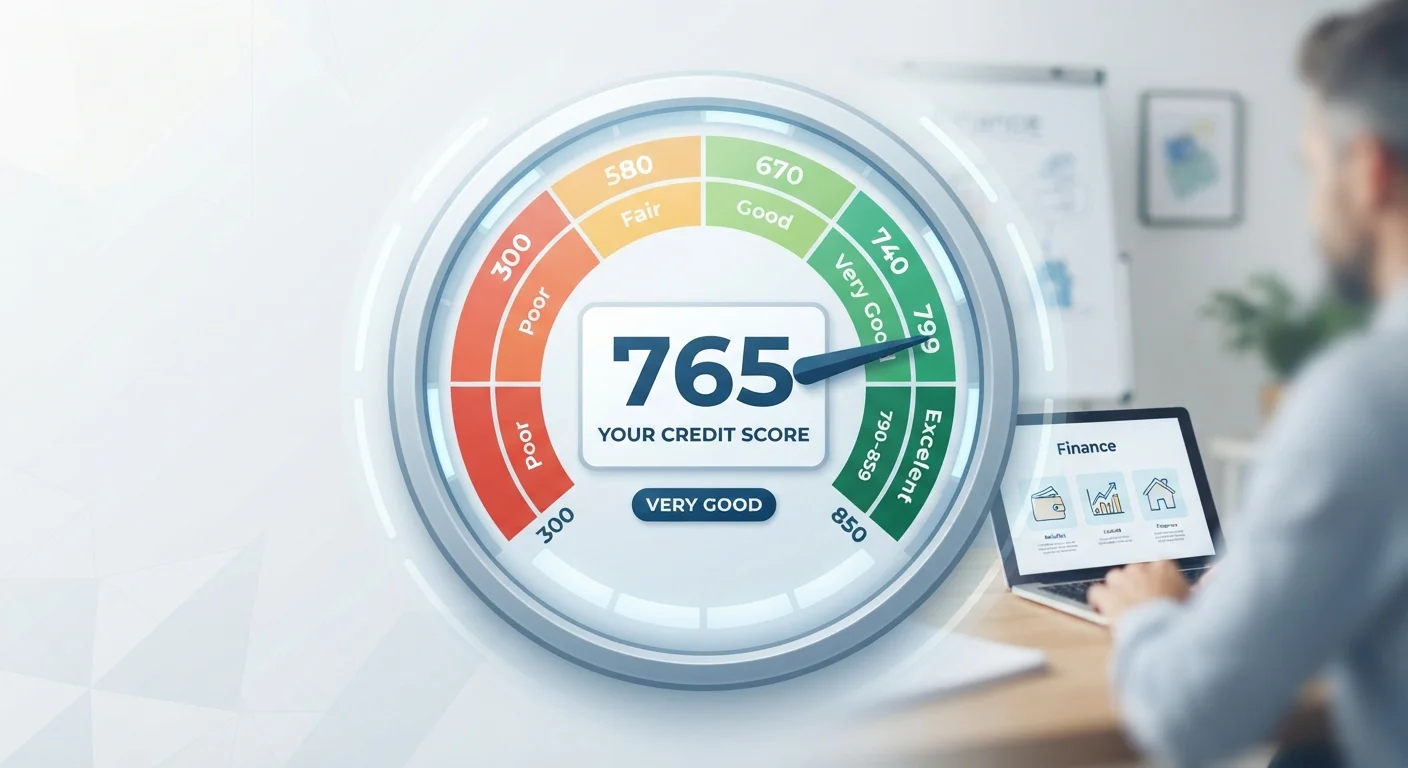
Under the FICO model, scores run from 300 to 850. Most people with any credit history fall somewhere between 580 and 800. Here's a rough breakdown of what those ranges typically mean to a lender:
- 800-850 (Exceptional): Borrowers in this range usually qualify for the most favorable terms lenders offer.
- 740-799 (Very Good): Strong track record; likely to receive competitive rates.
- 670-739 (Good): Generally considered an acceptable risk by most lenders.
- 580-669 (Fair): Some lenders will work with these borrowers, often at higher interest rates.
- 300-579 (Poor): Applications may be denied outright, or approval may require a co-signer or secured account.
These thresholds aren't universal - different lenders set their own cutoffs - but the bands give a useful reference point for understanding where you stand.
Why Your Score Matters Beyond Loans
Most people think of credit scores in terms of mortgages or car loans. But the number shows up in several other corners of everyday life.
Renting an apartment: Many landlords pull credit reports and use your score as part of their screening process. A low score can mean a rejected application or a larger security deposit requirement.
Utility and phone accounts: Some utility providers and wireless carriers check credit before setting up service. A poor score can result in a required deposit to open an account.
Auto and renters insurance: In most states, insurers are permitted to use a credit-based insurance score - related to but not identical to your lending score - as one factor in setting premiums. For a broader look at how insurance decisions get made, see how insurance actually works.
Employment: Some employers, particularly in financial services roles, may review credit reports (though typically not the score itself) as part of background checks. They are required by law to get your written consent first.
One factor that carries outsized influence on your score - and one that surprises many people - is credit utilization, meaning how much of your available revolving credit you're actually using. Our explainer on credit utilisation and why lenders watch it closely walks through how that ratio is calculated and why keeping it low tends to help.
How to Read and Protect Your Credit Information
You're entitled to a free credit report from each of the three major bureaus through AnnualCreditReport.com - the site established under federal law for this purpose. Reviewing your reports regularly matters because errors are more common than most people realize, and a mistake on your report can drag down your score without your knowledge.
If you find an error - a payment incorrectly marked late, an account that isn't yours, a balance that's wrong - you have the right to dispute it directly with the bureau that holds the report. The bureau is generally required to investigate within 30 days.
Building or rebuilding your score takes consistent, patient behavior over time. There are no shortcuts that reliably work, and many products advertised as quick fixes carry their own costs and risks. For a solid starting point that covers credit concepts from the ground up, understanding credit and debt from the ground up is a useful place to begin.
This article is for general informational and educational purposes only and does not constitute personalized financial, legal, or credit advice. Consult a qualified financial professional for guidance specific to your situation.
Frequently Asked Questions
Scores of 670 and above are generally considered 'good' under the FICO model. Scores from 740 to 799 are 'very good,' and 800 or higher is 'exceptional.' Anything below 580 is typically viewed as poor, which can make borrowing more difficult or expensive.
Your score can change whenever your credit report is updated, which creditors typically do once a month. A single late payment or a new credit account can shift your score noticeably within one billing cycle.
No. Checking your own score is called a soft inquiry and has no effect on your score. Hard inquiries - which happen when a lender reviews your credit for a loan or card application - can cause a small, temporary dip.
Generally, no. You usually need at least one account that has been open for six months or more and reported to a bureau to generate a score. People with no credit history are often called 'credit invisible.'
Your credit report is a detailed record of your credit accounts, payment history, and public records. Your credit score is a number calculated from that report data. Think of the report as the raw file and the score as the summary grade.
Many banks, credit unions, and credit card issuers now provide free score access to customers. You can also get free credit reports from AnnualCreditReport.com, the federally mandated source, though the score itself may require a separate service.
The content on this site is for informational purposes only and is not a substitute for professional advice. Always consult a qualified professional for guidance specific to your situation.