

Our Verdict
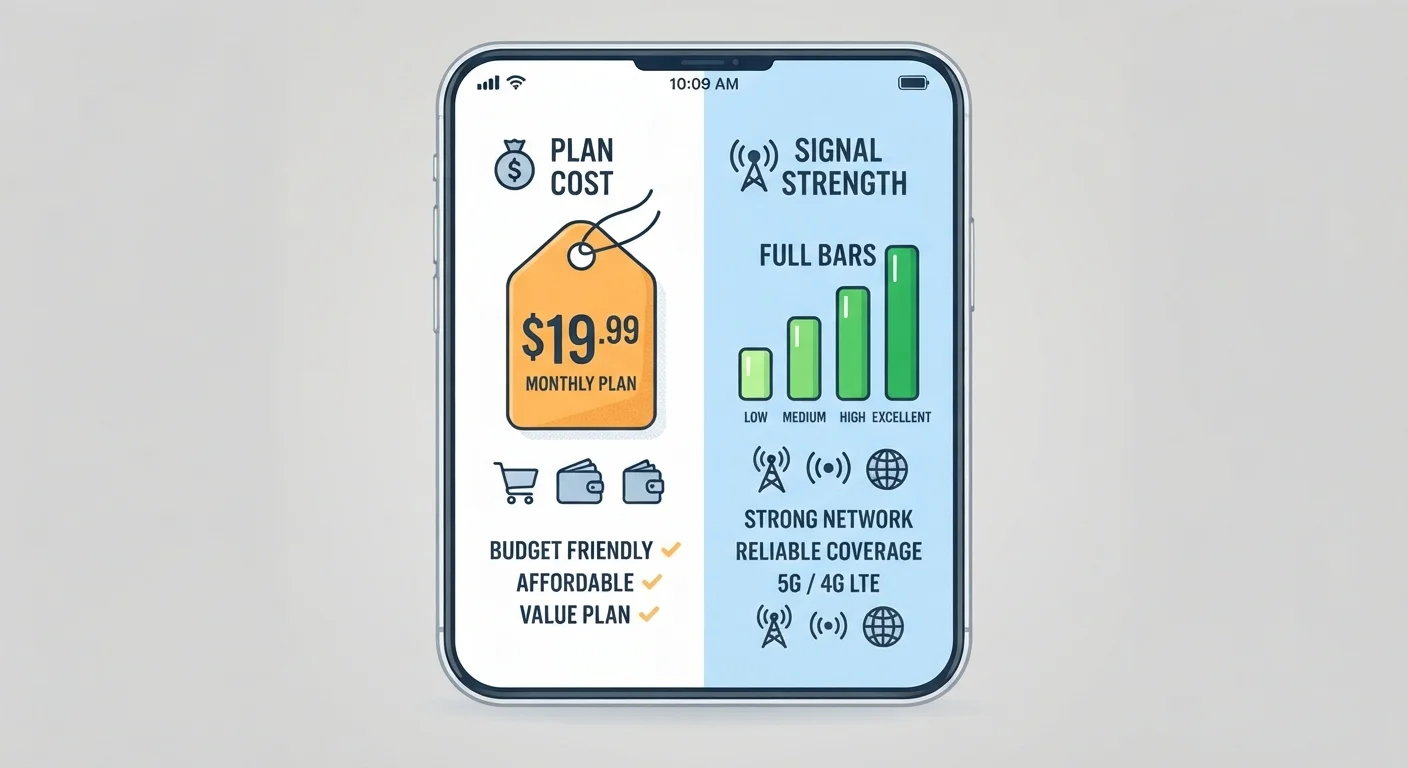
Budget mobile carriers offer genuine value for cost-conscious consumers, particularly those with light-to-moderate data needs and reliable Wi-Fi access at home or work. The monthly savings are real, but so are the limitations — reduced data priority, leaner customer support, and occasional coverage gaps. Going in with clear expectations makes the difference between a smart switch and a disappointing one.
Best for people with predictable, moderate mobile usage who prioritize monthly savings over premium perks and don't rely heavily on data-intensive streaming in areas with variable coverage.
What Budget Carriers Actually Are
Budget mobile carriers — formally called MVNOs — don't own the physical network infrastructure they run on. Instead, they purchase wholesale access to towers operated by major national carriers, then resell that connectivity under their own brand at lower prices. The result is a plan that can cost significantly less per month while using largely the same towers your neighbors with premium plans use.
Understanding this model is essential before evaluating any trade-off. See our full explainer on how MVNOs work for a deeper breakdown of the underlying mechanics. The short version: the network is shared, but the terms of that sharing affect your experience in meaningful ways.
~40%
Average monthly savings vs. major carriers
Industry analyses of MVNO pricing generally estimate budget carriers cost 40% or more less per month than equivalent major-carrier plans for similar data allowances.
30%+
U.S. mobile subscribers on MVNOs
According to telecom research estimates, a meaningful and growing share of U.S. mobile subscribers now use MVNO services rather than direct major-carrier plans.
The Real Advantages of Going Budget
The most immediate upside is straightforward: lower monthly bills. Many budget plans offer voice, text, and a workable data allowance for a fraction of what major carriers charge for comparable packages. For individuals or families managing tight monthly budgets, that difference adds up quickly over a year.
Significantly lower monthly costs
Budget carriers routinely offer plans at 40–60% less than comparable major-carrier plans, with savings that compound meaningfully over a full year.
No long-term contracts required
Most MVNOs operate on a month-to-month basis, giving you the flexibility to switch plans or carriers without early termination fees.
Access to major network infrastructure
Because MVNOs lease tower access from large carriers, coverage maps often mirror those of the host network — especially in urban and suburban areas.
Simple, predictable pricing structures
Many budget plans offer flat-rate pricing with fewer add-ons and hidden line items, making it easier to know exactly what you'll pay each month.
Beyond price, many budget carriers offer no-contract flexibility — meaning you're not locked into a two-year commitment. That's especially useful if your life circumstances change or if you want to reassess your plan regularly. For more context on how to align plan costs with actual needs, read about what premium plan pricing actually buys you.
The Limitations You Should Know About
Budget carriers come with trade-offs that are easy to overlook when comparing price tags alone. The most commonly reported issue is data deprioritization: during network congestion, budget carrier customers are moved to the back of the line for bandwidth, which can result in noticeably slower speeds in crowded areas during peak hours.
Data deprioritization during peak hours
When network traffic is heavy, MVNO customers are typically deprioritized behind the host carrier's own subscribers, which can result in noticeably slower speeds in busy locations.
Limited or online-only customer support
Many budget carriers do not operate physical retail stores and offer support primarily through apps or web chat, which can make resolving complex issues more time-consuming.
Stricter data caps and throttling
Budget plans often include a hard data cap or sharp speed reduction after a set threshold — sometimes dropping to speeds too slow for video streaming or navigation.
Fewer device compatibility guarantees
Not all phones are automatically compatible with every MVNO, and budget carriers may offer less assistance with unlocking or device setup compared to major carriers.
International roaming limitations
Many budget plans offer little or no international roaming coverage, which can be a significant inconvenience for travelers or those who communicate with people abroad.
Customer support is another area where budget carriers often differ. Many operate primarily through online portals or chat, with limited or no phone support. If you encounter a billing issue or device problem, resolution can take longer than with a major carrier's full-service support team.
Data Deprioritization vs. Throttling
These two terms are often confused but describe different experiences. Deprioritization means your speed drops only when the network is congested — under normal conditions, speeds may be comparable to premium plans. Throttling means your speed is capped at a fixed lower limit after a data threshold is reached, regardless of network load. Many budget plans apply both, so it's worth checking a carrier's specific policy before signing up.
Before committing, use this pre-switch checklist to verify coverage in your specific area and review any data cap or throttling policies in writing.
How to Decide If a Budget Plan Fits Your Life
The right choice depends on your usage patterns, location, and tolerance for trade-offs. Ask yourself: How often do you stream video on mobile data? Do you travel frequently to rural areas? Do you rely on your phone for work in ways where dropped connections carry real consequences?
If you use Wi-Fi most of the day and primarily need mobile data for navigation and occasional browsing, a budget plan may serve you just as well as a premium one. If you stream heavily on the go or work in areas with variable coverage, the limitations may outweigh the savings. It's also worth reviewing common assumptions that cost people money — hidden fees and auto-pay requirements can quietly narrow the gap between budget and premium plans.
If you do decide to switch, the process is simpler than most people expect. Our guide on switching carriers without losing your number walks through every step. And if mobile cost is part of a broader budget conversation, the same trade-off thinking applies to other monthly expenses — see balancing coverage and cost on a tight budget for a parallel framework.
The content on this site is for informational purposes only and is not a substitute for professional advice. Always consult a qualified professional for guidance specific to your situation.