

Why Paint Finish Matters as Much as Color
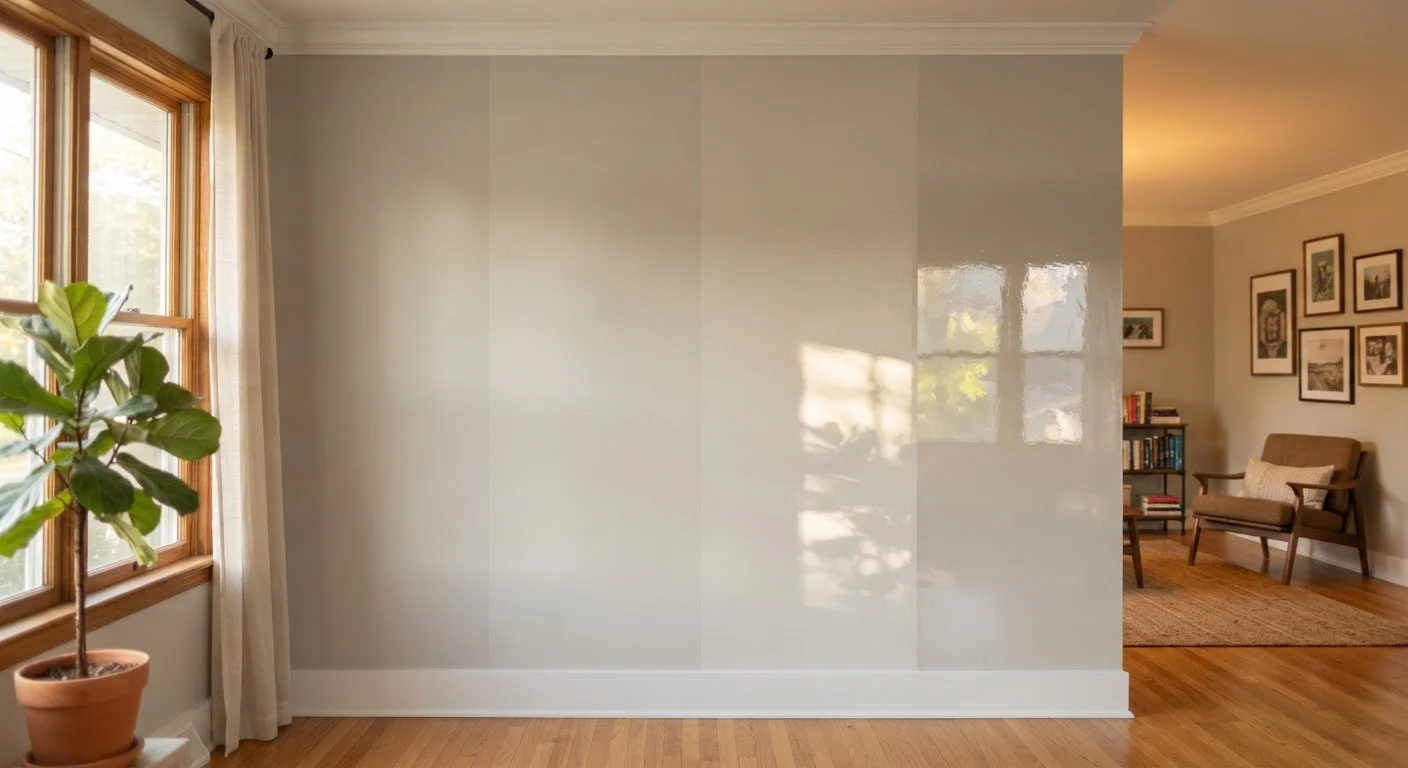
Most people spend hours picking the right paint color and about thirty seconds choosing the finish. That's a mistake. The sheen level affects how light bounces off the wall, how easy the surface is to clean, and how forgiving it is of wall imperfections. A flat matte finish hides dents and texture beautifully but wipes down poorly. A high-gloss finish is nearly bulletproof against scrubbing but will spotlight every bump and roller mark on the wall.
Understanding what each finish does - and where it performs best - saves you a repaint job down the road. This guide breaks it down room by room and surface by surface.
| Most versatile finish | Eggshell |
| Best for ceilings | Flat / Matte |
| Best for kitchens & bathrooms | Satin or Semi-Gloss |
| Standard finish for trim & doors | Semi-Gloss |
| Finish that hides wall flaws best | Matte (Flat) |
| Easiest finish to clean | Gloss or Semi-Gloss |
The Four Main Finishes and What Sets Them Apart
Matte (Flat)
Matte paint contains the least amount of sheen. It absorbs light rather than reflecting it, which means imperfect walls - minor dings, patchy spackling, or uneven texture - practically disappear. That makes it a strong choice for older homes with walls that aren't in perfect condition, adult bedrooms, and formal dining rooms where ambiance matters more than washability.
Downside: Matte paint marks easily and doesn't tolerate repeated scrubbing. Use it where walls stay relatively clean.
Eggshell
Eggshell sits just above matte on the sheen scale - it has a subtle, low-luster glow similar to the surface of an actual eggshell. It's arguably the most versatile interior finish. It hides minor wall flaws reasonably well while holding up to occasional wiping. Living rooms, hallways, and home offices are natural fits.
Satin
Satin has a soft, velvety sheen that's noticeably more reflective than eggshell but far less shiny than semi-gloss. It handles moisture and light cleaning well, which is why it's the go-to for kitchens, bathrooms, kids' rooms, and high-traffic hallways. Satin does tend to show brush strokes and lap marks more readily, so application technique matters.
Semi-Gloss and Gloss
Semi-gloss is the standard finish for trim, doors, and window frames - surfaces that take abuse and need to be wiped down regularly. Full gloss is even more durable and reflective, typically reserved for cabinetry or furniture-style applications. Both finishes amplify wall imperfections, so prep work is critical before applying either.
Sheen
The degree of light reflectivity in a dried paint film. Higher sheen means more light bounces off the surface, making it look shinier and generally more durable.
Matte (Flat) Finish
A paint finish with no noticeable sheen that absorbs light. It hides surface imperfections well but is less resistant to scrubbing and moisture.
Eggshell Finish
A low-luster finish with a very slight sheen, similar to the surface of an eggshell. It balances appearance and cleanability, making it a versatile choice for most living spaces.
Satin Finish
A mid-range finish with a soft, velvety glow. It resists moisture and light cleaning better than eggshell, making it well-suited for kitchens, bathrooms, and high-traffic areas.
Semi-Gloss Finish
A noticeably shiny, durable finish commonly used on trim, doors, and cabinetry. It stands up to frequent cleaning and moisture but will highlight surface imperfections.
Primer
A preparatory coat applied before paint to improve adhesion, seal the surface, and provide a uniform base. Using primer is especially important before applying higher-sheen finishes.
Matching Finish to Room and Surface
A simple room-by-room approach cuts through the guesswork:
- Ceilings: Flat or matte only. Sheen on ceilings highlights uneven texture and is distracting under overhead light.
- Bedrooms: Matte or eggshell. Low traffic, low moisture, low maintenance needs.
- Living rooms and dining rooms: Eggshell works well. It adds just enough durability without introducing a shiny look that might feel off in a cozy space.
- Kitchens and bathrooms: Satin or semi-gloss. Moisture resistance and easy cleaning are the priority.
- Kids' rooms and playrooms: Satin. It can handle the fingerprints and crayon smudges that come with the territory.
- Trim, doors, baseboards: Semi-gloss or gloss. These surfaces see constant contact and benefit from a hard, cleanable surface.
If your home renovation plans extend beyond paint - say, you're also reconsidering the floors - it's worth thinking about how finish choices interact with other surfaces. See how other material decisions involve similar tradeoffs in our guide to engineered vs. solid hardwood flooring.
A Few Practical Tips Before You Buy
Paint finish decisions are easy to get right once you know the basics, but a few additional points are worth keeping in mind:
- Test in the actual room. Paint a large swatch and look at it at different times of day. A satin finish that looks subtle in the store can appear quite shiny in a sun-drenched room.
- Prep matters more with higher sheens. The glossier the finish, the more it telegraphs imperfections. Fill holes, sand seams, and prime before applying semi-gloss or gloss to walls.
- Don't mix finishes mid-wall. If you're touching up an existing wall, match the finish exactly - matte and eggshell patches rarely blend invisibly, even in the same color.
- Moisture-prone areas need appropriate sheens. Using matte in a bathroom or kitchen leads to peeling, mold, and frequent repainting. It's not a cost-saving move in the long run.
Choosing a finish doesn't have to be complicated. Think about who uses the room, how much contact the walls see, and whether you'd rather hide imperfections or have an easy-to-clean surface. Most of the time, the right answer becomes obvious.
The content on this site is for informational purposes only and is not a substitute for professional advice. Always consult a qualified professional for guidance specific to your situation.