

Why the Salt Shaker Gets Too Much Blame
Many people assume that controlling sodium means putting down the salt shaker. In reality, that habit would barely move the needle. According to the CDC and the American Heart Association, only about 5–6% of the sodium in the average American's diet comes from salt added at the table, and roughly 10% occurs naturally in whole foods.
The remaining 70% or more comes from processed, packaged, and restaurant foods — items that may not even taste particularly salty. This distinction matters because it shifts where our attention is most useful when thinking about what we eat.
| Average daily sodium intake (U.S. adults) | ~3,400 mg (CDC, Sodium and Health) |
| Recommended daily limit (most adults) | 2,300 mg (Dietary Guidelines for Americans, 2020–2025) |
| Sodium from processed & restaurant foods | More than 70% (CDC, Where's the Sodium?) |
| Sodium from the salt shaker at the table | ~5–6% (American Heart Association) |
| Top food category contributor | Breads and rolls (CDC analysis of U.S. dietary data) |
| Sodium naturally occurring in food | ~10% (American Heart Association) |
Understanding the actual sources of dietary sodium isn't about triggering anxiety over food choices. It's about having accurate information so you can make sense of nutrition labels and food patterns with a clearer picture in mind.
The Food Categories That Contribute the Most
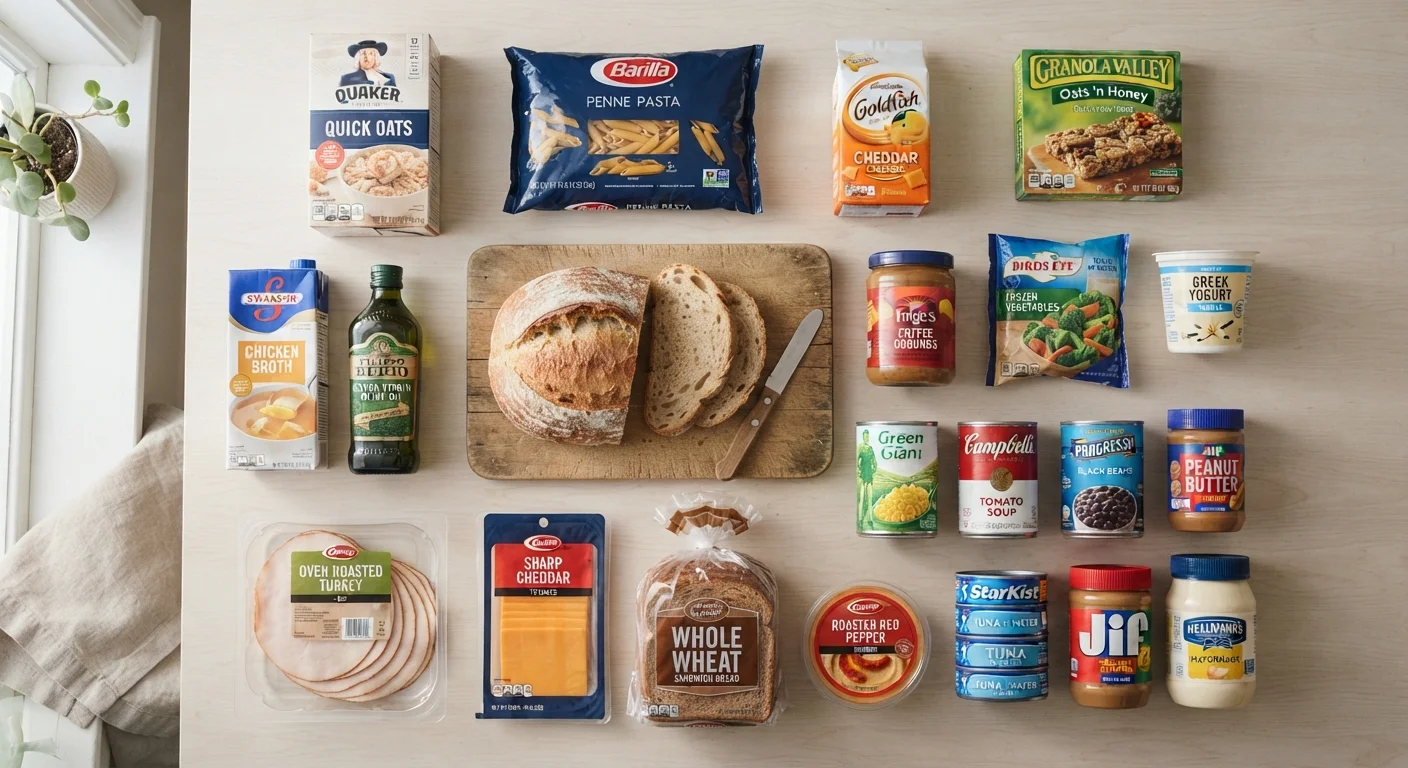
CDC analysis of U.S. dietary data consistently points to a handful of food categories as the biggest contributors to sodium intake. Bread and rolls top the list — not because they taste salty, but because Americans eat them in large quantities and each serving adds up. Other leading categories include:
- Cold cuts and cured meats (deli meat, bacon, sausage)
- Pizza (combining bread, cheese, sauce, and processed meat)
- Soups (especially canned varieties)
- Savory snacks (chips, crackers, pretzels)
- Cheese
- Mixed dishes such as burritos, pasta dishes, and sandwiches
- Condiments and sauces (soy sauce, ketchup, salad dressings)
Sodium
A mineral found naturally in many foods and added to others during processing. The body needs small amounts of sodium to function, but most Americans consume significantly more than recommended.
Dietary Reference Intake (DRI)
A set of nutrient reference values established by the National Academies of Sciences, Engineering, and Medicine. For sodium, the Chronic Disease Risk Reduction Intake is 2,300 mg per day for most adults.
Processed food
Any food that has been altered from its natural state through cooking, canning, freezing, or the addition of preservatives, flavoring, or other ingredients. Processing often introduces significant amounts of sodium.
Hypernatremia
A condition where sodium levels in the blood are abnormally high. It is a medical condition that requires professional evaluation and treatment — distinct from everyday high dietary sodium intake.
Hidden sodium
Sodium present in foods that don't taste noticeably salty, such as bread, breakfast cereals, and condiments. These sources are easy to overlook when tracking intake.
Notice that several of these — bread, cheese, condiments — are foods that don't register as obviously salty. That's the core insight here: sodium hides in plain sight across everyday meals.
How to Use This Information Practically
Knowing where sodium comes from is a starting point for awareness, not a checklist for elimination. A few practical observations worth keeping in mind:
- Nutrition labels are your most direct tool. The Nutrition Facts panel on packaged foods lists sodium per serving in milligrams. Comparing labels across similar products is one of the most straightforward ways to notice differences.
- Restaurant meals tend to run high. Portion sizes are larger and seasoning is heavier in commercial kitchens. This isn't a reason to avoid dining out — just useful context.
- Cooking at home gives you more control, simply because you decide what goes in. Meals built around whole foods (vegetables, grains, legumes, fresh proteins) naturally contain less added sodium.
70%+
Sodium from processed and restaurant food
According to the CDC, the vast majority of Americans' sodium intake comes from commercially prepared and packaged foods — not home cooking.
3,400 mg
Average daily sodium intake for U.S. adults
The CDC estimates this average, which is nearly 1,100 mg above the recommended daily limit for most adults.
~5–6%
Sodium added at the table
The American Heart Association notes that salt added during or after cooking accounts for a relatively small share of total intake.
For a broader look at what else tends to be missing from typical American eating patterns, our article on fiber and why most Americans fall short offers useful context. And if you're thinking about how diet and hydration connect, how food contributes to your water intake is worth exploring.
This article provides general nutrition information for educational purposes only and is not a substitute for advice from a qualified healthcare provider or registered dietitian. Individual sodium needs vary — speak with a professional about what's appropriate for you.
The content on this site is for informational purposes only and is not a substitute for professional advice. Always consult a qualified professional for guidance specific to your situation.