

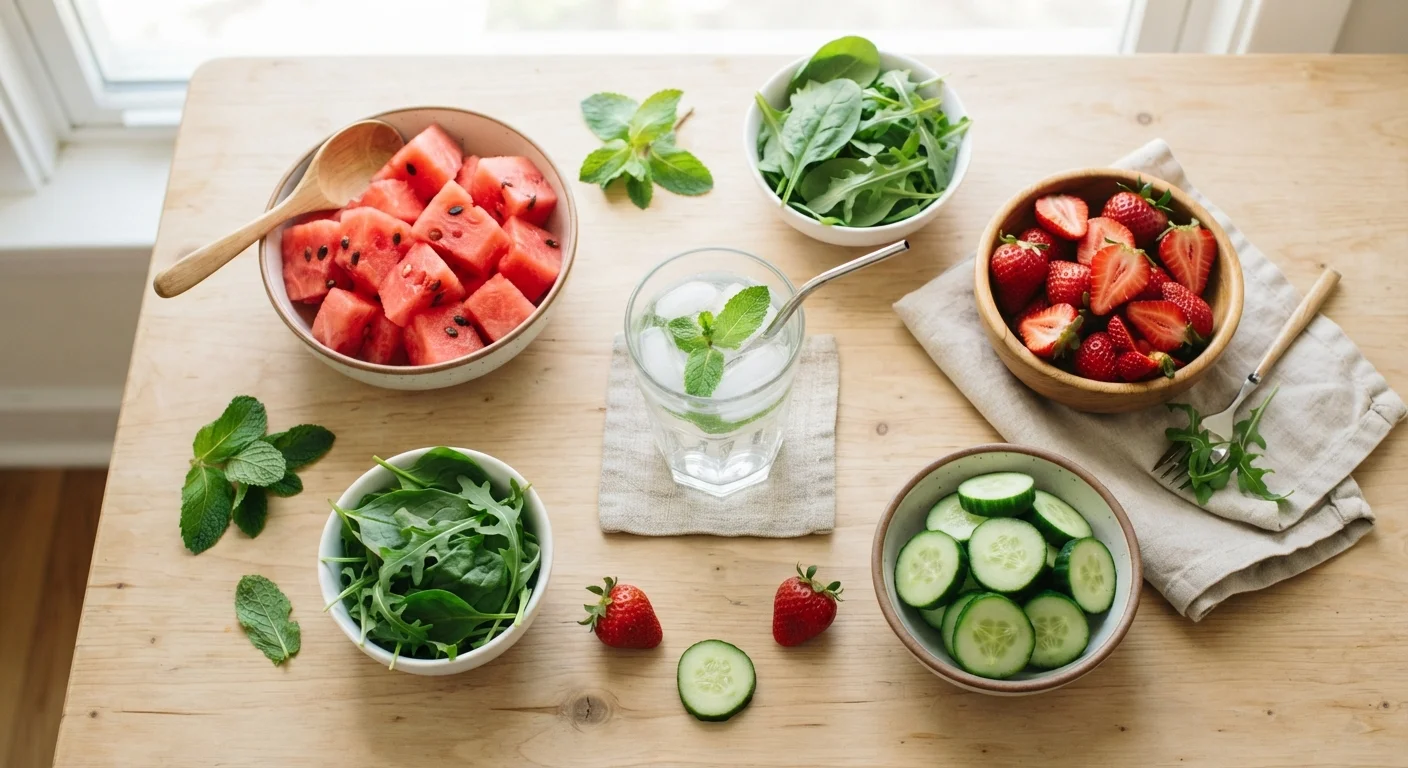
Water Isn't Just in Your Glass
Most of us think about hydration as a beverage problem — drink more water, carry a bottle, hit a certain number of glasses per day. But water reaches your body through another route that often goes unnoticed: the food on your plate.
According to guidance from nutrition researchers, roughly 20% of the average person's daily fluid intake comes from food. That's not a small footnote — it means that what you eat plays a real, measurable role in keeping your body hydrated. Understanding this doesn't mean tracking every bite; it means appreciating that a balanced diet is doing more work than you might have realized.
~20%
Of daily fluid intake from food
Nutrition researchers generally estimate that food accounts for about 20% of most adults' total daily water intake.
90–96%
Water content in top hydrating vegetables
Foods like cucumber, celery, and lettuce are composed almost entirely of water by weight, according to USDA food composition data.
87%
Water content of cow's milk
Milk is one of the more hydrating beverages available, supplying fluid alongside protein, calcium, and other nutrients.
Which Foods Are Actually High in Water?
Water content in food varies widely. Some items are mostly water by weight; others contribute very little. Here's a general breakdown of where food-sourced hydration tends to come from:
- Fruits and vegetables: Cucumbers, lettuce, celery, tomatoes, zucchini, watermelon, strawberries, and oranges are typically 90–96% water by weight. Eating a salad or a bowl of melon is genuinely hydrating.
- Soups and broths: Liquid-based meals deliver water directly and efficiently. A bowl of vegetable soup counts toward fluid intake just as meaningfully as a glass of water.
- Cooked grains and legumes: Foods like oatmeal, rice, and lentils absorb significant water during cooking, making them moderate contributors to hydration — something many people don't consider.
- Dairy and dairy alternatives: Milk is roughly 87% water and provides fluid alongside protein and calcium.
Drier foods — crackers, nuts, dried fruit, and most baked goods — contribute much less water by comparison. This isn't a reason to avoid them; it's simply helpful context for understanding where your hydration is coming from. For a similar look at how nutrients travel through everyday foods in unexpected ways, see our piece on where sodium actually comes from in the American diet.
A Simple Way to Boost Food-Based Hydration
If you want to increase the hydrating quality of your meals without overthinking it, aim to include at least one water-rich food at each meal — a piece of fruit, a vegetable side, or a broth-based soup. This isn't a strict rule, just a low-effort way to let your diet do some of the hydration work naturally.
Why This Matters — Without Overcomplicating It
Knowing that food contributes to hydration is useful for a few reasons — none of which require obsessive tracking.
First, it helps explain why people who eat plenty of fruits and vegetables may feel adequately hydrated even if they don't sip water constantly. The body is drawing fluid from multiple sources throughout the day.
Second, it offers a gentler on-ramp for people who struggle to drink plain water. Eating water-rich foods is a valid, evidence-supported way to supplement fluid intake. Soups, smoothies, fruit, and raw vegetables all count.
Third, it connects hydration to overall diet quality rather than treating it as a separate box to check. A varied diet naturally supports hydration without requiring a regimented plan. This is consistent with what nutrition science generally emphasizes: eating patterns matter more than isolated behaviors. For a broader look at how nutrition works in practice, our overview of common nutrition myths offers useful context.
Practical Signals Worth Paying Attention To
Rather than fixating on an exact number of glasses per day, most health guidance points to simple observational cues that reflect how your body is actually doing:
- Urine color: Pale yellow generally indicates good hydration; dark yellow or amber often means you need more fluids.
- Thirst: While thirst isn't always perfectly calibrated — particularly in older adults — it remains a reasonable real-time signal for most people.
- Energy and concentration: Even mild dehydration can affect alertness and mood, though these symptoms overlap with many other factors.
Individual hydration needs vary based on body size, activity level, climate, health conditions, and medications. If you have concerns about hydration, a healthcare provider is the right resource — they can assess your specific situation rather than relying on general population averages.
And if you're curious how hydration intersects with other aspects of wellness — including nutrients most Americans fall short on — our guide on fiber and why it matters covers another often-overlooked dietary element.
This article is for general informational purposes only and is not a substitute for professional medical advice. Speak with a qualified healthcare provider if you have questions about your individual hydration needs or health.
Frequently Asked Questions
Research generally estimates that food provides around 20% of a person's total daily water intake, though this varies based on diet. People who eat more fruits, vegetables, and soups may get a higher proportion from food. Beverages still account for the majority of most people's fluid intake.
Cucumbers, lettuce, celery, tomatoes, zucchini, watermelon, strawberries, and cantaloupe are among the highest, typically ranging from 90–96% water by weight. Soups and broths are also significant contributors. Cooked grains like oatmeal and rice absorb water during cooking and add to intake as well.
Yes — caffeinated beverages like coffee and tea do contribute to fluid intake for most people. While caffeine has a mild diuretic effect, research suggests the net hydration benefit of these drinks is still positive when consumed in typical amounts. Water, milk, and herbal teas remain excellent hydrating choices.
Pale yellow urine is generally considered a reliable sign of adequate hydration. Dark yellow or amber urine often signals you need more fluids. Other cues include feeling thirsty, dry mouth, or low energy. Individual needs vary based on body size, activity, climate, and health status — a healthcare provider can give personalized guidance.
For most people, relying solely on food for hydration is not enough to meet daily needs. While water-rich foods contribute meaningfully, the majority of fluid requirements are typically met through beverages. Drinking water throughout the day remains an important habit for most adults.
The relationship between water intake and skin appearance is more nuanced than popular belief suggests. Severe dehydration can affect skin, but for most people with normal hydration, drinking extra water has a modest effect on skin moisture. See our <a href="/style-beauty/beauty-basics/the-truth-behind-common-skincare-myths">skincare myths explainer</a> for more on what actually affects skin health.
The content on this site is for informational purposes only and is not a substitute for professional advice. Always consult a qualified professional for guidance specific to your situation.