

Why Fitness Myths Do Real Harm
Fitness misinformation isn't just annoying - it actively keeps people from starting. When you believe you need a full hour, a gym, or a certain body type before exercise "counts," the bar feels impossibly high. The result? Nothing happens.
Most of these myths aren't malicious. They spread through locker-room wisdom, outdated advice, and fitness culture that was built around competitive athletes - not the average person trying to feel better. The good news: the evidence paints a much more forgiving picture. If you've ever felt like fitness wasn't designed for you, it may be because the rules you were taught were wrong to begin with.
Below, we unpack the most common misconceptions that hold beginners back - and replace them with what the research actually supports. If you're also curious how similar myths show up elsewhere, you might recognize the pattern from job search myths that keep people stuck.
Common Fitness Myths - Set Straight
Work through these one by one. Each one represents a belief that sounds reasonable but doesn't hold up when you look at the evidence.
Myth
You need at least an hour of exercise a day for it to make any difference.
Fact
Shorter sessions - even 10 to 20 minutes - provide measurable health benefits when done regularly.
Major health organizations, including the U.S. Department of Health and Human Services, recommend accumulating around 150 minutes of moderate activity per week - which breaks down to about 21 minutes a day. Importantly, those minutes don't need to be consecutive. Research supports the idea that multiple shorter bouts of movement throughout the day can deliver comparable cardiovascular and metabolic benefits to one longer session. The "all or nothing" thinking around workout length is one of the biggest barriers to getting started at all.
Myth
If you're not sore the next day, the workout didn't do anything.
Fact
Muscle soreness is caused by tissue stress and inflammation - it's not a reliable measure of workout effectiveness.
Delayed onset muscle soreness (DOMS) typically appears 24-48 hours after unfamiliar or intense exercise. It reflects your body adapting to a new stimulus - not a sign that the session was productive. As your fitness improves, the same workout will produce less soreness, not because it stopped working, but because your muscles adapted. Chasing soreness can actually increase injury risk. A good workout leaves you feeling tired and capable - not necessarily wrecked the next morning.
Myth
Strength training will make you bulky unless you're careful.
Fact
Building significant muscle mass requires specific and sustained training, high calorie intake, and often years of consistent effort.
Most people who lift weights - especially beginners - will gain functional strength and some muscle definition without dramatically changing their body size. The "bulking" outcome that many people fear is the result of a deliberate, high-volume training program paired with a calorie surplus, not a side effect of a general fitness routine. Strength training is widely recommended for bone density, metabolic health, and injury prevention across all age groups. Avoiding it due to this myth means missing out on benefits that go well beyond appearance.
Myth
You have to go to a gym to get a real workout.
Fact
Effective exercise requires movement and effort - not a specific location or equipment.
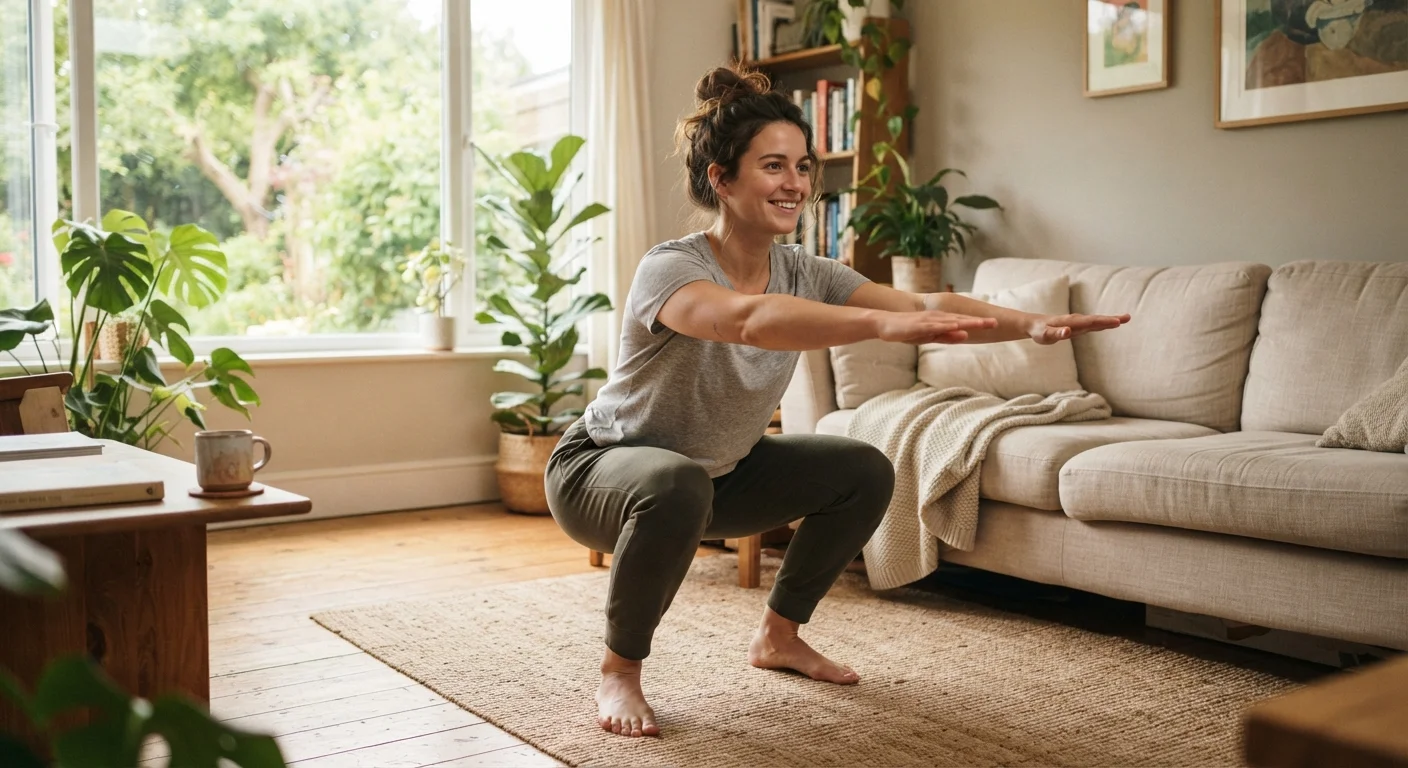
Bodyweight exercises like squats, lunges, push-ups, and planks can build genuine strength and cardiovascular fitness with no equipment. Walking, cycling, swimming, dancing, and gardening all count as physical activity. The gym is one option, not a prerequisite. For people who find gyms intimidating, inconvenient, or simply unappealing, the absence of a membership is not an obstacle - it's just a reason to find what actually works. Low-impact exercise is a good starting point for those exploring non-gym movement.
Myth
Stretching before exercise prevents injuries.
Fact
Static stretching before exercise has limited evidence for injury prevention and may temporarily reduce muscle performance.
Research suggests that a dynamic warm-up - light cardio and movement-based exercises that mimic the activity you're about to do - is more effective at preparing the body than holding static stretches. Static stretching (holding a stretch for 20-30 seconds) is more appropriate after exercise, when muscles are warm. This doesn't mean stretching is useless - it has genuine benefits for flexibility and range of motion - but its role in injury prevention is more nuanced than commonly assumed. For a fuller picture, see what stretching actually does.
For a deeper look at how exercise duration actually relates to results, see short workouts vs. long workouts.
Building a Routine That Actually Sticks
Debunking myths is only half the work. The other half is figuring out what movement looks like for your actual life - your schedule, your preferences, your starting point.
The most important variable isn't intensity or duration. It's consistency. A 15-minute walk four times a week beats an hour-long gym session you dread and skip. Movement that fits your routine and feels manageable is movement you'll keep doing.
If the gym has never appealed to you, you're not alone - and you're not stuck. There are genuinely varied ways to stay active that feel nothing like a traditional workout. Explore movement options for people who hate the gym for ideas grounded in real-world flexibility.
Nutrition plays a supporting role too. You don't need a special diet to benefit from exercise, but fueling yourself reasonably matters. The Everyday Nutrition hub offers straightforward guidance without the obsession. And if you want a full picture of how to make physical activity a lasting part of your life, building a sustainable fitness habit covers the psychology and practicalities in one place.
This article is for general informational purposes only and is not a substitute for professional medical advice. Speak with a qualified healthcare provider before beginning a new exercise program, especially if you have an existing health condition.
The content on this site is for informational purposes only and is not a substitute for professional advice. Always consult a qualified professional for guidance specific to your situation.