

Our Verdict
Sleep trackers can be a genuinely useful tool when treated as a rough guide rather than a precise medical readout. They shine at surfacing habits you might not notice - like late-night screen time, inconsistent bedtimes, or alcohol's effect on your rest. Where they fall short is in the fine detail: sleep stage breakdowns, short wake windows, and anything that needs clinical accuracy. Used lightly and kept in perspective, tracker data can prompt useful changes. Used obsessively, it can do more harm than good.
People who want a broad awareness of their sleep habits and are comfortable treating the data as a rough indicator rather than a clinical measurement.
How Consumer Sleep Trackers Actually Work
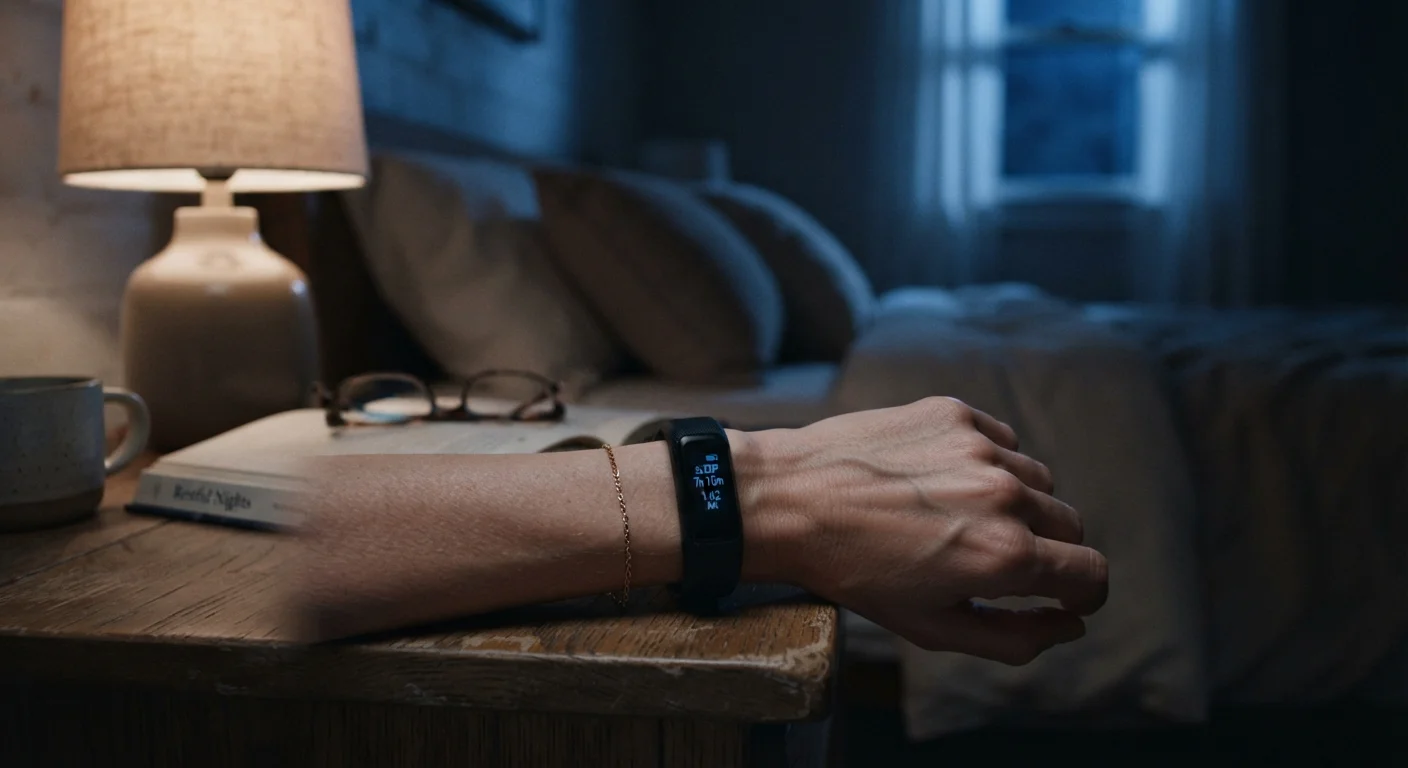
Most wearable trackers - watches, rings, bands - don't read your brain. Instead, they infer sleep from a combination of movement (accelerometry) and heart rate, and sometimes heart rate variability or skin temperature. The device detects when you stop moving and your pulse slows, then uses algorithms to estimate when you fell asleep, how long you slept, and which "stages" you passed through.
This is a meaningful distinction. Clinical sleep studies, called polysomnography, use electrodes on your scalp to measure brain waves directly. That's the gold standard for identifying sleep stages. Consumer devices are making educated guesses from indirect signals. Research comparing wearable data to polysomnography has generally found that trackers are reasonably accurate at measuring total sleep time but are less reliable at distinguishing individual sleep stages - particularly light sleep versus being briefly awake.
Phone-based apps that rely only on the microphone or a mattress sensor without a heart rate monitor are even further from accuracy. They're picking up proxy signals of proxy signals.
What the Data Is Genuinely Useful For
Surfaces long-term patterns you'd otherwise miss
Trends across weeks - like consistently shorter sleep before early-morning commitments - are easier to spot in a chart than to recall from memory alone.
Can reveal lifestyle factors affecting rest
Some trackers flag correlations between resting heart rate and alcohol consumption, late meals, or exercise timing, giving you concrete data to act on.
Provides a rough consistency check on bedtimes
Irregular sleep schedules are associated with poorer rest quality; seeing your bedtime vary by 90 minutes nightly can be a useful wake-up call.
Low barrier to entry for most people
Many people already own a smartphone or basic fitness band, making sleep tracking accessible without additional cost or clinical appointments.
Can prompt a conversation with a healthcare provider
If a tracker consistently shows fragmented sleep or very low totals, that data can be a useful starting point for a discussion with a doctor.
The real value of sleep tracking tends to emerge over weeks and months, not from a single night's readout. When you look at your data across time, you can start to see patterns that are hard to notice day-to-day - like consistently shorter sleep on nights when you had a late meal, or a reliably lower resting heart rate after alcohol-free evenings.
Trackers can also function as a gentle accountability nudge. Seeing a consistent record of 5.5-hour nights in a row may make the tradeoff more concrete than a vague feeling of tiredness. For people who suspect their sleep is being affected by something specific - stress, a new schedule, travel - a tracker can help confirm whether their hunch is supported by the numbers.
For more on habits that quietly chip away at rest without obvious signs, see our article on overlooked sleep disruptors.
Where Sleep Tracking Falls Short
Sleep stage data is often unreliable
Consumer devices estimate stages from heart rate and movement rather than brain activity, so the "deep sleep" percentage shown may not match clinical measurements.
Can trigger anxiety about sleep itself
Researchers have documented "orthosomnia" - a condition where fixating on tracker scores creates stress that actively worsens sleep quality.
Cannot diagnose sleep disorders
Conditions like sleep apnea require clinical evaluation; a tracker may not detect apnea events at all, giving a false sense of reassurance.
Accuracy varies significantly by device and person
Darker skin tones, tattoos, or irregular heart rhythms can reduce the accuracy of optical heart rate sensors used in most wearables.
Wearing a device to bed isn't comfortable for everyone
Discomfort from wearing a wrist band or ring overnight may itself introduce a variable that disrupts the sleep you're trying to measure.
The limits are real and worth knowing before you put too much stock in any single metric. Sleep stage breakdowns - how long you were in "deep" or "REM" sleep - are where consumer trackers are least reliable. The algorithm names differ by brand, and the percentages shown may not correspond closely to clinically defined stages.
There's also the problem of orthosomnia - a term researchers use to describe anxiety that develops when people become overly fixated on their tracker scores. Studies have documented cases where people who slept well began reporting worse sleep quality after starting to use a tracker and fixating on the numbers. The data meant to reassure them became a new source of worry.
And of course, no tracker can diagnose anything. If you have symptoms suggesting sleep apnea, insomnia disorder, or restless legs syndrome, a wearable score is not a substitute for talking to a healthcare provider and potentially undergoing proper evaluation. Our sleep myths explainer covers some of the misconceptions that can lead people to over-rely on these tools.
How to Use Tracker Data Without Overthinking It
A Word on Sleep Stage Labels
Different tracker brands use different algorithms and labels - "light," "deep," and "REM" percentages are not standardized across devices. Two trackers worn on the same night may report very different stage breakdowns. Treat these labels as approximate categories rather than precise measurements, and focus instead on total sleep time and consistency, which tend to be more reliable outputs.
A few practical habits can help you get value from a tracker without letting it run your mornings:
- Look at weekly or monthly averages, not individual nights. One "bad score" night is rarely meaningful.
- Use it to test one hypothesis at a time - for example, whether a consistent bedtime improves your data over a month.
- Cross-reference with how you feel. If the tracker says you slept poorly but you feel rested, trust the feeling. The reverse is also worth noting.
- Ignore the stage breakdowns unless you're using them purely as rough context.
- Take breaks from checking. If looking at the app first thing raises your anxiety, it's worth stepping back.
Your bedroom setup matters too - if your tracker is consistently flagging poor sleep, doing a physical audit of your environment is a reasonable next step. Our pre-sleep environment checklist walks through the key factors worth examining.
This article is for general informational purposes only and is not medical advice. If you have concerns about your sleep health, please consult a qualified healthcare professional.
The content on this site is for informational purposes only and is not a substitute for professional advice. Always consult a qualified professional for guidance specific to your situation.