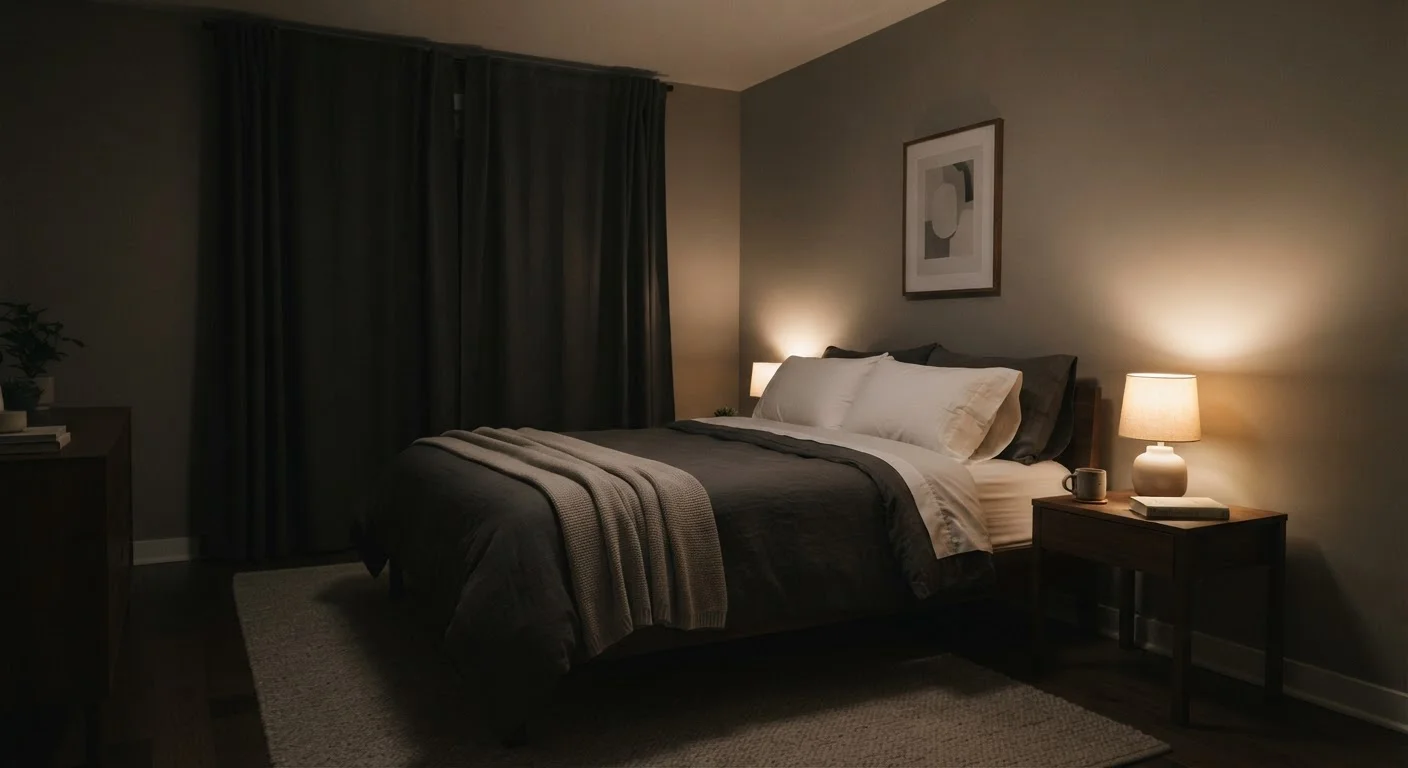
Why Your Bedroom Environment Matters More Than You Think
Most people troubleshoot sleep by focusing on what's happening in their head - stress, racing thoughts, anxiety. But the room itself is often doing just as much damage. Light levels, noise, temperature, and even clutter all send signals to your nervous system, either nudging it toward rest or quietly keeping it on alert.
This audit is designed to help you look at your sleep environment with fresh eyes. It takes under an hour to work through, and many of the fixes cost nothing at all. For a deeper look at why some disruptions are so easy to miss, this breakdown of overlooked sleep saboteurs is worth a read alongside this checklist.
Block all external light sources by hanging blackout curtains or a blackout blind - even streetlights and moonlight can suppress melatonin.Must
Cover or remove any LED standby lights on TVs, chargers, or smart devices; a single blinking light in a dark room is enough to disrupt sleep depth.Must
Switch any bedside lamp to a warm-toned bulb (2700K or lower) to avoid blue-spectrum light in the hour before bed.Should
Check whether light enters under the bedroom door and consider a draft excluder or door seal if it does.Nice to have
Temperature & Airflow
Set your thermostat or adjust bedding so your room sits around 65-68°F (18-20°C), the range most commonly associated with comfortable sleep.Must
Ensure your bedding weight matches the season - overheating is one of the most common causes of night waking.Must
Crack a window or use a fan to maintain gentle airflow if the room feels stuffy.Should
Consider moisture levels: very dry air (below 30% humidity) can cause throat and nasal irritation that interrupts sleep.Nice to have
Noise Management
Identify your main noise sources - traffic, neighbours, pets, appliances - and note whether they are continuous or intermittent (intermittent noise is more disruptive).Must
Use earplugs, a white noise machine, or a fan to mask unpredictable sounds if external noise can't be reduced.Should
Put your phone on Do Not Disturb or place it in another room so notification sounds don't fragment your sleep.Must
Add soft furnishings - rugs, curtains, cushions - which absorb sound if your room feels echoey.Nice to have
Screen & Device Habits
Remove the TV from your bedroom if possible, or commit to turning it off at least 30 minutes before your target sleep time.Should
Charge your phone outside the bedroom so it's not the last thing you look at and the first thing you reach for.Should
Enable night mode or warm-display settings on any devices used in the hour before bed.Nice to have
Bed & Bedding Comfort
Check your pillow for support: if it collapses flat or feels lumpy, it may be causing neck tension that keeps you from settling.Must
Wash bedding regularly - at least every one to two weeks - since dust mites and allergens can disturb breathing and sleep quality.Should
Reserve your bed for sleep and intimacy only; using it for work or scrolling trains your brain to treat it as an active space.Must
Mental Environment & Wind-Down Cues
Clear any visible work materials, bills, or to-do lists from your bedroom sightline - visual reminders of tasks keep the brain in problem-solving mode.Should
Add a consistent sensory cue - a scent, a sound, a dim lamp - that you use only at bedtime to help your brain associate it with winding down.Nice to have
Establish a rough 'last screen' time each evening and pair it with a non-stimulating activity like reading or light stretching.Should
Tools You'll Need for This Audit
You don't need any special equipment to complete this audit, but a few inexpensive items make it easier to assess your room objectively rather than guessing.
Required
Thermometer
Lets you verify your actual room temperature rather than relying on how it feels.
Required
Blackout curtains or blinds
Blocks external light that can suppress melatonin and delay sleep onset.
Optional
White noise machine or fan
Provides consistent background sound to mask intermittent noise disruptions.
Optional
Hygrometer
Measures bedroom humidity so you can tell whether dry air may be affecting your breathing during sleep.
Optional
Warm-toned light bulb (2700K or lower)
Reduces blue-spectrum light exposure from bedside lamps in the hour before bed.
Once you've worked through the checklist, consider pairing these environmental changes with a consistent evening wind-down. Building an evening routine that quiets your mind covers exactly how to do that without rigid schedules.
This article is for general informational purposes only and is not a substitute for medical advice. If you have ongoing sleep difficulties, speak with a qualified healthcare professional.
Health Made Simple Editorial Team is the collective byline for our editorial team and contributor network. Articles published under this byline or an editorial pen name are researched, written, and reviewed according to our editorial standards for clarity, consistency, and independence before publication.
The content on this site is for informational purposes only and is not a substitute for professional advice. Always consult a qualified professional for guidance specific to your situation.