

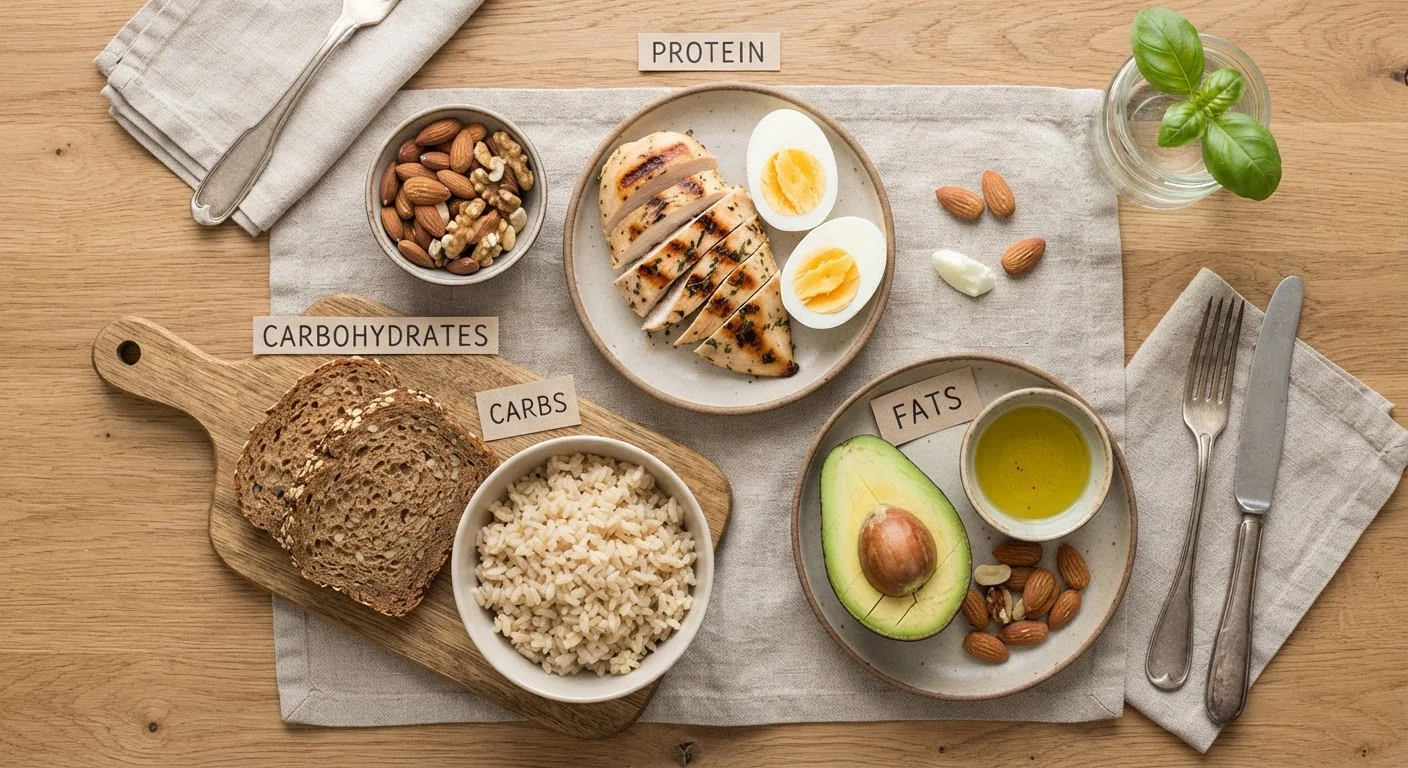
The Big Three: A Quick Orientation
Every food you eat is made up of some combination of carbohydrates, protein, and fat. These are the macronutrients - and they're called "macro" simply because your body needs them in relatively large amounts compared to vitamins and minerals.
Understanding what each one actually does helps explain why nutrition advice can feel contradictory. Low-carb advocates and low-fat advocates can both point to real biological mechanisms - because all three macronutrients genuinely matter, just in different ways. For a broader look at the other nutrients your body needs, see our guide to what vitamins and minerals do.
Carbohydrates: Your Body's First Choice for Fuel
Carbohydrates break down into glucose, which is the primary energy source for your brain, muscles, and most organs. When you eat a slice of bread, a bowl of oats, or an apple, your digestive system converts the carbohydrates into glucose and releases it into the bloodstream.
Your body stores some glucose as glycogen in the liver and muscles - a ready reserve for when you need a quick burst of energy. During sustained activity or between meals, that glycogen gets drawn down and replenished.
Not all carbohydrates behave the same way. Refined carbs (white bread, sugary drinks) digest quickly and cause faster rises in blood glucose. Whole-food carb sources - legumes, vegetables, whole grains - digest more slowly and also deliver fiber, which has its own set of benefits. Our article on fibre and why most people eat too little of it goes deeper on that angle.
45-65%
Recommended share of calories from carbohydrates
According to the U.S. Dietary Guidelines for Americans, carbohydrates should make up roughly 45 to 65 percent of total daily calorie intake for most adults.
20-35%
Recommended share of calories from fat
The same U.S. Dietary Guidelines suggest fat should account for 20 to 35 percent of daily calories, with an emphasis on unsaturated sources.
10-35%
Recommended share of calories from protein
Protein's recommended range spans 10 to 35 percent of daily calories, with needs varying by age, activity level, and health status per U.S. dietary guidance.
Protein: Builder, Repairer, and More
Protein is made of amino acids - often described as the body's building blocks. Your body uses them to repair and build muscle tissue, produce enzymes that drive chemical reactions, make hormones, and support immune function.
When you eat protein - whether from eggs, lentils, chicken, or tofu - your digestive system breaks it down into individual amino acids, which are then reassembled into whatever the body currently needs. Some amino acids can be made internally; others, called essential amino acids, must come from food.
Protein also tends to be more satiating than carbohydrates or fat gram-for-gram, which is why higher-protein meals often keep hunger at bay longer. This isn't magic - it's partly because protein takes more energy to digest and influences appetite-related hormones.
Fat: Misunderstood and Essential
Fat has spent decades unfairly cast as the dietary villain. In reality, it's critical. Dietary fat helps your body absorb fat-soluble vitamins (A, D, E, and K), forms the structural layer of every cell membrane, and serves as raw material for hormones - including sex hormones and those that regulate inflammation.
Your brain is roughly 60% fat by dry weight, and a steady supply of dietary fat supports cognitive function and nerve signaling. Fat also provides a dense, slow-burning energy source - useful during lower-intensity activities and between meals.
The types of fat matter. Unsaturated fats - found in avocados, nuts, seeds, and fish - are associated with better health outcomes in research. Heavily processed trans fats (now largely removed from the US food supply) are associated with harm. Saturated fat occupies a more nuanced middle ground that nutrition researchers continue to study.
A Simple Way to Think About Fat Sources
If a fat-containing food is close to its whole, natural form - a handful of walnuts, a drizzle of olive oil, a slice of salmon - it's generally a good choice. The more a fat source has been processed or partially hydrogenated, the less reliable it tends to be nutritionally. You don't need to count fat grams; just pay attention to where yours are coming from.
Why Cutting One Out Rarely Works Long-Term
Diet trends tend to villainize one macronutrient at a time. The logic is appealing - if something makes you gain weight, just eliminate it. But the body doesn't work in isolation.
Cut fat drastically, and you may struggle to absorb fat-soluble vitamins or maintain hormone balance. Cut carbohydrates severely, and your fiber intake often drops along with it, affecting gut health and digestion. Cut protein too low, and tissue repair and immune function may suffer.
The evidence broadly supports balance and food quality over elimination. Most people do well eating all three macronutrients, adjusting proportions based on their activity level, health goals, and preferences - ideally with input from a registered dietitian rather than a trending elimination plan.
This article is for general informational purposes only and is not a substitute for personalized medical or nutritional advice. Consult a qualified healthcare professional before making significant changes to your diet.
Frequently Asked Questions
Not necessarily. Most people can eat well without precise tracking by focusing on whole foods, variety, and reasonable portions. Tracking can be useful for specific goals, but it's not required for general good health.
Reducing refined carbohydrates can help some people manage their intake, but cutting carbs entirely is rarely necessary and can be hard to sustain. Whole food carb sources also supply fiber, vitamins, and minerals your body relies on. A qualified dietitian can help you find an approach that works for you.
General dietary guidelines suggest around 0.8 grams of protein per kilogram of body weight per day for most adults, though needs vary with age, activity level, and health status. For personalized recommendations, consult a registered dietitian or healthcare provider.
The relationship between fat and heart health is more nuanced than older guidelines suggested. The type of fat matters - unsaturated fats found in foods like nuts, olive oil, and fish are generally considered heart-friendly, while heavily processed trans fats are not. Speak with your doctor for guidance tailored to your health history.
Your body adapts in various ways, but prolonged deficiency in any macronutrient can cause problems. Too little fat impairs vitamin absorption; too little protein affects tissue repair; too little carbohydrate can impact energy and mood. Balance over time matters more than any single meal.
The content on this site is for informational purposes only and is not a substitute for professional advice. Always consult a qualified professional for guidance specific to your situation.