

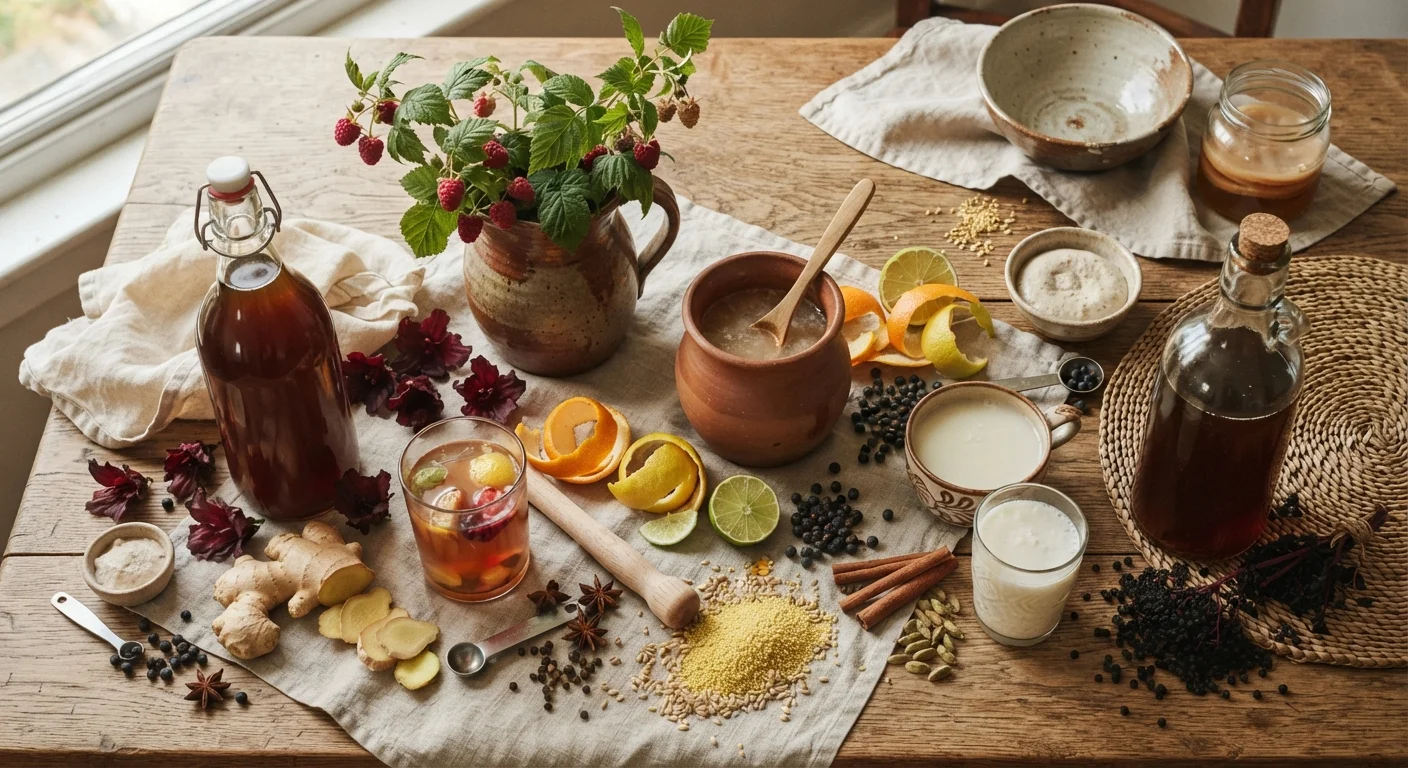
Why Humans Have Always Fermented Their Drinks
Long before refrigeration - or even a working theory of what microbes were - people around the world figured out that leaving certain liquids to sit and bubble made them taste better, last longer, and sometimes made you feel a pleasant warmth. That's fermentation at its most human: an ancient, practical, and endlessly inventive tradition.
Fermentation happens when microorganisms - mainly bacteria, yeasts, or a combination - consume sugars and produce alcohol, acids, and carbon dioxide as byproducts. The result is a drink that's tangier, more complex, and often lightly or fully fizzy. As explored in our look at fermentation across cultures piece explains, this process was discovered independently on every populated continent. That says something important: fermented drinks aren't a niche trend. They're one of the most universal things humans have ever made.
Fermentation
A metabolic process where microorganisms like bacteria or yeast convert sugars into acids, gases, or alcohol. It's the core mechanism behind all traditional fermented drinks.
SCOBY
Short for Symbiotic Culture of Bacteria and Yeast. A living colony used to ferment kombucha; it consumes sugar from sweetened tea and produces acids and carbonation.
Kefir Grains
Rubbery clusters of bacteria and yeast used to ferment milk or water into kefir. Despite the name, they contain no actual grain - they just look like cauliflower florets.
Lactic Acid Fermentation
A type of fermentation where bacteria convert sugars into lactic acid. This is what gives yogurt, kefir, and many traditional fermented drinks their characteristic sour tang.
Microbiome
The community of trillions of microorganisms - bacteria, fungi, and others - living in and on the human body, particularly concentrated in the gut. Diet can influence its composition.
Chicha
A broad category of fermented beverages from South America, most commonly made from maize. Some traditional preparations use chewed corn to introduce enzymes that begin the fermentation process.
A Tour of the World's Most Notable Fermented Beverages
The variety is genuinely staggering. Here's a reference guide to some of the most culturally significant and widely recognized fermented drinks from around the world.
Kombucha - East Asia / Global
A sweetened tea fermented by a SCOBY - a rubbery disc of microorganisms that looks more like a science experiment than a culinary ingredient. The result is tangy, lightly effervescent, and slightly vinegary. Though it has ancient roots in northeastern China, kombucha has become a globally recognized product over the past few decades.
Kefir - Central Asia / Caucasus
Made by fermenting milk (or water) with kefir grains - clusters of bacteria and yeast - kefir is thinner than yogurt and distinctly tart. Milk kefir has deep roots in the Caucasus region and Central Asia, where it's been part of daily diet for centuries. Water kefir, fermented from sugar water or juice, is a dairy-free alternative with a different flavor profile.
Kvass - Eastern Europe
A lightly fermented beverage made from stale rye bread, kvass has been a staple in Russia, Ukraine, and neighboring countries for over a thousand years. It's low in alcohol, slightly sour, and tastes vaguely like a malty soda. Traditionally a warm-weather street drink, it remains popular across the region today.
Tepache - Mexico
Made from fermented pineapple rinds, sugar, and spices like cinnamon and clove, tepache is refreshing and only mildly alcoholic. It's a pre-Columbian tradition with roots in indigenous Mexican culture and is typically prepared at home or sold fresh by street vendors. The flavor sits somewhere between a light beer and a fruity soda.
Ayran / Lassi - Turkey / South Asia
These are yogurt-based drinks - diluted, salted (in the case of ayran) or sweetened and spiced (in the case of lassi). The fermentation occurs in the yogurt itself, making these a way of consuming cultured dairy as a beverage. Both have centuries of tradition behind them and remain everyday drinks in their regions of origin.
Chicha - Andean South America
One of the oldest fermented drinks in the Americas, chicha is traditionally made from maize (corn). Some preparations involve chewing the corn first to introduce salivary enzymes that help break down starches - a technique that predates modern brewing science by thousands of years. Chicha de jora, made from germinated corn, is still produced and consumed throughout Andean communities.
| Oldest known fermented beverage | Likely a grain-based fermented drink; evidence dates back approximately 9,000 years in China (Archaeological findings from Jiahu site) |
| Alcohol content of kvass | Typically 0.5-1.5% ABV |
| Main microorganism in kombucha | SCOBY (Symbiotic Culture of Bacteria and Yeast) |
| Primary flavor compound in kefir | Lactic acid (from bacterial fermentation) |
| Tepache origin | Pre-Columbian Mexico; roots in indigenous Nahua culture |
| Fermentation time for tepache | Typically 2-3 days at room temperature |
The Science in the Sip - and What We Don't Know Yet
Much of the modern interest in fermented drinks centers on their potential relationship to gut health. The fermentation process does produce live microorganisms, and some research suggests that certain fermented foods may contribute to gut microbiome diversity. That said, the science is still actively developing - our companion piece on fermented foods and gut health walks through what's established and what's still emerging.
It's also worth being alert to overclaiming. Fermented drinks are frequently marketed with words like "detox" or "probiotic-rich" in ways that outpace the evidence. For a grounding perspective on that kind of language, our guide to nutrition claims that sound scientific but aren't is a useful reference.
What we can say with confidence: fermented drinks are flavorful, culturally rich, and part of a global tradition worth understanding on its own terms - not just through the lens of wellness trends. Whether you're drawn to the sour punch of kvass or the spiced sweetness of tepache, there's a world of fermented beverage culture worth exploring one sip at a time.
The content on this site is for informational purposes only and is not a substitute for professional advice. Always consult a qualified professional for guidance specific to your situation.