

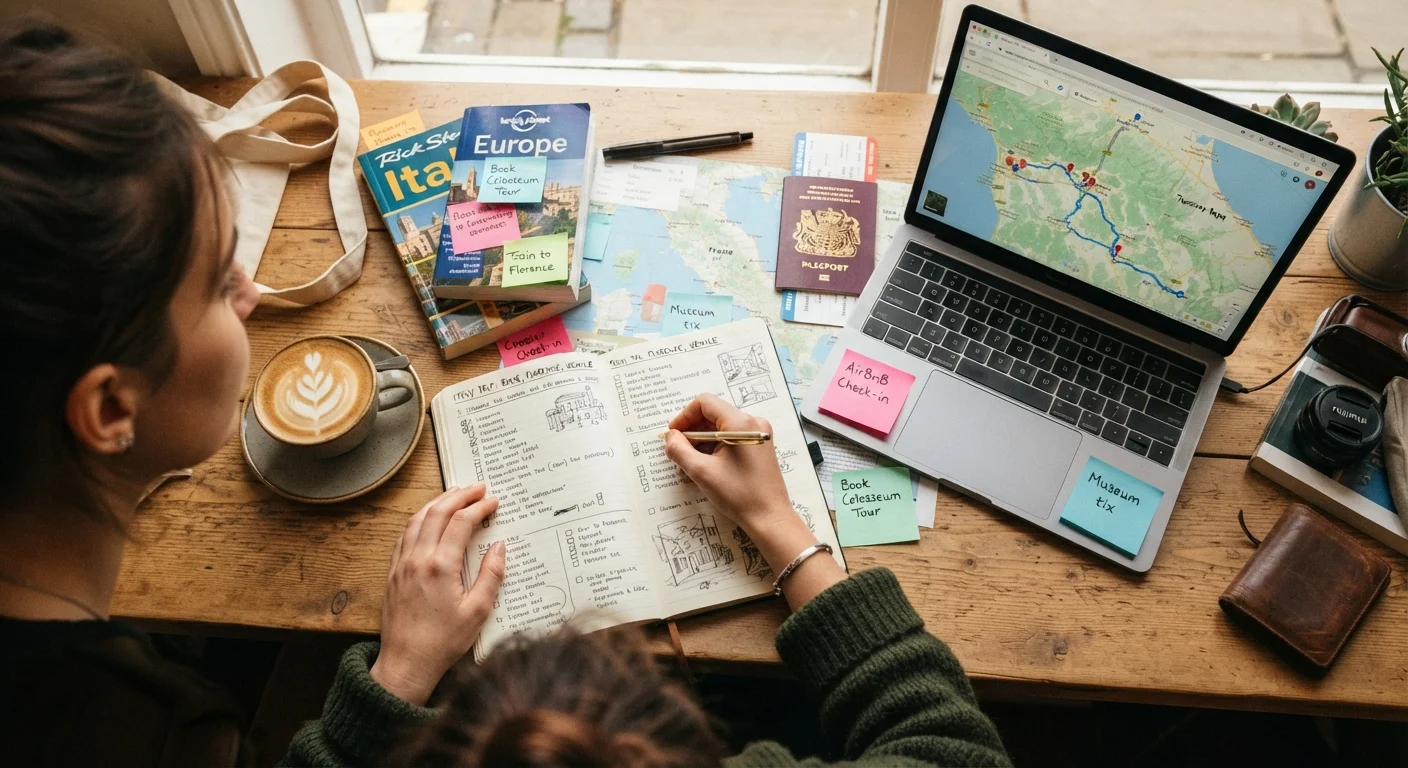
Why Destination Research Goes Off the Rails
Anyone who has spent four hours reading travel blogs about a city they're visiting for three days knows the problem. Destination research starts with a simple question - "What should I do in Lisbon?" - and ends with seventeen open tabs, two Reddit threads, a YouTube walking tour, and zero actual decisions made.
The issue isn't lack of information. It's the opposite. Most travelers don't have a research strategy; they have a research impulse. Understanding how to structure your research upfront saves hours and produces better decisions. See how destination research fits into the broader planning picture in our trip planning overview.
Best Practices for Researching Smarter
These approaches work whether you're planning a weekend road trip or a two-week international itinerary. Apply whichever are most relevant to your situation.
Define your research questions before you start searching
Vague research produces vague results. Entering a session knowing exactly what you need - entry requirements, neighborhood safety, average daily costs - keeps you from following tangents. It also tells you when you're done.
Prioritize primary and official sources for logistics
For anything that affects safety, legal entry, or money - visa rules, vaccination requirements, travel advisories - blogs and forums are unreliable. Policies change, and outdated information on a popular travel site can cause real problems.
Use traveler forums for lived experience, not logistics
Communities like travel-focused forums and subreddits are valuable for understanding what a place actually feels like - neighborhood character, transit quirks, local etiquette. They're less reliable for rules, prices, or schedules, which shift frequently.
Set a hard time limit for each research session
Research expands to fill whatever time you give it. A 90-minute session with a clear question list produces more usable output than an all-day scroll that ends in decision fatigue. Time limits also force prioritization.
Keep a single running notes document, not scattered bookmarks
Bookmarking pages gives you a pile to revisit, not a plan. A working document where you paste key facts, rough costs, and confirmed logistics is immediately usable and helps you spot gaps.
Cross-reference costs from at least two independent sources
Travel cost estimates vary widely depending on who wrote them, when, and their travel style. Relying on a single source - especially one monetized through affiliate links - can leave your budget significantly off.
Quick Actions You Can Take Right Now
Before you dive into your next destination search, put these habits in place. Each one takes under five minutes but meaningfully changes the quality of your research session.
Common Research Traps to Avoid
Even well-intentioned research can lead you astray. Watch for these patterns:
- Treating blog rankings as gospel. "Top 10" lists often reflect what's easy to photograph or monetize, not what's genuinely worth your time. Cross-reference any list with multiple sources before committing it to your itinerary.
- Over-researching areas you won't visit. It's tempting to read everything about a destination even if you're only spending two days there. Limit research scope to what you'll actually use.
- Ignoring recency. Hours of business, transport routes, and entry requirements change. Always check that information is current - especially for anything safety- or entry-related, which you should verify directly with official government sources before traveling.
For a look at other habits that inflate planning time and stress, see our piece on trip planning myths travelers tend to repeat.
When you're ready to turn research into a working schedule, how you structure your days is the next decision to work through.
The content on this site is for informational purposes only and is not a substitute for professional advice. Always consult a qualified professional for guidance specific to your situation.