

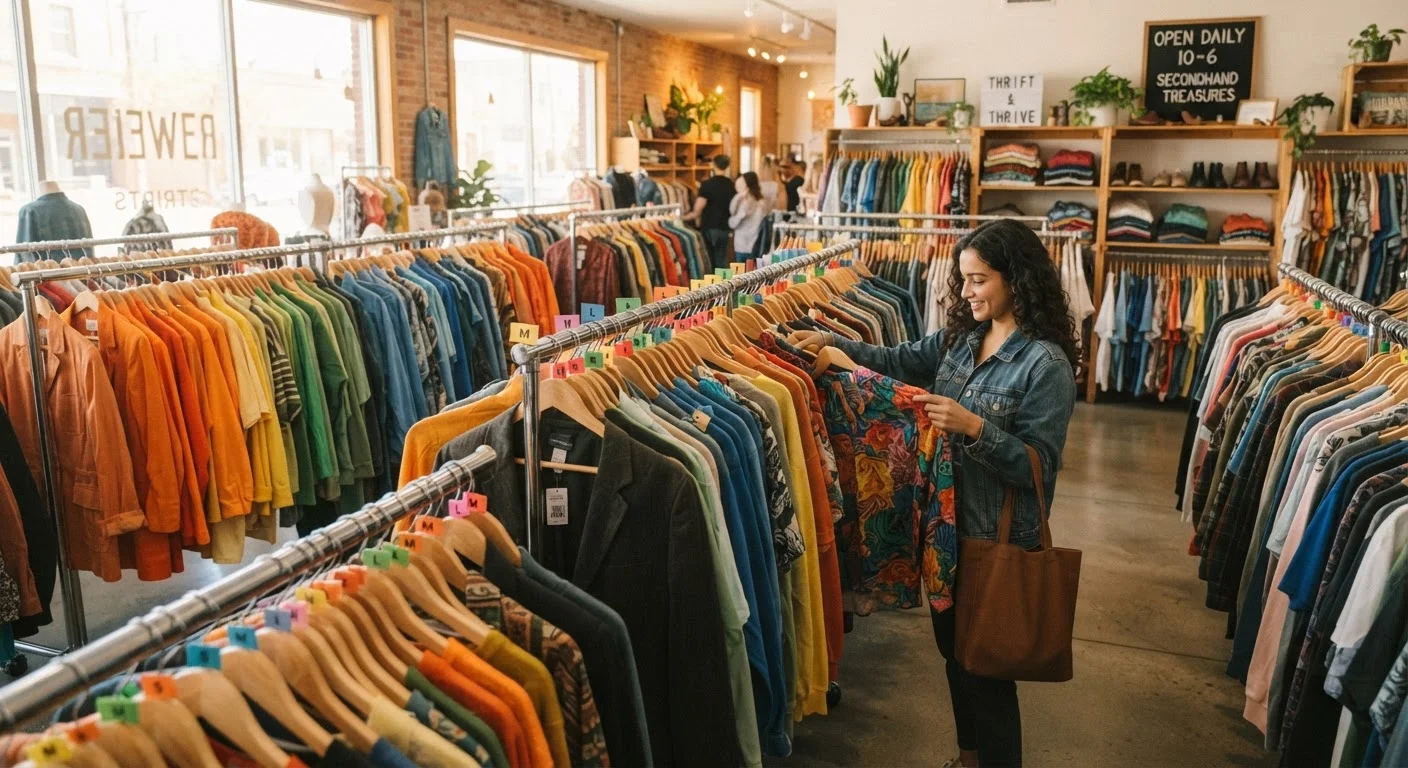
Why Thrift Stores Feel Chaotic (And Why That's Fine)
Walk into a thrift store for the first time and the sheer volume of stuff can be genuinely disorienting. There's no curated display, no coordinated mannequins, and no helpful sales associate steering you toward a season's collection. That lack of structure is exactly what makes thrift stores feel overwhelming — and exactly what makes them rewarding once you know how to navigate them.
Unlike traditional retail, thrift store inventory is unpredictable. Stock rotates constantly, prices vary by store, and quality ranges from near-new to clearly worn-out. The upside: if you develop a systematic approach, you can walk out with well-made pieces at a fraction of what you'd pay anywhere else. The key is knowing what to look for and how to evaluate it honestly.
What you will need
Once you've built out your thrifted wardrobe, our occasion dressing checklist can help you put those pieces to work confidently.
How to Work Through a Thrift Store Visit
A wardrobe checklist
Keeps your shopping focused on actual gaps rather than impulse grabs.
A fabric lint roller or flashlight
Helps spot pet hair, pilling, or hidden stains under store lighting.
A reusable tote bag
Makes it easier to carry and compare multiple items as you browse.
Shop Mid-Week for Better Selection
Most thrift stores restock throughout the week, and weekend crowds pick shelves clean fast. A Tuesday or Wednesday visit often means fresher stock and more breathing room to browse. If your schedule allows, mid-morning on a weekday is a thrifter's sweet spot.
Identify your wardrobe gaps before you walk in
Thrift stores reward shoppers who know what they actually need. Before your trip, spend five minutes thinking about what's missing from your closet — a versatile jacket, everyday trousers, casual tops. Jot a loose list on your phone. This isn't about being rigid; it's about having an anchor so you don't leave with three items you'll never wear. If you're starting from scratch, our guide to building a wardrobe from nothing can help you figure out where to begin.
Orient yourself in the store
Most thrift stores organize clothing by category (tops, bottoms, dresses) and then by color or size within each section. Spend two minutes walking the full floor before diving in. Note where menswear, womenswear, and accessories live. Some stores have a dedicated clearance or new-arrival section — worth checking first. Understanding the layout saves time and prevents you from missing entire sections.
Browse methodically — don't just skim the surface
Flip through each hanger one by one rather than skimming the tops of garments. Great pieces get sandwiched between ordinary ones constantly. Work through a section systematically, pulling anything promising to hold and evaluate. Give yourself permission to move slowly — this is where the good finds happen.
Inspect each item thoroughly
Before adding anything to your basket, check it carefully. Look at the underarms, collar, and cuffs for staining. Run your fingers across the fabric for pilling, thinning patches, or snags. Test every zipper and button. Give the item a subtle sniff — some odors (smoke, mildew) don't wash out reliably. Check the seams for unraveling. This two-minute check protects you from buying something that goes straight to the donation bin.
Try everything on
Sizing in secondhand clothing is notoriously inconsistent. Garments from different decades, countries, and brands all use different measurements — the number on the tag means very little. Trying items on is the only reliable way to know if something fits well. Pay attention to shoulder seams, waist fit, and length. A too-short hem is usually not fixable; a slightly loose waist often is.
Evaluate before checkout and stay on budget
At the register line, do a final review of your basket. For each item, ask: Does it fit? Does it work with things I already own? Would I buy this if it were in a regular store? If the honest answer to any of those is no, set it aside — no guilt required. Stick to the budget you set before entering. Thrift shopping is most satisfying when it serves real needs rather than filling bags for the thrill of the deal. For a broader look at how thrifting compares to other shopping approaches, see our article on thrift shopping vs. fast fashion trade-offs.
Always Inspect Before You Buy
Thrift stores generally do not accept returns, so a thorough in-store check is your only safety net. Look for permanent stains, broken zippers, missing buttons, thinning fabric, and any smell that won't wash out. A two-minute inspection saves real money and disappointment.
Don't Skip the Try-On
Secondhand clothing spans decades of shifting sizing standards, so a tagged size 10 from one era can fit like a modern 6 or 14. Always try items on before purchasing. Fitting room lines at thrift stores are usually short, so there's no reason to skip this step.
Making Thrift Shopping a Habit That Actually Works
One visit won't transform your wardrobe — but a few strategic trips a month can. Because stock changes constantly, regulars tend to find more over time simply by showing up. You start to learn which stores in your area have better quality, which sections are worth your time, and which days new donations tend to arrive.
Wash everything before wearing it. That's not a judgment on where the clothes came from — it's just practical hygiene. Most thrift-store finds clean up beautifully, and a freshly laundered piece rarely looks secondhand at all.
Over time, thrift shopping builds a skill set: evaluating fabric quality, recognizing a well-constructed garment, knowing what fits your body well. Those skills pay off everywhere, not just at the thrift store.
The content on this site is for informational purposes only and is not a substitute for professional advice. Always consult a qualified professional for guidance specific to your situation.