

Our Verdict
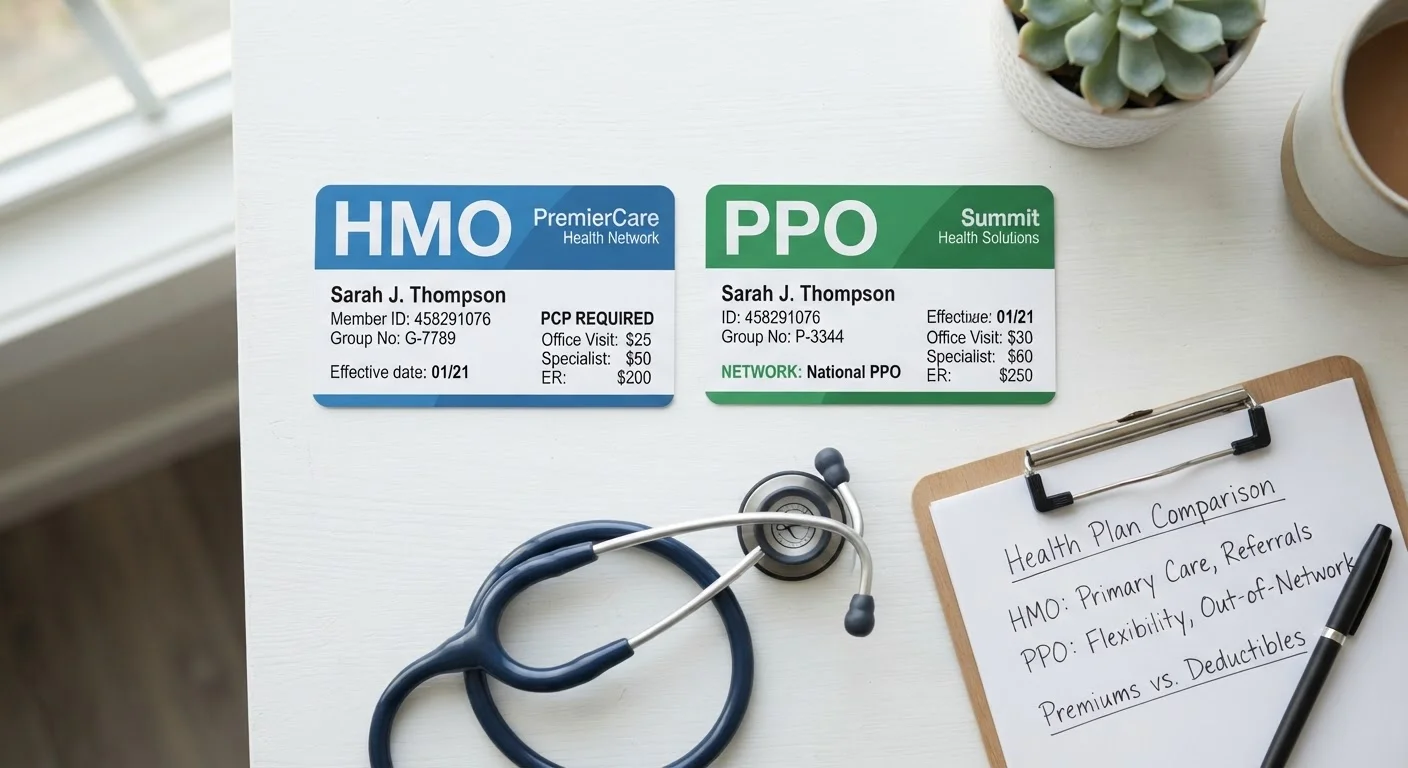
HMO plans work well for people who want lower costs and don't mind coordinating care through a primary doctor. PPO plans suit those who need flexibility — frequent specialist visits, out-of-area care, or a preference to choose their own providers without referrals. Neither plan is objectively better; the right choice depends on your health needs, budget, and how you actually use healthcare.
| Best for | Recommended |
|---|---|
| Budget-conscious individuals with routine healthcare needs | HMO |
| People who see specialists frequently or travel often | PPO |
| Those who prefer a coordinated, single point of care | HMO |
| Anyone who values provider choice above lower premiums | PPO |
What HMO and PPO Actually Mean
HMO stands for Health Maintenance Organization. PPO stands for Preferred Provider Organization. Both are types of managed care health insurance plans widely available through employers and the Health Insurance Marketplace, but they structure your access to healthcare very differently.
With an HMO, you choose a primary care physician (PCP) who acts as your main medical contact. That doctor coordinates your care and provides referrals when you need to see a specialist. You're generally limited to a specific network of providers — going outside that network means paying the full cost yourself, except in emergencies.
With a PPO, you have more freedom. You can see any doctor — in-network or out-of-network — without a referral. You'll pay less when you stay in-network, but the plan still provides some coverage if you go outside it. That flexibility comes at a price, usually in the form of higher monthly premiums. If some of these terms feel unfamiliar, the plain-English insurance glossary can help clarify the basics before you dig deeper.
Side-by-Side: How the Two Plans Stack Up
The table below compares HMO and PPO plans across the criteria that matter most when you're making a real decision — not just the marketing language on a brochure.
| HMO | PPO | |
|---|---|---|
| Monthly Premium | Generally lower | Generally higher |
| Provider Network | Restricted to network | In- and out-of-network covered |
| Primary Care Physician Required | Yes, required | No, optional |
| Specialist Referral Needed | Yes, from PCP | No referral needed |
| Out-of-Network Coverage | Rarely (emergencies only) | Yes, at higher cost share |
| Administrative Simplicity | More coordination required | More self-directed |
| Best Suited For | Routine, predictable care | Frequent or varied specialist care |
One detail worth understanding: the lower premium of an HMO doesn't automatically mean you spend less overall. If your plan has a high deductible, you could still face significant out-of-pocket costs before coverage kicks in. For a deeper look at that trade-off, see this breakdown of deductible vs. premium decisions.
When an HMO Makes More Sense
An HMO tends to be a better fit if:
- You're generally healthy and mostly need preventive care and the occasional sick visit.
- Keeping your monthly premium low is a priority.
- You don't mind — or actually prefer — having one doctor who knows your full health history and coordinates your care.
- All your preferred providers are already in the plan's network.
Check the Network Before You Enroll
Most insurers publish an online provider directory where you can search by doctor name or specialty. Before selecting an HMO, confirm that your current primary care doctor and any specialists you see regularly are listed as in-network. Networks can change year to year, so re-verify even if you're renewing the same plan.
The main trade-off is rigidity. If you're diagnosed with a condition that requires frequent specialist visits, or if you move or travel often, those network restrictions can become a real problem. It's worth checking whether your current doctors are in-network before enrolling — not after.
When a PPO Is Worth the Higher Cost
A PPO earns its higher premium in specific situations:
- You already have an established relationship with specialists you'd rather not give up.
- You travel frequently or split time between two locations.
- You have a chronic condition that requires ongoing specialist care.
- You want the option to self-refer without waiting for a PCP appointment first.
It's a common misconception that a more expensive plan automatically means better care. As covered in common health insurance myths, in-network status and coverage details matter far more than price tier alone. A PPO makes sense when the flexibility genuinely matches how you use healthcare — not just as a default assumption that more cost equals more value.
~49%
Employer plan enrollees in PPOs
According to the Kaiser Family Foundation's 2023 Employer Health Benefits Survey, PPOs remain the most common plan type offered by employers, covering roughly half of covered workers.
~13%
Employer plan enrollees in HMOs
The same KFF survey found HMO enrollment at around 13% of covered workers, reflecting the trade-off many employees make between cost and flexibility.
How to Choose Without Overthinking It
Start with three honest questions:
- How often do I actually use healthcare? If you rarely go beyond annual checkups, a lower-cost HMO is likely sufficient.
- Do I have doctors I want to keep? Check both plan networks before deciding — many people are surprised to find their doctor is in-network for both, or neither.
- Can I afford the premium difference? Run the math on monthly premiums against your realistic usage. A PPO that sits unused costs real money every month.
Open enrollment is typically your one annual window to make this choice, so it's worth slowing down rather than defaulting to whatever you had last year. If you're unsure where to start, a licensed insurance agent or your employer's HR benefits coordinator can walk through the specifics of what's available to you without any obligation.
This article is for general informational purposes only and does not constitute personalized insurance, financial, or legal advice. Coverage details, costs, and network rules vary by plan and provider. Consult a licensed insurance professional before making decisions about your own coverage.
The content on this site is for informational purposes only and is not a substitute for professional advice. Always consult a qualified professional for guidance specific to your situation.