

Why Auto Insurance Is More Than One Thing
Most people think of auto insurance as a single product, but it's actually a bundle of distinct coverage types. Each one kicks in under different circumstances — and each protects a different thing. Knowing what you're actually buying helps you avoid gaps and avoid overpaying for protection you don't need.
If you're new to insurance concepts generally, it helps to first understand how insurance works at a basic level before sorting through the coverage types. And for quick definitions of terms like deductible or premium, the plain-English insurance glossary is a good companion to this article.
| States requiring liability insurance | 49 out of 50 (New Hampshire is the exception but has alternative requirements) |
| Coverage required by most lenders | Collision + Comprehensive (Standard lender/leasing requirement) |
| Uninsured drivers on U.S. roads | Roughly 1 in 8 (Insurance Research Council estimates) |
| No-fault states requiring PIP | 12+ states (Varies; verify with your state's insurance department) |
The Core Coverage Types, Explained
Here's what each standard auto coverage type actually does:
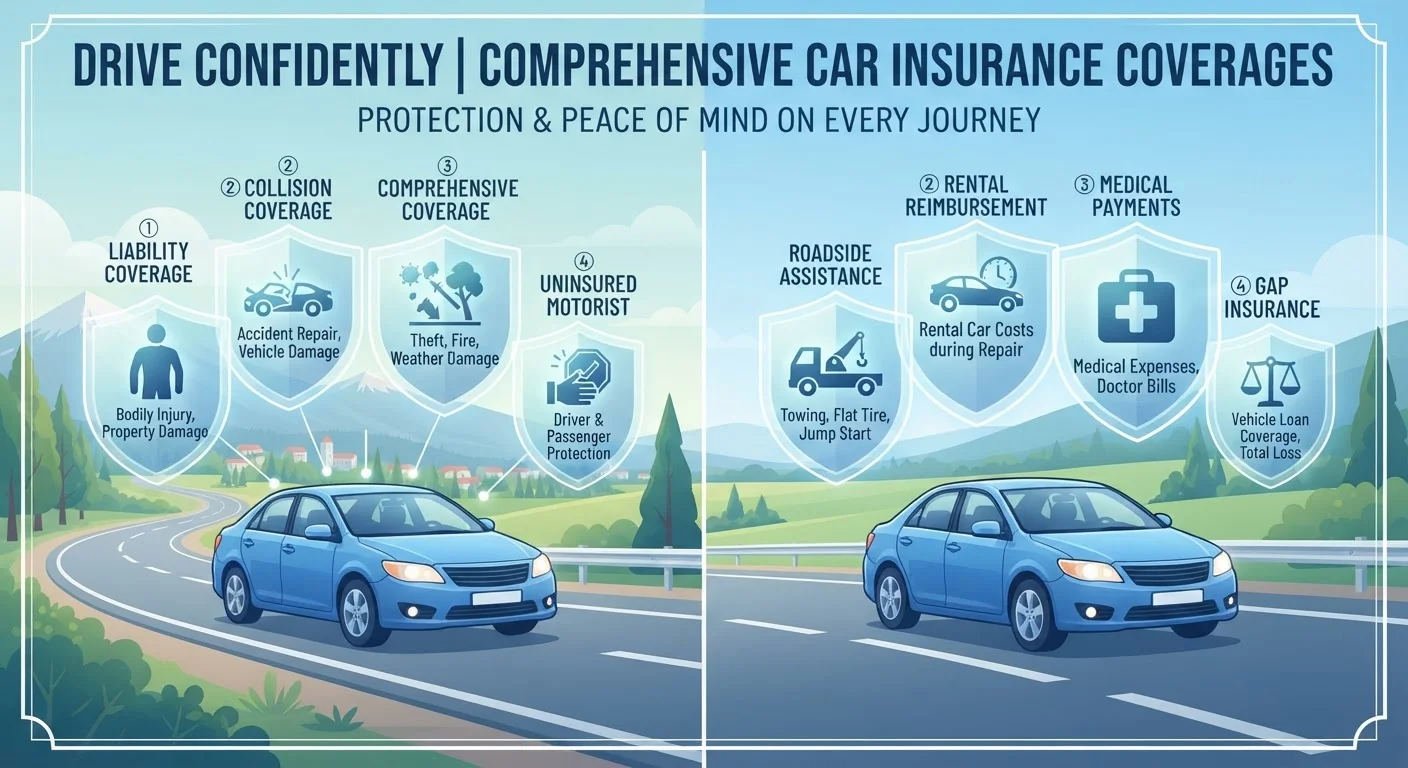
Liability Coverage
This is the coverage required in nearly every U.S. state. It pays for damage you cause to other people and their property when you're at fault in an accident. It does not cover your own injuries or your own car. Liability typically comes in two parts: bodily injury liability (covering medical costs for others) and property damage liability (covering repairs to others' vehicles or structures).
Collision Coverage
Collision pays to repair or replace your own vehicle after it's damaged in a crash — whether you hit another car or a stationary object like a guardrail. This coverage applies regardless of fault. It usually comes with a deductible you pay first before the insurer covers the rest.
Comprehensive Coverage
Despite the name, comprehensive doesn't cover everything. It covers damage to your vehicle that isn't caused by a collision — think theft, vandalism, hail, flooding, fire, or hitting an animal. Like collision, it has a deductible. Lenders often require both collision and comprehensive when you're financing or leasing a vehicle.
Uninsured and Underinsured Motorist Coverage
This protects you when the driver who hits you has no insurance or not enough insurance to cover your costs. It can cover your medical bills and sometimes vehicle damage. A notable share of drivers on U.S. roads carry no insurance at all, making this coverage worth understanding even if it's optional in your state.
Medical Payments and Personal Injury Protection (PIP)
These cover medical expenses for you and your passengers after an accident, regardless of fault. PIP, required in some states, can also cover lost wages and other costs. Medical payments coverage (MedPay) is a simpler version available in most states.
Liability Coverage
Pays for injuries and property damage you cause to others in an accident. Required in most U.S. states. Does not cover your own vehicle or injuries.
Collision Coverage
Pays to repair or replace your own vehicle after a crash with another vehicle or object. Subject to a deductible.
Comprehensive Coverage
Covers non-collision damage to your vehicle such as theft, weather events, or animal strikes. Also subject to a deductible.
Deductible
The amount you pay out of pocket before your insurer covers the remaining cost of a claim. Higher deductibles generally mean lower premiums.
PIP (Personal Injury Protection)
Covers medical costs and sometimes lost wages for you and your passengers after an accident, regardless of who was at fault. Required in no-fault states.
Uninsured Motorist Coverage
Protects you when the at-fault driver has no insurance or insufficient coverage to pay for your damages or injuries.
What's Optional and What's Required
Liability coverage is legally required in almost every state, though minimum limits vary. Beyond that, what's mandatory depends on your state and, in many cases, your lender.
Collision and comprehensive are generally optional if you own your vehicle outright — but required by most lenders and lease companies. Uninsured motorist coverage is required in some states and optional in others. PIP is mandatory in so-called no-fault states.
Minimum Coverage Isn't Always Enough
State-mandated minimums for liability coverage are often lower than the actual cost of a serious accident. If you cause significant injuries or property damage and your policy limits are low, you could be personally responsible for the difference. It's worth understanding what the limits on your policy actually are before you need them.
When deciding which optional coverages make sense for your situation, consider the age and value of your car, your savings cushion, and your state's requirements. A licensed insurance agent can walk you through your state's specific rules — this article provides general education, not personalized advice.
To see how auto insurance fits within your broader coverage picture, see the types of insurance most Americans actually need.
The content on this site is for informational purposes only and is not a substitute for professional advice. Always consult a qualified professional for guidance specific to your situation.