

The Simple Idea Behind the Number
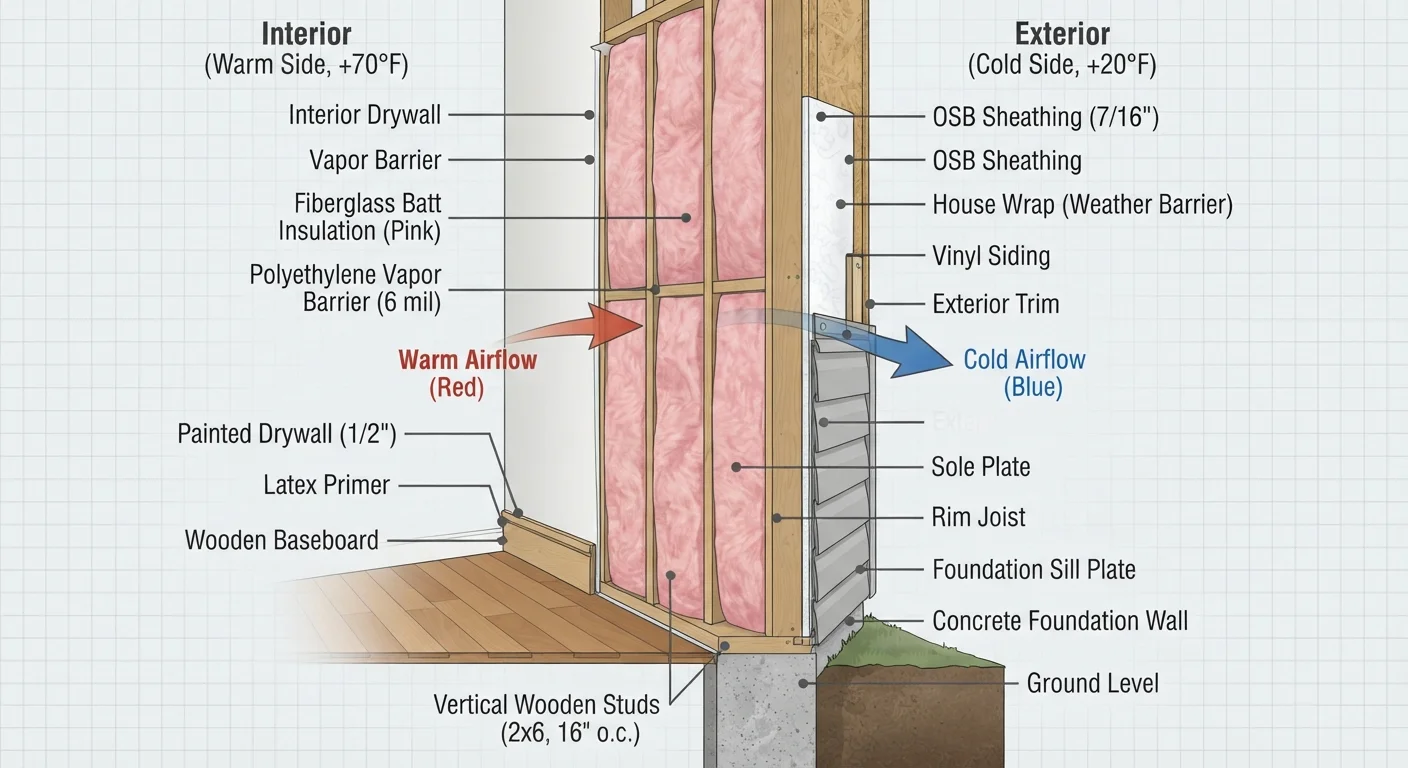
Think of R-value the way you'd think about a winter coat. A thin windbreaker lets cold air in quickly; a heavy parka slows it down dramatically. Insulation works the same way - it slows heat from moving through the surfaces of your home. R-value just puts a number on that resistance.
Heat always moves toward cooler areas. In winter, that means warm indoor air is constantly trying to escape through your walls, ceiling, and floor. In summer, the reverse happens - outdoor heat pushes inward. A higher R-value means your insulation puts up more resistance to that movement, keeping your conditioned air where you want it and reducing the load on your heating and cooling system.
The number itself is cumulative. If you have two layers of insulation - say, R-13 batts in your wall cavity plus R-5 rigid foam on the exterior - the combined performance is roughly R-18. This additive quality is one reason retrofitting older homes with supplemental insulation is often worthwhile.
Why the Right R-Value Depends on Where You Live
The U.S. Department of Energy divides the country into climate zones numbered 1 through 8, ranging from hot southern regions to bitterly cold northern ones. The colder your climate, the higher the R-value you'll need to maintain comfortable indoor temperatures without overworking your HVAC system.
A homeowner in Miami needs far less attic insulation than someone in Minneapolis. Broadly speaking, recommended attic R-values range from around R-30 in warmer zones to R-60 in colder ones. Walls typically run from R-13 to R-21, and floors above unheated spaces might call for R-19 to R-38 depending on the zone.
90%
U.S. homes estimated to be under-insulated
According to the North American Insulation Manufacturers Association, the vast majority of existing U.S. homes lack adequate insulation levels.
R-49 to R-60
Recommended attic R-value for cold climates
The U.S. Department of Energy recommends these attic insulation levels for climate zones 5 through 8, which cover much of the northern United States.
Up to 20%
Heat loss through an under-insulated attic
Energy efficiency organizations commonly cite the attic as one of the largest sources of heat loss in a typical home, though exact figures vary by home design.
Local building codes incorporate these climate-zone recommendations and represent the minimum standard for new construction or major renovations. They're a reliable baseline, but exceeding those minimums can pay off over time in lower energy bills - though actual savings vary depending on your home's overall envelope, behavior, and equipment efficiency.
How Material Type Affects R-Value
Different insulation materials achieve their R-values in different ways, and each has trade-offs worth understanding.
- Fiberglass batts: The familiar pink rolls found in most hardware stores. Widely available and relatively affordable. Typically R-3.1 to R-4.3 per inch.
- Blown-in cellulose: Made from recycled paper treated with fire retardant. Good for filling irregular spaces and attic floors. Around R-3.2 to R-3.8 per inch.
- Spray foam: Expands to fill gaps, providing both insulation and air sealing. Open-cell foam runs about R-3.5 per inch; closed-cell foam reaches R-6 to R-7 per inch but costs significantly more.
- Rigid foam board: Used on exterior walls or as supplemental layers. Ranges from R-3.8 to R-6.5 per inch depending on type.
Thickness matters too - a 3.5-inch wall cavity filled with fiberglass yields around R-13, but the same cavity with closed-cell spray foam could reach R-21 or higher. The trade-off is cost and installation complexity.
Installation: Where R-Value Can Go Wrong
Here's something that surprises many homeowners: a product's labeled R-value assumes it's installed perfectly. Real-world performance often falls short if installation is rushed or careless.
Compressing fiberglass batts to fit a thinner space reduces their R-value because the material relies on trapped air pockets to resist heat flow. Squeeze out those air pockets, and you squeeze out the performance. Similarly, gaps and voids - even small ones around outlets, pipes, or framing - create pathways for heat to bypass the insulation entirely. This is called thermal bridging, and it can noticeably reduce whole-wall performance.
Always Pair Insulation With Air Sealing
Before adding or upgrading insulation, seal gaps around electrical boxes, pipe penetrations, and where walls meet the top and bottom plates. Even a small gap can allow significant air movement that bypasses even high-R-value insulation. Expanding foam sealant and caulk handle most of these spots quickly and inexpensively.
Air sealing before or alongside insulation installation is often the step homeowners skip but shouldn't. Insulation slows conductive heat transfer; it does comparatively little to stop air movement. Caulking gaps, weatherstripping doors, and sealing around penetrations work together with insulation to deliver the performance the R-value number implies.
For complex retrofits or if you're unsure what you already have, a home energy auditor can use tools like a blower door test or thermal imaging camera to identify problem areas before you invest in new materials.
Frequently Asked Questions
It depends on where in your home and what climate zone you live in. Attics typically need R-38 to R-60, while walls often call for R-13 to R-21. The U.S. Department of Energy provides a free online tool to look up recommendations by ZIP code.
A higher R-value does mean greater resistance to heat flow, but it's not the only factor. Proper installation, air sealing, and moisture control are equally important. Insulation with a high R-value that's poorly installed can perform worse than lower-rated insulation installed correctly.
Yes, and doing so is additive - the R-values stack together. However, the existing insulation should not be compressed or wet. A qualified contractor or energy auditor can assess whether your current insulation is in suitable condition before you add more.
No. Attics lose the most heat and generally require the highest R-values, often R-38 or above. Walls and floors have their own requirements, which are typically lower. Local building codes reflect regional climate needs and are a reliable starting point.
Some insulation types, particularly certain foam boards, can experience slight R-value reduction as gas within the foam escapes over years. Most common insulation materials like fiberglass and cellulose maintain their rated R-value reliably when kept dry and undisturbed.
The content on this site is for informational purposes only and is not a substitute for professional advice. Always consult a qualified professional for guidance specific to your situation.