

Why the Plate Method Works
Most people who want to eat better don't fail because they lack willpower - they fail because the systems they try are too complicated to maintain. Calorie-counting apps, macro tracking, and food scales all require sustained effort that tends to collapse the moment life gets busy.
The plate method sidesteps all of that. Instead of numbers, it uses visual proportions: your plate is divided into rough sections for vegetables, protein, and grains or starchy foods. No math, no app required. This approach is broadly aligned with guidance from major public health organizations, which consistently emphasize food group balance over precise calorie targets for everyday eating.
It also scales naturally. Whether you're eating at home, ordering at a restaurant, or navigating a work cafeteria, you can apply the same rough proportions to whatever's in front of you. For more on building variety into your meals without stress, see building a nutritionally varied plate.
What you will need
How to Build Your Plate, Step by Step
The following steps walk you through the basic plate method. Think of each one as a guideline, not a rule with a pass/fail grade. You're aiming for a reasonable pattern across most meals - not a perfect score at every single one.
Fill half the plate with non-starchy vegetables
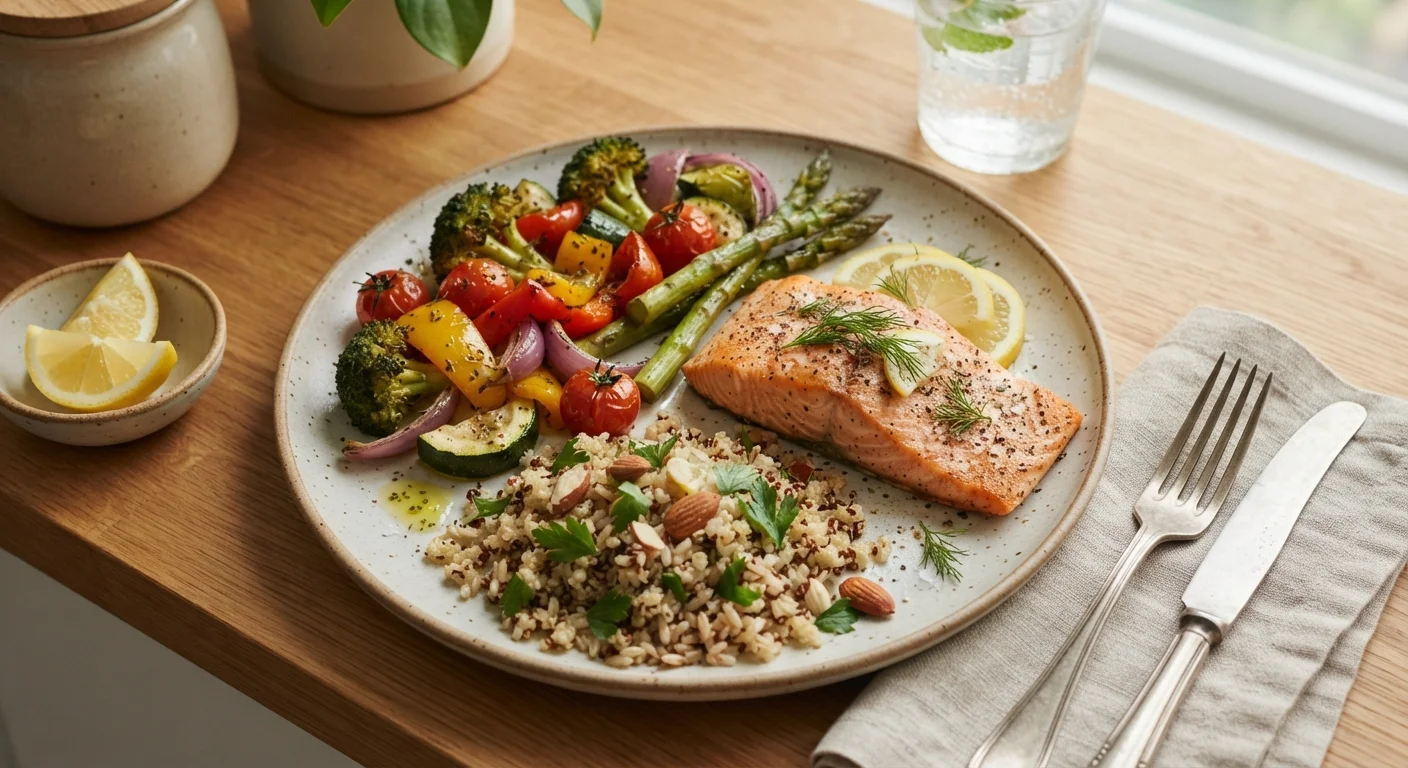
Leafy greens, broccoli, peppers, cucumbers, tomatoes, zucchini, carrots - anything that isn't primarily starchy counts here. Aim for color variety when you can, since different pigments in vegetables tend to correspond with different beneficial compounds. Frozen and canned vegetables (with no added salt or sauce) are just as valid as fresh.
Fill one quarter with a lean or plant-based protein
This section can include chicken, fish, eggs, tofu, tempeh, legumes (beans, lentils, chickpeas), or lower-fat cuts of meat. Protein contributes to satiety and supports muscle maintenance. Legumes do double duty here - they also bring fiber, which helps slow digestion and supports stable energy.
Fill the remaining quarter with whole grains or starchy vegetables
Brown rice, quinoa, whole wheat bread or pasta, oats, sweet potato, corn, and peas all belong here. Whole grain versions tend to provide more fiber and nutrients than refined alternatives, though either can fit into a balanced diet. This quarter provides sustained energy, particularly useful if you're physically active.
Add a small amount of healthy fat
Fat doesn't need its own plate section, but a modest amount helps your body absorb fat-soluble vitamins from the vegetables you're eating. A drizzle of olive oil, a few slices of avocado, a small handful of nuts, or a tablespoon of seeds is enough. These fats also contribute to meal satisfaction.
Choose water or an unsweetened drink
What you drink alongside your meal matters. Sugary beverages add concentrated calories with little nutritional value, while water, plain sparkling water, unsweetened tea, or black coffee don't alter your plate's balance. This doesn't mean never having juice or a sweetened drink - it just means it's worth being intentional about it.
Once this becomes second nature, you may want to check in with yourself periodically. The weekly eating audit is a practical, non-judgmental way to spot patterns and notice where small adjustments might help.
Common Obstacles and How to Handle Them
A few situations trip people up when they first try this approach.
Meals that don't come on a plate
Soups, stir-fries, sandwiches, and grain bowls don't have a clear dividing line. Apply the same proportions mentally: does the dish lean heavily toward one food group? Could you add a side of vegetables, or swap a refined grain for a whole one? Approximate is fine.
Eating out
Restaurant portions often skew toward grains and protein with minimal vegetables. Ordering a side salad or extra vegetables, or setting aside half a large portion to take home, can help bring things closer to balance. You don't need to engineer every restaurant meal - doing so most of the time is enough.
Very limited time or energy
Convenience foods and simple meals are a real part of most people's lives. Canned legumes, frozen vegetables, rotisserie chicken, and pre-cooked grains all count. The plate method works just as well with shortcut ingredients. For practical ideas on eating well under time pressure, eating well on a busy schedule covers realistic strategies worth knowing.
Good Enough, Most of the Time
You don't need to apply the plate method perfectly at every meal. Research on dietary patterns consistently suggests that what you eat across days and weeks matters far more than individual meals. If dinner tonight is mostly pasta, a vegetable-heavy lunch tomorrow is a natural rebalance - no stress required.
This article provides general nutrition information for educational purposes and is not a substitute for personalized advice from a qualified healthcare or dietetics professional. If you have a medical condition, specific dietary needs, or concerns about your health, please consult a registered dietitian or your doctor before making significant changes to your diet.
The content on this site is for informational purposes only and is not a substitute for professional advice. Always consult a qualified professional for guidance specific to your situation.